Senator Reverdy Johnson
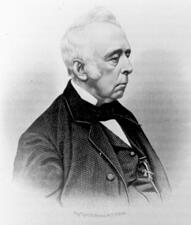
Here you will find contact information for Senator Reverdy Johnson, including email address, phone number, and mailing address.
| Name | Reverdy Johnson |
| Position | Senator |
| State | Maryland |
| Party | Democratic |
| Status | Former Representative |
| Term Start | December 1, 1845 |
| Term End | March 3, 1869 |
| Terms Served | 2 |
| Born | May 21, 1796 |
| Gender | Male |
| Bioguide ID | J000169 |
About Senator Reverdy Johnson
Reverdy Johnson (May 21, 1796 – February 10, 1876) was an American politician, statesman, and jurist from Annapolis, Maryland, whose public career spanned more than half a century and intersected with many of the most consequential legal and political controversies of the nineteenth century. He was born in Annapolis to John Johnson (1770–1824), a distinguished Maryland lawyer and politician who served as Attorney General of Maryland from 1806 to 1811 and later as Chancellor of Maryland, and Deborah (née Ghieselen) Johnson (1773–1847). His family was prominent in Maryland legal circles; his younger brothers included John Johnson Jr. (1798–1856), the last Chancellor of Maryland, and George Johnson (1817–1892). In August 1814, during the War of 1812, Johnson served as a private in Ensign William Brewer’s detachment of the 36th Maryland Militia and fought at the Battle of Bladensburg in Maryland, an early indication of his willingness to serve in public and national causes.
Johnson received his education at St. John’s College in Annapolis, from which he graduated in 1812. He then read law and was admitted to the bar in 1815. In 1816, he was appointed Deputy Attorney General of Maryland, a post he held until 1817. That same year he moved to Baltimore, Maryland, where he quickly became associated with some of the leading legal figures of his day, including Luther Martin, William Pinkney, and Roger B. Taney, who would later serve as Attorney General of the United States and Chief Justice of the United States Supreme Court. Also in 1817, Johnson was appointed chief commissioner of insolvent debtors of Maryland. From 1821 to 1825 he served in the Maryland State Senate, after which he returned to private practice in Baltimore for roughly two decades, building a reputation as one of the foremost advocates at the bar. In 1842, while assisting North Carolina Congressman Edward Stanly in preparing for a duel with Virginia Congressman Henry Wise, Johnson test-fired a pistol at a tree; the ball rebounded and struck his left eye, blinding it and initiating a gradual deterioration of his remaining eye that left him almost completely blind later in life.
On November 16, 1819, in Maryland, Johnson married Mary Mackall Bowie (1801–1873), the daughter of Thomas Contee Bowie (1771–1813) and Mary Mackall (née Bowie) Wootton (1776–1825), and sister of Representative Thomas Fielder Bowie. Through his wife he was connected to Governor Robert Bowie (1750–1818) of Maryland, her maternal grandfather. The couple had fifteen children, of whom five daughters and three sons survived to adulthood. Their children included Mary Johnson (1822–1915), who married Thomas Hollingsworth Morris (1817–1872); Eliza Ridgely Johnson (1823–1897), who married Henry Daingerfield (d. 1866); Reverdy Johnson Jr. (1826–1907), who married Caroline Patterson (1828–1863); Maria Louisa Johnson (1827–1893), who married William Riggin Travers (1819–1887); Matilda Elizabeth Bowie Johnson (1829–1911), who married Charles John Morris Gwinn (1822–1894), Attorney General of Maryland; Emily Contee Johnson (1832–1909), who married George Washington Lewis (1829–1885); Louis E. Johnson (1837–1905), who married Marie May Bostick (1856–1942) and later served as United States Marshal of South Carolina; and Edward Contee Johnson (1843–1905), who married Kate Moore (1871–1922). Through these alliances, Johnson’s family remained deeply intertwined with the legal, political, and social elite of Maryland and beyond.
Johnson’s national career began in the United States Senate. From 1845 to 1849, he represented Maryland in the United States Senate as a member of the Whig Party, and his service in Congress thus occurred during a significant period in American history marked by sectional tensions and debates over slavery and expansion. During these years, Reverdy Johnson served as a Senator from Maryland in the United States Congress, and, as a member of the Senate, he participated in the democratic process and represented the interests of his constituents. In March 1849, following his first Senate term, he was confirmed as Attorney General of the United States under President Zachary Taylor, serving from March 1849 until his resignation on July 21, 1850, shortly after Millard Fillmore assumed the presidency on July 9, 1850. While Attorney General, he was permitted to act in a private capacity to assist Virginians Charles W. Russell and Alexander H. H. Stuart in defending the Wheeling Suspension Bridge, a critical link in the National Road and the first bridge to cross a major river west of the Appalachian Mountains. Although the plaintiffs technically prevailed twice on the ground that the bridge obstructed a navigable river, the structure was never demolished, only repaired after wind damage, and it set a practical precedent for subsequent major river crossings, including the 1856 bridge over the Mississippi River at Rock Island.
By the mid-1850s, Johnson had become a conservative Democrat and supported Stephen A. Douglas in the presidential election of 1860. He gained national prominence as a defense attorney in several high-profile cases. In the controversial 1857 Supreme Court case Dred Scott v. Sandford, he represented the slave-owning defendant, Sandford, even though he was personally opposed to slavery. In November 1856, his political positions provoked public anger in Baltimore, where a large crowd armed with guns and clubs burned an effigy of Johnson on the railing of the Battle Monument in front of his house to protest a speech he had delivered in New York against former President Fillmore. During the Civil War era, however, Johnson emerged as a strong supporter of the Union war effort and became a key figure in efforts to prevent Maryland, a slave state, from seceding. He served as a Maryland delegate to the Peace Convention in Washington, D.C., in 1861, which sought to avert civil war, and from 1861 to 1862 he sat in the Maryland House of Delegates. During this period he also represented Union Maj. Gen. Fitz John Porter at his court-martial, arguing that Porter’s distinguished record should shield him from charges of cowardice and disobedience, though a court composed of officers selected by Secretary of War Edwin Stanton nonetheless voted to convict.
Johnson returned to the United States Senate in 1863, this time serving as a Senator from Maryland from 1863 through 1868. A member of the Democratic Party during this later phase of his career, Reverdy Johnson contributed to the legislative process during two terms in office, and his service in Congress again coincided with a transformative period in American history encompassing the Civil War and Reconstruction. Initially opposed to wartime measures to abolish slavery, he changed his position in 1864. The proposed Thirteenth Amendment to the United States Constitution, abolishing slavery, “caught Johnson’s eye” as an indisputable constitutional solution to the problem. In a notable 1864 speech on the Senate floor, he broke decisively with pro-slavery forces, declaring strong antislavery sentiments, advocating immediate and universal emancipation, and supporting the amendment that would forever prohibit slavery in the United States. In 1865, he defended Mary Surratt before a military tribunal against charges of conspiring in the assassination of President Abraham Lincoln; she was convicted and executed despite his efforts. Johnson served on the Joint Committee on Reconstruction, which drafted the Fourteenth Amendment to the United States Constitution, but he ultimately voted against the amendment’s passage. In 1866, he addressed the Senate on the appointment of provisional governors in the Southern states and attended the National Union Convention in Philadelphia, which sought to build political support for President Andrew Johnson’s Reconstruction policies; his report on the convention’s proceedings was later entered into the record of President Johnson’s impeachment trial. In 1867, Reverdy Johnson voted for the Reconstruction Act of 1867, becoming the only Democrat to support a major Reconstruction measure in either 1866 or 1867.
On June 12, 1868, Johnson was appointed United States Minister to the United Kingdom, and he began his service in London on September 14, 1868. While in England, he was criticized in some American circles for socializing with British figures such as the Lairds, Wharncliffes, Roebucks, and Gregorios, conduct some contemporaries regarded as a diplomatic misstep. Nonetheless, he quickly undertook significant negotiations and concluded the Johnson–Clarendon Treaty, intended to settle disputes arising from the Civil War, including the Alabama Claims against Great Britain for damages caused by Confederate commerce raiders built in British shipyards. The United States Senate, however, refused to advise and consent to ratification of the treaty, and Johnson returned home following the inauguration of President Ulysses S. Grant in March 1869. Johnson’s formal congressional service, therefore, extended from his first Senate term beginning in 1845 through his second term ending in 1868, during which he participated in the democratic process and represented Maryland’s interests in the Senate during an era of sectional crisis, civil war, and constitutional change.
In his later years, Johnson resumed his legal practice and continued to appear in important and often controversial cases. In the early 1870s he defended members of the Ku Klux Klan against indictments brought under the Ku Klux Klan Act of 1871. Even after leaving public office, he remained an active commentator on public affairs. In December 1874, he wrote to The New York Times expressing his hope that after the next presidential election the federal government would be brought back within what he regarded as the proper constitutional limits, that the reserved powers of the states would be recognized, and that citizens’ rights would be faithfully preserved. In December 1875, he addressed a letter to the Baltimore Sun discussing the potential implications of Great Britain’s purchase of a controlling interest in the Suez Canal. In early 1876, while in Annapolis arguing the case of Baker v. Frick before the Maryland Court of Appeals, Johnson was a guest at the Maryland Governor’s Mansion. On the evening of February 10, 1876, during a dinner party at the mansion in Annapolis, he fell near a basement door—apparently tripping—and struck his head on a sharp corner of the mansion’s granite base course and then again on the cobblestone pavement, dying instantly. He was the last surviving member of President Taylor’s cabinet. Upon his death, the bar of the Supreme Court of the United States unanimously adopted a statement praising his contributions to the Court and expressing condolences for his sudden passing. Johnson was buried in Green Mount Cemetery in Baltimore, Maryland. His life and career, which later drew renewed public attention through his portrayal by actor Tom Wilkinson in the 2011 film “The Conspirator,” left a complex legacy as that of a conservative constitutional lawyer and senator who moved from defending slavery’s legal framework to supporting its abolition, and who played a notable role in both the preservation of the Union and the contested settlement of Reconstruction.