Senator Rice William Means
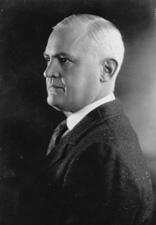
Here you will find contact information for Senator Rice William Means, including email address, phone number, and mailing address.
| Name | Rice William Means |
| Position | Senator |
| State | Colorado |
| Party | Republican |
| Status | Former Representative |
| Term Start | December 1, 1924 |
| Term End | March 4, 1927 |
| Terms Served | 1 |
| Born | November 16, 1877 |
| Gender | Male |
| Bioguide ID | M000621 |
About Senator Rice William Means
Rice William Means (November 16, 1877 – January 30, 1949) was an American soldier, lawyer, Ku Klux Klan leader, and Republican politician who represented Colorado in the United States Senate from 1924 to 1927. Over the course of his varied career he served in two wars, held local judicial and legal offices, led major veterans’ organizations, and played a controversial role in Colorado politics during the height of Ku Klux Klan influence in the state.
Means was born in St. Joseph, Missouri, on November 16, 1877. In 1887 he moved with his parents to Yuma County, Colorado, and two years later, in 1889, the family settled in Denver. He attended Denver’s public schools and then Sacred Heart College of Denver, an institution later renamed Regis University. His early years in Colorado coincided with the state’s rapid growth and urbanization, and Denver would remain the center of his professional and political life.
During the Spanish–American War, Means entered military service and commanded a company in the Philippine campaign of 1899. He was awarded the Distinguished Service Cross for his actions there, having “distinguished himself before the fall of Manila by swimming the Singalon River to reconnoiter the Spanish works,” and escaping capture after being spotted by Spanish forces. Returning from the war, he publicly advocated permanent United States incorporation of the Philippines, envisioning Manila surpassing Hong Kong as a major trading center. After his military service, Means pursued legal training, graduating in 1901 from the law department of the University of Michigan at Ann Arbor. That same year he was admitted to the bar and commenced the practice of law in Denver.
Means quickly entered public life in Colorado. From 1902 to 1904 he served as county judge of Adams County. In 1908 he was an unsuccessful Republican candidate for election to the Sixty-first Congress, after which he was appointed deputy district attorney for Adams County. His prominence among veterans grew as well: in 1913 he was elected commander in chief of the Army of the Philippines, and in 1914 he became commander in chief of the Veterans of Foreign Wars. During the First World War he returned to uniform as a lieutenant colonel and commandant of the Fortieth Division School of Arms, and he commanded the 4th Infantry in the Meuse–Argonne offensive. In 1920 he sought a seat in the United States Senate but lost the Republican nomination to Samuel D. Nicholson, who went on to win the general election. Means later served as attorney for the City and County of Denver in 1923 and 1924.
Means’s congressional service came during a significant period in American history and in Colorado politics. On November 4, 1924, he was elected as a Republican to the United States Senate in a special election to fill the vacancy caused by Senator Nicholson’s death. His Democratic opponent nicknamed him “Puffed Rice” during the campaign, but the moniker did not prevent his victory. He entered the Senate on December 1, 1924, and served until March 3, 1927, completing the remainder of Nicholson’s term. During his single term in office, he participated in the legislative process and represented the interests of his Colorado constituents. He chaired the Committee on Claims in the Sixty-ninth Congress and authored legislation designating Armistice Day—later known as Veterans Day—as a national holiday in the United States, reflecting his long-standing identification with veterans’ causes.
Means’s Senate career was closely intertwined with the rise and fall of the Ku Klux Klan in Colorado. He was one of several candidates in the state with ties to the Klan organization, and while serving in the Senate he became the directing head of the Ku Klux Klan in Colorado. His association with the Klan became a central issue in subsequent elections. In 1926 he sought reelection but was defeated in the Republican primary by Charles W. Waterman, who “rode to victory on the wave of anti-Klan sentiment” in the state. Means’s Senate service thus lasted three years, from 1924 to 1927, as he completed his predecessor’s unexpired term.
After leaving the Senate, Means continued to be active in veterans’ and publishing circles. From 1926 to 1927 he served as commander in chief of the United Spanish War Veterans, a role that brought his past Klan affiliations further into the public spotlight; he denied any association with the Klan despite contemporaneous reports of his leadership role. In 1927 he became president of the National Tribune Corporation and publisher of the National Tribune and Stars and Stripes in Washington, D.C. From this platform he emerged as a sharp critic of President Franklin D. Roosevelt and the early New Deal, denouncing the administration’s initial measures in 1933 as the product of “ruthless, vicious propaganda” and “a stain upon the honor of the United States.” He retired from active public and professional life in 1937.
Rice William Means died in Denver on January 30, 1949, following a six‑month bout with heart problems. He was interred at Fairmount Cemetery in Denver.