Senator Richard Henry Bayard
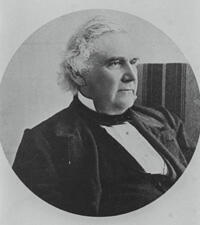
Here you will find contact information for Senator Richard Henry Bayard, including email address, phone number, and mailing address.
| Name | Richard Henry Bayard |
| Position | Senator |
| State | Delaware |
| Party | Whig |
| Status | Former Representative |
| Term Start | June 17, 1836 |
| Term End | March 3, 1845 |
| Terms Served | 2 |
| Born | September 26, 1796 |
| Gender | Male |
| Bioguide ID | B000251 |
About Senator Richard Henry Bayard
Richard Henry Bayard (September 26, 1796 – March 4, 1868) was an American lawyer, jurist, diplomat, and politician from Wilmington, Delaware. A member of the Whig Party, he served as the first mayor of Wilmington, as chief justice of the Delaware Superior Court, and as a United States Senator from Delaware during two separate periods between 1836 and 1845. His service in Congress occurred during a significant period in American history, and as a member of the Senate he participated in the legislative process and represented the interests of his Delaware constituents.
Bayard was born in Wilmington, Delaware, on September 26, 1796, into a prominent political family. He was the son of James A. Bayard Sr., a leading Federalist who served both as a U.S. Representative and U.S. Senator from Delaware, and Nancy (née Bassett) Bayard. His maternal grandfather was Richard Bassett, another U.S. Senator from Delaware and a signer of the U.S. Constitution, further entrenching the family in national politics. His younger brother, James A. Bayard Jr., would also later serve as a U.S. Senator from Delaware. Richard Henry Bayard thus grew up in an environment closely connected to federal public service and the legal profession.
Bayard pursued a classical education and graduated from Princeton College in 1814. After completing his studies there, he read law and was admitted to the bar in 1818. He established his legal practice in Wilmington, where he quickly gained prominence in the local bar. When Wilmington was newly incorporated as a city, Bayard was chosen as its first mayor in 1832, marking his formal entry into public office and municipal leadership.
In 1820, Bayard married Mary Sophia Carroll (1804–1886), in a ceremony officiated by the Right Reverend Henry Conwell, the Roman Catholic Bishop of Philadelphia. She was the daughter of Charles Carroll of Homewood, the only surviving son of U.S. Senator Charles Carroll of Carrollton, a signer of the United States Declaration of Independence, and Harriett (née Chew) Carroll, daughter of Judge Benjamin Chew. Richard and Mary Sophia Bayard were the parents of seven children: Mary Louisa Bayard (1822–1889), who married William Henry Beck and, after his death in 1859, Col. Manlio Bettarini, adjutant of King Victor Emmanuel II of Italy; Caroline Bayard (1824–1895), who married Henry Baring Powel, son of John Hare Powel and Julia (née Deveaux) Powel; Elizabeth Bayard (1826–1885), who in 1848 married Col. Frederick Henry Rich of the English Army; Charles Carroll Bayard (1828–1850), a midshipman in the United States Navy who died from a wound received on Mount Vesuvius during the eruption of February 1850; Richard Bassett Bayard (1831–1878), who in 1860 married Ellen Howard, daughter of Gen. Benjamin Chew Howard and Jane Grant (née Gilmor) Howard; Sarah A. Bayard (1835–1880), who died unmarried; and Harriet Bayard (1836–1865), who married Christian Børs of Norway. Through these family connections, Bayard was linked to several of the most prominent political and legal families in early American history.
Bayard’s national political career began when the Delaware General Assembly elected him to the United States Senate in 1836 as an Anti-Jacksonian, reflecting opposition to the policies of President Andrew Jackson. He was chosen to fill the vacancy caused by the resignation of Senator Arnold Naudain and took his seat on June 17, 1836. Under the system then in place, the state legislature selected U.S. Senators, who formally took office on March 4 for six-year terms. In Bayard’s case, he was completing an existing term. He served in the Senate from June 17, 1836, until September 19, 1839, when he resigned to accept a judicial appointment. During this first period in the Senate, he aligned with the emerging Whig coalition that opposed Jacksonian Democrats and contributed to the legislative debates of the era on finance, internal improvements, and federal authority.
Upon resigning from the Senate in 1839, Bayard became chief justice of the Delaware Superior Court (often referred to at the time as the Delaware Supreme Court). He served as chief justice from 1839 to 1841, presiding over the state’s highest judicial tribunal and bringing his legal training and legislative experience to the bench. After two years in that role, he resigned in 1841 when he was again elected to the United States Senate, this time explicitly as a member of the Whig Party. The Senate seat had remained vacant since his own resignation in 1839, and his return underscored both his personal standing in Delaware politics and the strength of the Whig organization in the state.
Bayard’s second term in the Senate began on January 12, 1841, and continued until March 3, 1845. During this period, he served in the 27th and 28th Congresses, a time marked by the Whig ascendancy under President William Henry Harrison and then President John Tyler, followed by growing sectional tensions. In the 27th Congress he was chairman of the Committee on Private Land Claims, and he also served as a member of the Committee on the District of Columbia. In both the 27th and 28th Congresses he sat on the Committee on Naval Affairs, reflecting Delaware’s maritime interests and the broader national concern with naval strength. Bayard did not seek reelection in 1844, concluding his Senate service in early 1845 after nearly nine years in total, spread over two nonconsecutive terms from 1836 to 1845.
After leaving the Senate, Bayard continued to serve the nation in a diplomatic capacity. President Millard Fillmore appointed him chargé d’affaires to Belgium, a post he held from 1850 to 1853. In that role he represented U.S. interests in a key European state during a period of expanding American commercial and political engagement abroad. His diplomatic service capped a long public career that had encompassed municipal leadership, judicial office, and high federal legislative responsibility.
Richard Henry Bayard died on March 4, 1868, in Philadelphia, Pennsylvania. He was interred in Wilmington and Brandywine Cemetery in Wilmington, Delaware, returning in death to the city where he had been born, practiced law, and served as first mayor. He was the second of five members of the Bayard family to serve in the United States Senate, and his life and career reflected the intertwined traditions of law, politics, and public service that characterized his distinguished family and his generation.