Representative Richard Bolling
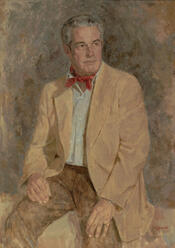
Here you will find contact information for Representative Richard Bolling, including email address, phone number, and mailing address.
| Name | Richard Bolling |
| Position | Representative |
| State | Missouri |
| District | 5 |
| Party | Democratic |
| Status | Former Representative |
| Term Start | January 3, 1949 |
| Term End | January 3, 1983 |
| Terms Served | 17 |
| Born | May 17, 1916 |
| Gender | Male |
| Bioguide ID | B000605 |
About Representative Richard Bolling
Richard Walker Bolling (May 17, 1916 – April 21, 1991) was a prominent American Democratic Congressman from Kansas City, Missouri, who represented Missouri’s 5th congressional district in the United States House of Representatives from January 3, 1949, to January 3, 1983. Over the course of 17 consecutive terms, he became a leading figure in House procedure and reform and retired after serving for four years as chairman of the powerful United States House Committee on Rules. His long tenure in Congress spanned a significant period in American history, during which he participated actively in the legislative process and represented the interests of his constituents in Missouri.
Bolling was born in New York City on May 17, 1916, into a family with deep political roots in the American South. He was the great-great-grandson of John Williams Walker and the great-great-nephew of Percy Walker, both of whom had served in public life in earlier generations. He attended Phillips Exeter Academy in Exeter, New Hampshire. At the age of fifteen, following the death of his father, he returned to the family home in Huntsville, Alabama, where he completed his secondary education and prepared for college.
Bolling pursued higher education at the University of the South in Sewanee, Tennessee, where he studied literature and French. He earned a Bachelor of Arts degree in 1937 and remained at Sewanee to complete a Master of Arts degree in 1939. He then undertook further graduate studies at Vanderbilt University in Nashville, Tennessee, during 1939–1940. Before entering public service, he embarked on a career in education and educational administration. He taught at Sewanee Military Academy in 1938 and 1939, and in 1940 he became assistant to the head of the Department of Education at Florence State Teachers College in Alabama, establishing himself as an educational administrator by profession.
With the onset of World War II, Bolling entered the United States Army in April 1941 as a private. He served on active duty until July 1946, rising to the rank of lieutenant colonel. During the war he spent four years overseas as assistant to the chief of staff to General Douglas MacArthur, serving in Australia, New Guinea, the Philippines, and Japan. For his service he was awarded the Legion of Merit and the Bronze Star. After his discharge, he settled in the Kansas City area and served as a veterans’ adviser at the University of Kansas City in 1946 and 1947, assisting returning servicemembers in their transition to civilian and academic life.
Bolling was elected as a Democrat to the Eighty-first Congress in 1948 and took office on January 3, 1949, beginning a congressional career that would extend through the Ninety-seventh Congress, ending on January 3, 1983. Representing Missouri’s 5th congressional district, centered on Kansas City, he was reelected to sixteen succeeding Congresses. Over these 17 terms, he became known as an expert on House rules and procedure and a key participant in the internal reform of the House of Representatives. He chaired the Select Committee on Committees of the House in the Ninety-third Congress, the Joint Economic Committee in the Ninety-fifth Congress, and the Committee on Rules in the Ninety-sixth and Ninety-seventh Congresses. His leadership of the Rules Committee, often described as one of the most powerful panels in the House, placed him at the center of the legislative agenda and floor strategy during his final years in office.
Throughout his congressional service, Bolling played a significant role in civil rights and institutional reform. He did not sign the 1956 Southern Manifesto and consistently supported major civil rights legislation, voting in favor of the Civil Rights Acts of 1957, 1960, 1964, and 1968, as well as the Voting Rights Act of 1965. He voted “present” on the proposed Twenty-fourth Amendment to the U.S. Constitution, which abolished the poll tax in federal elections, but otherwise aligned himself with the legislative drive to expand civil and voting rights. He was instrumental in advancing the Civil Rights Act of 1964 by introducing the discharge petition that released the bill from the control of Senate committees chaired by southern Democrats, a crucial procedural step in securing its passage. Within the Democratic caucus, he sought leadership positions, running twice for House Majority Leader—losing to Carl Albert in 1961 and to Jim Wright by three votes in 1977—illustrating both his influence and the competitive nature of House leadership politics.
By the early 1980s, Bolling’s health had begun to decline due to heart disease. In 1981 he announced that he would retire from Congress and was not a candidate for reelection to the Ninety-eighth Congress in 1982. After leaving the House in January 1983, he continued to engage in public affairs and civic life. That same year he was elected to the National Governing Board of Common Cause, a public-interest advocacy organization focused on government accountability and reform. He also returned to academic pursuits, serving as a visiting professor of political science at the University of Missouri–Kansas City and later as a professor of politics at Boston College in Massachusetts, where he drew on his extensive legislative experience to teach and write about American government and the workings of Congress.
Bolling’s personal life included several marriages and a long-standing connection to multiple regions of the country. On June 7, 1945, he married Barbara Stratton, sister of author and Office of Strategic Services agent Arthur Stratton; they had one daughter, Andrea Walker Bolling. He subsequently married Jim Grant Akin, a congressional liaison officer for the U.S. Department of Health, Education, and Welfare, who later served as his legislative affairs assistant. Following her death in 1978, he married psychologist Dr. Prudie Luther Orr in Memphis, Tennessee. His spouse at the time of his death was Nona Herndon of Dallas. Bolling resided primarily in Washington, D.C., during and after his congressional career, maintained a summer home at Portage Point, Michigan, and in the 1970s owned a cottage on St. Barthelemy in the French West Indies, which he also rented to vacationers.
Richard Walker Bolling remained a resident of Washington, D.C., until his death there on April 21, 1991. In recognition of his long service and influence in Congress, the Richard Bolling Federal Building in Kansas City, Missouri, was named in his honor, commemorating his decades of representation of the city and his substantial contributions to the legislative process and institutional development of the House of Representatives.