Representative Richard Thompson Buckler
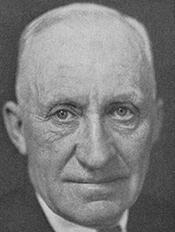
Here you will find contact information for Representative Richard Thompson Buckler, including email address, phone number, and mailing address.
| Name | Richard Thompson Buckler |
| Position | Representative |
| State | Minnesota |
| District | 9 |
| Party | Farmer-Labor |
| Status | Former Representative |
| Term Start | January 3, 1935 |
| Term End | January 3, 1943 |
| Terms Served | 4 |
| Born | October 27, 1865 |
| Gender | Male |
| Bioguide ID | B001023 |
About Representative Richard Thompson Buckler
Richard Thompson Buckler (October 27, 1865 – January 23, 1950) was a Farmer–Labor politician and United States Representative from Minnesota whose public career was rooted in his long experience as a working farmer. He was born on a farm near Oakland, Coles County, Illinois, where he spent his early years engaged in agricultural pursuits alongside his family. Raised in a rural environment in eastern Illinois during the closing decades of the nineteenth century, he became familiar with the economic challenges and community life of Midwestern farmers, experiences that would later shape his political outlook and legislative priorities.
Buckler attended the public schools of Coles County, Illinois. His formal education, though typical of rural schooling of the period, provided a foundation for his later service in local and state government. After completing his schooling, he continued to farm in Coles County, gaining practical experience in crop production and farm management at a time when agricultural markets were volatile and farmers were increasingly drawn to cooperative and reform movements.
In 1904 Buckler moved from Illinois to Minnesota, settling in Andover Township, Polk County. There he continued his agricultural pursuits, establishing himself as a farmer in the Red River Valley region. In his new community he quickly became active in local affairs, reflecting both his interest in public service and his commitment to improving conditions for farmers. He became involved in Farm Bureau and Farmers’ Union organizations, which were central vehicles for farmer advocacy in the Upper Midwest. Through these organizations he worked to promote cooperative marketing, better credit facilities, and policies favorable to family farmers, and he emerged as a recognized leader in local agricultural circles.
Buckler’s engagement with farm organizations led naturally to elective office. He held numerous township and local school district positions, contributing to the administration of rural education and local governance in Polk County. Building on this local service, he was elected to the Minnesota Senate, where he served multiple nonconsecutive terms: from 1915 to 1919, from 1923 to 1927, and from 1931 to 1935. In the state legislature he was associated with agrarian and progressive causes that sought to address the concerns of small farmers and rural communities, participating in debates over taxation, agricultural policy, and public services during a period marked by post–World War I adjustment and the onset of the Great Depression.
In 1934 Buckler was elected to the United States House of Representatives as a member of the Minnesota Farmer–Labor Party, a progressive third party that represented farmers, workers, and small producers. He took his seat in the Seventy-fourth Congress on January 3, 1935, and was subsequently reelected to the Seventy-fifth, Seventy-sixth, and Seventy-seventh Congresses, serving continuously from January 3, 1935, to January 3, 1943. Representing a largely rural district, he supported measures aligned with New Deal efforts to stabilize agricultural prices, provide relief to distressed farmers, and strengthen the economic position of rural America. His congressional service spanned the depths of the Great Depression and the early years of World War II, and he was identified with the Farmer–Labor program of economic reform and social welfare. He chose not to be a candidate for renomination in 1942, thus concluding his federal legislative career at the end of his fourth term.
After leaving Congress, Buckler returned to Polk County and resumed his agricultural pursuits, once again devoting himself to farming and local community life. He remained a respected elder statesman within Minnesota’s agrarian and Farmer–Labor circles, his career exemplifying the trajectory of a farmer who rose from township offices to the state senate and then to the national legislature while maintaining close ties to the land.
Richard Thompson Buckler died in Crookston, Minnesota, on January 23, 1950. He was interred in Oakdale Cemetery, leaving a legacy as a farmer-legislator who brought the concerns of Midwestern agricultural communities to the Minnesota Senate and the United States House of Representatives during a transformative era in American economic and political life.