Representative Richard Edward Connell
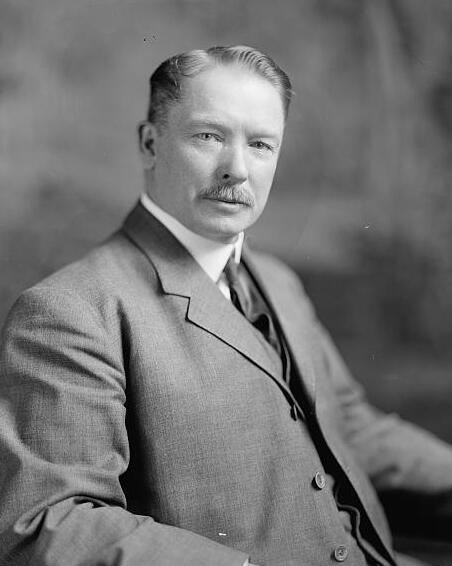
Here you will find contact information for Representative Richard Edward Connell, including email address, phone number, and mailing address.
| Name | Richard Edward Connell |
| Position | Representative |
| State | New York |
| District | 21 |
| Party | Democratic |
| Status | Former Representative |
| Term Start | April 4, 1911 |
| Term End | March 3, 1913 |
| Terms Served | 1 |
| Born | November 6, 1857 |
| Gender | Male |
| Bioguide ID | C000686 |
About Representative Richard Edward Connell
Richard Edward Connell Sr. (November 6, 1857 – October 30, 1912) was an American newspaperman and Democratic politician who served as a United States Representative from New York from March 4, 1911, until his death on October 30, 1912. During his single term in Congress, he represented his Hudson Valley constituents in the House of Representatives and contributed to the legislative process at a significant moment in American political history.
Connell was born in Poughkeepsie, Dutchess County, New York, to Richard and Ann Connell (née Phelan), who had immigrated from Kilkenny, Ireland, to New York in 1846. Raised in a Catholic family, he attended St. Peter’s parochial school and the public schools of Poughkeepsie. His formal education ended when he was about thirteen years old, when he left school to enter the workforce in order to help support his widowed mother and his siblings. In his youth he held a variety of jobs, including work for the Poughkeepsie and Eastern Railway and at the Hudson River State Hospital, experiences that grounded him in the daily life of his community and informed his later public career.
Connell’s entry into journalism provided the foundation for his prominence in local affairs. He was eventually hired as a reporter for the Poughkeepsie News-Press, where his abilities and diligence led to his promotion to managing editor. As a newspaperman, he became well known in Poughkeepsie and Dutchess County, gaining both political insight and public visibility. His work in the press coincided with his growing engagement in Democratic Party politics, and he emerged as a notable local orator and party advocate.
Connell first rose to political prominence in 1884 when he began delivering speeches in support of Democratic presidential candidate Grover Cleveland. Throughout the late nineteenth century he was a persistent, if initially unsuccessful, candidate for public office. He ran unsuccessfully for election to the Fifty-fifth Congress in 1896, losing to Republican incumbent John H. Ketcham, and he failed in his bids for the New York State Assembly in 1898 and 1900. After these defeats, he became known for his efforts to cultivate goodwill among schoolchildren, hoping that when they reached voting age they would remember him favorably and support his candidacies. Despite these setbacks, he continued to build his public record through appointed and party positions. Connell served as police commissioner of Poughkeepsie for three years beginning in 1892, was Dutchess County’s inheritance tax appraiser from 1907 to 1909, and was a delegate to the Democratic National Conventions in 1900 and 1904.
Connell’s persistence was rewarded in the election of 1910, when he sought a seat in the U.S. House of Representatives from New York. That year he campaigned in the Hudson Valley alongside Hyde Park resident Franklin D. Roosevelt, who was running for the New York State Senate. Traveling together in Roosevelt’s Maxwell automobile, the two men conducted a joint campaign that helped introduce them to voters across the region. Roosevelt later adopted Connell’s favored opening phrase, “My friends,” as a hallmark of his own public speeches. In the 1910 election, Connell, running as a Democrat, defeated the Republican incumbent Hamilton Fish II by a margin of 517 votes, winning election to the Sixty-second Congress.
As a member of the House of Representatives from March 4, 1911, Connell participated fully in the democratic process and represented the interests of his New York constituents during a period of progressive reform in national politics. In his brief time in Congress, he collaborated with Representative Isaac R. Sherwood in championing a Civil War veterans’ pension bill, which was successfully enacted and contributed to the expansion of federal support for aging veterans. A member of the Democratic Party, he was renominated in 1912 as the Democratic candidate for reelection to the Sixty-third Congress, reflecting the confidence of his party and constituents in his service.
Connell’s personal life was closely tied to his family and his Catholic community in Poughkeepsie. He married Mary Miller, and the couple had four children: Mary, Anne, Catherine, and Richard. His son, Richard Edward Connell Jr., served as his secretary during sessions of Congress and later achieved literary distinction as an accomplished writer, best known for the widely anthologized short story “The Most Dangerous Game.” Connell was active in fraternal and religiously affiliated organizations, including membership in the Royal Arcanum, the Knights of Columbus, and the Benevolent and Protective Order of Elks, which reflected both his social engagement and his standing in the community.
Connell’s congressional service was cut short by his sudden death in office. On the night of October 29, 1912, he spent hours delivering campaign speeches in Putnam County before returning home to Poughkeepsie at about 2:00 a.m. The next morning, when he did not rise to meet an automobile scheduled to take him to Middletown for further meetings with constituents, his wife discovered him unresponsive. He had died in his sleep of heart disease on October 30, 1912, just days before the 1912 general election. Richard Edward Connell Sr. was interred in St. Peter’s Cemetery in Poughkeepsie, New York, and is remembered among the members of the United States Congress who died in office in the first half of the twentieth century.