Representative Richard Franchot
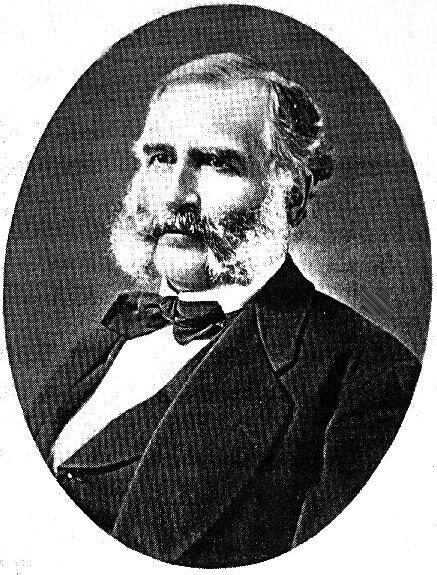
Here you will find contact information for Representative Richard Franchot, including email address, phone number, and mailing address.
| Name | Richard Franchot |
| Position | Representative |
| State | New York |
| District | 19 |
| Party | Republican |
| Status | Former Representative |
| Term Start | July 4, 1861 |
| Term End | March 3, 1863 |
| Terms Served | 1 |
| Born | June 2, 1816 |
| Gender | Male |
| Bioguide ID | F000334 |
About Representative Richard Franchot
Richard Hansen Franchot (June 2, 1816 – November 23, 1875) was a U.S. Representative from New York, a Union Army officer during the American Civil War, and a prominent railroad executive associated with the Albany and Susquehanna Railroad and the Central Pacific Railroad. A member of the Republican Party, he served one term in Congress during a critical period in American history, participating in the legislative process at the outset of the Civil War and representing the interests of his New York constituents.
Franchot was born on June 2, 1816, in the town of Morris, Otsego County, New York, the son of Paschal Franchot, a French immigrant. He was educated in the public schools of the region and continued his studies at Hartwick and Cherry Valley Academies, institutions that prepared many young men of the era for professional and technical careers. Demonstrating an aptitude for the applied sciences, he pursued civil engineering at Rensselaer Polytechnic Institute in Troy, New York, one of the earliest American institutions devoted to engineering education. This technical training provided the foundation for his later work in railroad construction and management.
Following his education, Franchot embarked on a career in civil engineering and railroad development at a time when railroads were transforming the economic landscape of New York and the broader United States. He became closely associated with the Albany and Susquehanna Railroad, a key line intended to connect the Hudson River with the southern tier of New York. He served for several years as president of the Albany and Susquehanna Railroad, overseeing aspects of its construction, operation, and expansion. His leadership in this role reflected both his engineering background and his growing prominence in business and public affairs.
Franchot entered national politics as a member of the Republican Party, which had emerged in the 1850s as the principal political force opposing the expansion of slavery. He was elected as a Republican to the Thirty-seventh Congress, serving from March 4, 1861, to March 3, 1863. His term coincided with the secession crisis and the first two years of the Civil War, a period in which Congress grappled with issues of war finance, military organization, and the preservation of the Union. As a representative from New York, he contributed to the legislative process during this significant period in American history, participating in the democratic process and representing the interests of his constituents. He was not a candidate for renomination in 1862, choosing instead to devote his efforts directly to the Union war effort.
During the Civil War, Franchot moved to Schenectady, New York, and took an active role in raising troops for the Union Army. He was instrumental in organizing the 121st New York Infantry, a regiment that would see extensive service in the Eastern Theater of the war. On August 23, 1862, he was commissioned as colonel of the 121st New York Infantry, assuming command and contributing to the training and leadership of the regiment. In recognition of his service, he was later brevetted as a brigadier general of U.S. Volunteers, with rank dating from March 13, 1865, an honorary promotion commonly bestowed for meritorious or distinguished service during the conflict.
After the conclusion of the Civil War, Franchot returned to the railroad industry, which was entering a period of rapid expansion westward. He became associated with the Central Pacific Railroad, one of the principal companies responsible for constructing the western portion of the first transcontinental railroad. In this capacity, he drew upon his engineering expertise and prior executive experience, contributing to the development of the nation’s rail infrastructure that would link the Atlantic and Pacific coasts and facilitate commerce, migration, and national integration in the postwar era.
Franchot spent his later years in Schenectady, New York, where he remained a figure of local and regional prominence due to his combined record in business, military service, and public office. He died in Schenectady on November 23, 1875. He was interred in Vale Cemetery in that city, a burial place for many of Schenectady’s notable citizens. His family continued to play a significant role in public life: his sons included Nicholas Van Vranken Franchot (1855–1943), who served as New York Superintendent of Public Works, and Stanislaus P. Franchot (1851–1908), a member of the New York State Senate. His grandson Nicholas V. V. Franchot II (1884–1938) served in the New York State Assembly, his great-grandson Franchot Tone (1905–1968) achieved fame as an actor, and former Maryland Comptroller Peter Franchot (born 1947) is also among his descendants, extending the family’s public and professional legacy well into the twentieth and twenty-first centuries.