Representative Richard Pillsbury Gale
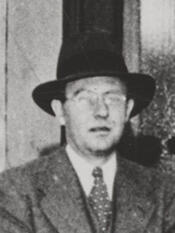
Here you will find contact information for Representative Richard Pillsbury Gale, including email address, phone number, and mailing address.
| Name | Richard Pillsbury Gale |
| Position | Representative |
| State | Minnesota |
| District | 3 |
| Party | Republican |
| Status | Former Representative |
| Term Start | January 3, 1941 |
| Term End | January 3, 1945 |
| Terms Served | 2 |
| Born | October 30, 1900 |
| Gender | Male |
| Bioguide ID | G000014 |
About Representative Richard Pillsbury Gale
Richard Pillsbury Gale (October 30, 1900 – December 4, 1973) was an American politician, farmer, and securities investor who served as a U.S. Representative from Minnesota from 1941 to 1945. A member of the Republican Party, he represented his state in the United States Congress for two consecutive terms during a critical period encompassing the early years of American involvement in the Second World War. He was a member of the Pillsbury family, a prominent Minnesota milling family that founded and owned the Pillsbury Company, one of the world’s largest grain producers.
Gale was born in Minneapolis, Minnesota, the son of Edward Cheney Gale and Sarah Bell (née Pillsbury) Gale. Through his mother he belonged to the influential Pillsbury family; his grandfather was John S. Pillsbury, a governor of Minnesota and a leading figure in the state’s milling industry. Raised in Minneapolis, Gale attended the city’s public schools and The Blake School, reflecting both his family’s prominence and its emphasis on education. He also attended the Minnesota Farm School and the University of Minnesota at Minneapolis, experiences that helped shape his later interest in agriculture and rural affairs.
After his early schooling in Minnesota, Gale pursued higher education at Yale University, from which he graduated in 1922. The year following his graduation, in 1923, he became engaged in agricultural pursuits and in the securities business, combining practical farming with financial and investment activities. On August 8, 1923, he married Isobel Rising in St. Paul, Minnesota; the couple had two children. His dual involvement in farming and securities reflected both his personal interests and the economic opportunities available to a member of a well-established business family in the Upper Midwest.
Gale’s public career began at the local and state levels. He was a member of the Mound School Board for eight years, contributing to the governance of public education in his community, and he also served as a trustee of The Blake School at Hopkins, maintaining a connection to one of his own alma maters. In 1938 he was elected to the Minnesota House of Representatives, where he served from 1939 to 1941. His legislative work in St. Paul provided him with experience in state government and positioned him for higher office.
In 1940, Gale was elected as a Republican to the Seventy-seventh Congress and subsequently reelected to the Seventy-eighth Congress, serving in the U.S. House of Representatives from January 3, 1941, to January 3, 1945. During his two terms in Congress, he participated in the legislative process at a time when the United States was preparing for and then actively engaged in World War II. As a member of the House of Representatives, Richard Pillsbury Gale represented the interests of his Minnesota constituents while contributing to national debates over wartime policy and domestic mobilization. During the war he became known for advocating the use of biological warfare—what he termed “spore war”—against German and Japanese food supplies, suggesting that aircraft spread grain rust, potato fungus, and rice fungus on enemy crops. He was an unsuccessful candidate for reelection in 1944, bringing his congressional service to a close at the start of 1945.
After leaving Congress, Gale returned to his agricultural pursuits and made his home at Wickham Farm near Mound, Minnesota. There he continued the farming activities he had begun in the 1920s, maintaining his connection to the land and to the rural community west of Minneapolis. Wickham Farm later gained a public legacy when his son donated the property to the Three Rivers Park District; it remains open to the public, preserving both the landscape and a tangible link to Gale’s life and work.
In addition to his political and agricultural interests, Gale was an avid collector of Japanese art. His collection of Japanese prints and scroll paintings from the Tokugawa period was regarded as one of the finest privately owned collections of its kind in the United States, reflecting a cultivated interest in Asian art and culture that extended beyond his public career. Richard Pillsbury Gale died in Minneapolis on December 4, 1973. He was interred in Lakewood Cemetery in Minneapolis, closing the life of a figure who combined family legacy, public service, and diverse personal interests in art, agriculture, and public affairs.