Representative Richard William Guenther
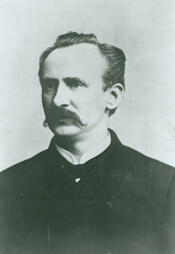
Here you will find contact information for Representative Richard William Guenther, including email address, phone number, and mailing address.
| Name | Richard William Guenther |
| Position | Representative |
| State | Wisconsin |
| District | 2 |
| Party | Republican |
| Status | Former Representative |
| Term Start | December 5, 1881 |
| Term End | March 3, 1889 |
| Terms Served | 4 |
| Born | November 30, 1845 |
| Gender | Male |
| Bioguide ID | G000516 |
About Representative Richard William Guenther
Richard William Guenther (November 30, 1845 – April 5, 1913) was a German American immigrant, pharmacist, and Republican politician from Oshkosh, Wisconsin, who served as a Representative from Wisconsin in the United States Congress from 1881 to 1889. Over four consecutive terms, from the 47th through the 50th Congresses, he represented central and northeastern Wisconsin and contributed to the legislative process as a member of the Republican Party. Before his congressional service, he was the 8th State Treasurer of Wisconsin, and later he held several senior diplomatic posts as an American consul general in Mexico City, Frankfurt, and Cape Town.
Guenther was born on November 30, 1845, in Potsdam, then in the Province of Brandenburg in the Kingdom of Prussia (now Germany). He was the youngest of eleven children born to Theodore and Augusta (née Lietze) Guenther; his father was a musician in Potsdam, and both parents remained in Germany for their entire lives. Only one of his siblings, his elder brother August, emigrated to the United States, settling in St. Louis, Missouri, where he died in 1912. Richard Guenther was raised and educated in the schools of Potsdam and then attended the Royal Pharmacy, where he studied chemistry and pharmacy. While at the Royal Pharmacy, he intended to enter the Prussian Army, but he was badly burned in a laboratory explosion shortly before his final examinations. Declared unfit for military service as a result of his injuries, he abandoned his plans for an army career and decided instead to emigrate to the United States.
Guenther arrived in the United States in January 1867 and initially settled in New York City. There he entered into a brief partnership with fellow pharmacist Robert Wood Johnson in a plaster business that ultimately grew into the conglomerate Johnson & Johnson. Guenther remained in the partnership only a few months before deciding to continue westward. In the fall of 1867 he moved to Wisconsin, first settling in Fond du Lac and soon afterward relocating to Oshkosh, which became his permanent home. In Oshkosh he established a drug store that quickly became one of the city’s most prominent businesses. He became active in the local German American community, joining the Oshkosh Turnverein (Turners), and his prominence among German immigrants in the region steadily increased. Guenther obtained American citizenship in December 1873. The following year he entered public life, winning election to the Oshkosh school commission in 1874 and securing reelection in 1875, 1876, and 1877. Through his growing role in local affairs, he became increasingly active in the Republican Party of Wisconsin.
By the mid-1870s Guenther was recognized statewide as a leading German American Republican. He served as president of the Oshkosh Turnverein and helped establish Oshkosh as the headquarters of the state Turnverein organization. In 1875 he was first mentioned as a potential candidate for state treasurer, as both major parties sought to include German American representation on their statewide tickets. Although he was widely expected to become president of the state Turnverein in 1876, Democratic members blocked his elevation at the state convention. His political prospects nevertheless continued to rise, and in 1877 he again emerged as a leading Republican candidate for state treasurer after Henry Baetz’s defeat in 1875. At the Republican state convention in September 1877, his name was placed in nomination by James H. Foster in a highly complimentary speech, and after a brief informal ballot Guenther was nominated by acclamation. He won the general election with about 45 percent of the vote, along with the rest of the Republican ticket, and was reelected two years later with nearly 54 percent of the vote. As the 8th State Treasurer of Wisconsin, his reputation extended beyond the state’s borders, and he was invited by neighboring Republican organizations to campaign among German American communities in other states.
During his third year as state treasurer, Guenther’s name began to appear in newspaper editorials as a potential candidate for the United States House of Representatives from Wisconsin’s 6th congressional district, which then encompassed much of northeastern Wisconsin, including Winnebago, Brown, Door, Kewaunee, Outagamie, Calumet, Green Lake, Waushara, and Waupaca Counties. In September 1880 he publicly indicated that he would accept the nomination if offered. Almost immediately, Democratic opponents questioned his eligibility, focusing on the timing of his naturalization. At the time, federal law required a two‑year interval between a declaration of intent to become a citizen and the granting of citizenship. An article in the Oshkosh Northwestern suggested that Guenther had declared his intention only in April 1873, less than a year before he became a citizen in December 1873. Guenther’s allies countered that the newspaper had erred and that he had in fact filed his declaration in April 1870, satisfying the legal requirement. At the Republican district convention later that month, he was nominated on the first ballot without serious opposition. In the general election he faced Democratic incumbent Gabriel Bouck, who was seeking a third term, and defeated him with approximately 52 percent of the vote.
Richard William Guenther entered Congress on March 4, 1881, and served four consecutive terms, contributing to the legislative work of the House of Representatives during a significant period in American history. He represented Wisconsin’s 6th congressional district for three terms, from March 4, 1881, to March 3, 1887. Following redistricting, he represented Wisconsin’s 2nd congressional district for one term, from March 4, 1887, to March 3, 1889. Throughout his service from the 47th through the 50th Congresses, he participated in the democratic process and represented the interests of his Wisconsin constituents as a Republican, reflecting both his business background and his strong ties to the state’s German American community. After eight years in the House, he did not continue in Congress after March 3, 1889.
Following his congressional career, Guenther embarked on a long period of diplomatic service. President Benjamin Harrison appointed him consul general of the United States in Mexico City in 1890, a post he held until 1893. In 1898 President William McKinley appointed him consul general in Frankfurt, Germany, where he served for an extended tenure until 1910, strengthening commercial and political ties between the United States and Germany during a period of rapid industrial and international growth. In 1910 President William Howard Taft appointed him consul general at Cape Town, in what was then the Union of South Africa. Although he held the Cape Town appointment until his death, Guenther died while back in Oshkosh, Wisconsin, on April 5, 1913. He was interred at Riverside Cemetery in Oshkosh. His residence in Oshkosh, the Richard Guenther House, built in 1888, was later listed on the National Register of Historic Places.
In his personal life, Guenther married Emilie Schloerb in 1870. The couple had four children, though two died in childhood; he was survived by his wife, his son Richard Jr., and his daughter Alice. Guenther was a member of the Congregational church and participated in several fraternal organizations, including the Knights of Honor and the Independent Order of Odd Fellows. His life traced a path from Prussian pharmacy student and would‑be soldier to American businessman, local official, state treasurer, four‑term member of Congress, and senior diplomatic representative of the United States on three continents.