Senator Richard Charles Hunter
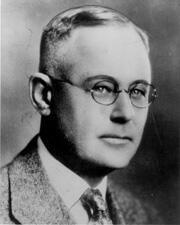
Here you will find contact information for Senator Richard Charles Hunter, including email address, phone number, and mailing address.
| Name | Richard Charles Hunter |
| Position | Senator |
| State | Nebraska |
| Party | Democratic |
| Status | Former Representative |
| Term Start | January 1, 1934 |
| Term End | January 3, 1935 |
| Terms Served | 1 |
| Born | December 3, 1884 |
| Gender | Male |
| Bioguide ID | H000987 |
About Senator Richard Charles Hunter
Richard Charles Hunter (December 3, 1884 – January 23, 1941) was an American attorney and Democratic politician from Nebraska who served as a United States Senator from Nebraska from 1933 to 1935 and, more specifically, from November 7, 1934, to January 3, 1935, following a special election. He was most prominent for this brief service in the United States Senate and for his later tenure as Nebraska’s state attorney general from 1937 to 1939. Over the course of his career he was active in state and local government, as well as in the broader legislative process during a significant period in American history.
Hunter was born in West Point, Cuming County, Nebraska, on December 3, 1884, the son of Jabez Richard Hunter and Sarah Frances (Olmstead) Hunter. In 1885 his family moved to Omaha, Nebraska, where he was raised. He attended the Omaha public schools and graduated from Omaha High School in 1904. On April 22, 1908, he married Viletta G. Taylor (1887–1937); the couple had no children. His early life in Omaha and his subsequent education prepared him for a professional career in law and public service in the state.
Hunter pursued higher education at the University of Nebraska, from which he received a Bachelor of Arts degree in 1909. He then undertook legal studies at Harvard Law School before transferring to Columbia Law School, where he completed his LL.B. degree in 1911. While at Columbia he was active in academic and extracurricular life, serving on the university’s debate team and joining the Delta Sigma Rho and Sigma Alpha Epsilon fraternities. This combination of legal training and debating experience helped establish his reputation as a capable advocate and contributed to his later effectiveness as a lawyer and legislator.
After his admission to the bar, Hunter began practicing law in Lincoln, Nebraska. In 1912 he returned to Omaha, where he continued in private legal practice. His legal work soon intersected with public service. He was elected to the Nebraska House of Representatives and served there, and he also held judicial office as judge of Omaha’s Municipal Court from 1915 to 1917. During the 1920s he sought higher statewide office, running unsuccessfully for Nebraska attorney general in 1920 and for state railway commissioner in 1928. These campaigns, though unsuccessful, kept him in the public eye and solidified his standing within the Democratic Party in a state that was often dominated by Republicans.
Hunter’s most notable federal service came with his election to the United States Senate. A member of the Democratic Party, he was elected in 1934 in a special election to fill the unexpired term of Senator Robert B. Howell, who had died in office. Hunter’s service in Congress occurred during a significant period in American history, as the nation grappled with the Great Depression and the early years of the New Deal. He was elected specifically to serve out the final two months of Howell’s term and was not a candidate for the regular election. As a result, his tenure in the Senate extended from November 7, 1934, to January 3, 1935, encompassing one term in office in the technical sense and placing him among those senators whose service, though brief, coincided with major national legislative initiatives. During this period he participated in the democratic process and represented the interests of Nebraska constituents in the upper chamber of Congress.
After leaving the Senate, Hunter returned to state politics. In 1936 he was the successful Democratic nominee for Nebraska attorney general. He served in that office from 1937 to 1939, during which time he was responsible for representing the state in legal matters and overseeing the enforcement of state law. His tenure as attorney general further cemented his reputation as a leading Democratic legal figure in Nebraska. Notably, he remains, to date, the last Democrat to have served as Nebraska’s attorney general, underscoring both his individual prominence and the long-term political trends in the state.
In his later years, Hunter continued to be recognized for his contributions as an attorney and public official. His wife, Viletta G. Taylor Hunter, died in 1937, and he did not remarry. Richard Charles Hunter died in Tucson, Arizona, on January 23, 1941. His body was returned to Nebraska, and he was buried at West Lawn Memorial Park in Omaha. His career, spanning local judicial service, state legislative work, a brief but historically situated term in the United States Senate, and a consequential tenure as Nebraska attorney general, left a distinct imprint on the political and legal history of Nebraska during the first half of the twentieth century.