Senator Richard Rolland Kenney
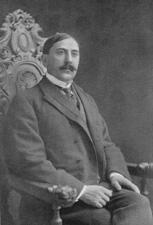
Here you will find contact information for Senator Richard Rolland Kenney, including email address, phone number, and mailing address.
| Name | Richard Rolland Kenney |
| Position | Senator |
| State | Delaware |
| Party | Democratic |
| Status | Former Representative |
| Term Start | March 15, 1897 |
| Term End | March 3, 1901 |
| Terms Served | 1 |
| Born | September 9, 1856 |
| Gender | Male |
| Bioguide ID | K000121 |
About Senator Richard Rolland Kenney
Richard Rolland Kenney (September 9, 1856 – August 14, 1931) was an American lawyer and Democratic politician from Dover, in Kent County, Delaware, who represented Delaware in the United States Senate from 1897 to 1901. Over the course of a varied public career, he held a series of legal, military, and administrative posts in Delaware state government before and after his single term in Congress.
Kenney was born in Laurel, Sussex County, Delaware, on September 9, 1856. He was educated in the public schools and at Laurel Academy, reflecting the typical course of schooling for a young man of his era in rural Delaware. Seeking higher education, he attended Hobart College in Geneva, New York, from which he graduated in 1878. His move from Delaware to New York for college placed him within a broader intellectual and professional network that would support his later legal and political pursuits.
After completing his college education, Kenney studied law and prepared for admission to the bar. He was admitted to the Delaware bar in 1881 and established a legal practice in Dover, the state capital, where he would reside for the remainder of his life. Even before formal admission to the bar, he had begun to build a record of public service: from 1879 to 1881 he served as State Librarian of Delaware, an administrative position that placed him in close contact with the documentary and legal resources of state government. At the same time, he embarked on a parallel military career in the Delaware National Guard, serving as a captain from 1880 until 1889. His responsibilities in the Guard expanded when he was appointed Adjutant General of Delaware, a post he held from 1887 to 1891, overseeing the organization and administration of the state’s militia forces.
Kenney’s growing prominence in state affairs led to increasing involvement in partisan politics. A committed member of the Democratic Party, he became a member of the Democratic National Committee in 1896, aligning himself with the national party leadership during a period of intense political and economic debate in the United States. His party service and his established reputation as a lawyer and state official positioned him as a leading Democratic figure in Delaware at a time when the state’s politics were deeply affected by the protracted struggle over U.S. Senate representation associated with industrialist J. Edward Addicks.
On January 19, 1897, the Delaware General Assembly elected Kenney to the United States Senate. He was chosen to fill the vacancy in the term that had commenced on March 4, 1895, a vacancy caused by the ongoing Addicks controversy that had prevented the timely election of a senator. Under the system then in effect, the state legislature selected U.S. Senators, who took office on March 4 for six-year terms. Kenney’s service in the Senate thus began in the midst of a contentious political environment both within Delaware and nationally. A member of the Democratic Party, he served with the Democratic minority in the 54th, 55th, and 56th Congresses during the administration of President William McKinley. His term extended from January 19, 1897, until March 4, 1901. During this single term in office, he contributed to the legislative process and represented the interests of his Delaware constituents at a time marked by issues such as monetary policy, industrial expansion, and the Spanish–American War. The Democrats in Delaware were unable to secure his reelection in 1901, and, reflecting the continuing political deadlock in the state, the Senate seat again became vacant after his term expired.
Following the conclusion of his Senate service, Kenney returned to Dover and resumed the practice of law. He remained active in public affairs and continued to hold a series of legal and administrative posts in Delaware government. He served as a member and secretary of the State public lands commission from 1913 until 1929, participating in the oversight and management of Delaware’s public lands over more than a decade. During World War I, he contributed to the national war effort by serving in the Judge Advocate General’s Department, drawing on his legal expertise in the military justice system. In 1921 he was elected counsel to the Delaware House of Representatives, providing legal advice to the state’s lower legislative chamber. That same year he was elected prosecuting attorney by the levy court of Kent County and was appointed a member of the State board of supplies, further extending his influence in the legal and administrative machinery of Delaware.
Kenney spent his later years in Dover, where he continued to be identified with the legal profession and Democratic politics until his death. He died in Dover on August 14, 1931. Richard Rolland Kenney was buried in Christ Episcopal Church Cemetery in Dover, reflecting his long-standing connection to the community he had served in various capacities throughout his life.