Senator Richard Henry Lee
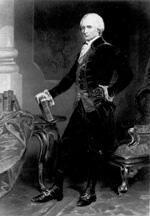
Here you will find contact information for Senator Richard Henry Lee, including email address, phone number, and mailing address.
| Name | Richard Henry Lee |
| Position | Senator |
| State | Virginia |
| Party | Anti-Administration |
| Status | Former Representative |
| Term Start | March 4, 1789 |
| Term End | March 3, 1793 |
| Terms Served | 1 |
| Born | January 20, 1732 |
| Gender | Male |
| Bioguide ID | L000201 |
About Senator Richard Henry Lee
Richard Henry Lee (January 20, 1732 – June 19, 1794) was an American statesman and Founding Father from Virginia, best known for introducing the June 1776 Lee Resolution in the Second Continental Congress, the motion calling for the colonies’ independence from Great Britain that led directly to the drafting and adoption of the United States Declaration of Independence, which he later signed. A prominent member of the influential Lee family of Virginia, he was part of a dynasty that played a central role in colonial and early national politics. Born into the Tidewater gentry, Lee grew up in an environment steeped in public service, landholding, and transatlantic commerce, which shaped his early understanding of British imperial policy and colonial rights.
Lee received the education typical of a wealthy Virginia planter’s son, including private tutoring in classical subjects and law. As a young man he was sent to England for further schooling, where he became familiar with British political thought and parliamentary practice. Returning to Virginia, he managed family estates and entered local public life. His early experiences as a planter and local officeholder, combined with his exposure to British political institutions, helped form his emerging views on liberty, representation, and the limits of imperial authority over the colonies.
By the 1760s and early 1770s, Lee had become a leading critic of British policy in Virginia. He was active in the House of Burgesses and emerged as an early advocate of intercolonial cooperation in response to measures such as the Stamp Act and the Townshend Acts. In 1774 he proposed, and became a signatory to, the Continental Association, the nonimportation and nonconsumption agreement adopted by the First Continental Congress to pressure Great Britain to redress colonial grievances. His work on the Association marked him as a principal architect of organized colonial resistance and helped elevate him to a position of national prominence among American patriots.
During the Revolutionary era, Lee’s most enduring contribution came in the Second Continental Congress. On June 7, 1776, he introduced the resolution that declared, “That these united colonies are, and of right ought to be, free and independent States, that they are absolved from all allegiance to the British crown, and that all political connection between them and the state of Great Britain is, and ought to be, totally dissolved.” Although he had returned to Virginia by the time Congress voted on and adopted the Declaration of Independence on July 4, 1776, he later signed the document upon his return to Philadelphia, thereby formally associating his name with the birth of American independence. In addition to his role in independence, Lee signed the Articles of Confederation, helping to establish the first constitutional framework for the new nation.
Lee’s leadership extended beyond the struggle for independence into the institutional development of the United States under the Continental Congress. He served a one-year term as president of the Continental Congress, presiding over that body during a critical phase of the Revolutionary War and the early confederation period. In this capacity he helped guide deliberations on military affairs, diplomacy, and finance, and he worked to maintain unity among the states under the fragile confederal system. His presidency and continued service in Congress reflected the confidence his contemporaries placed in his judgment and republican principles.
With the adoption of the federal Constitution and the establishment of the new government in 1789, Richard Henry Lee continued his national service as a United States Senator from Virginia. He served in the United States Senate in the First and Second Congresses from 1789 to 1792, representing Virginia during the formative years of the federal government. A member of the Anti-Administration Party, he aligned with those who were skeptical of centralized federal power and critical of key elements of the program advanced by Alexander Hamilton and the Washington administration. During his one term in office, Lee contributed to the legislative process and participated in debates over the scope of federal authority, fiscal policy, and the protection of individual liberties, representing the interests and concerns of his Virginia constituents.
Within the Senate, Lee attained a position of particular distinction when, in 1792, he became the second president pro tempore of the upper house, presiding over the Senate in the absence of the vice president. His selection to this role underscored his seniority, experience, and the respect he commanded among his colleagues. However, later that same year he was obliged to resign his Senate seat due to failing health, bringing to a close his formal participation in national politics. His service in Congress, from the Continental Congress through the early federal Senate, occurred during a significant period in American history and placed him at the center of the nation’s transition from colony to republic.
After his resignation from the Senate, Lee retired from public life in Virginia, where he continued to be regarded as a venerable figure of the Revolutionary generation. He spent his remaining years in relative seclusion, his health increasingly impaired but his reputation secure as a principal advocate of independence and a key architect of early American governance. Richard Henry Lee died on June 19, 1794, in Virginia. His career, encompassing leadership in the Continental Congress, authorship of the Lee Resolution, signatures on the Continental Association, the Articles of Confederation, and the Declaration of Independence, and service as a United States Senator and president pro tempore, established him as one of the central figures in the founding and early legislative history of the United States.