Representative Richard W. Mallary
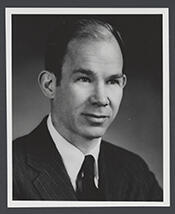
Here you will find contact information for Representative Richard W. Mallary, including email address, phone number, and mailing address.
| Name | Richard W. Mallary |
| Position | Representative |
| State | Vermont |
| District | At-Large |
| Party | Republican |
| Status | Former Representative |
| Term Start | January 21, 1971 |
| Term End | January 3, 1975 |
| Terms Served | 2 |
| Born | February 21, 1929 |
| Gender | Male |
| Bioguide ID | M000078 |
About Representative Richard W. Mallary
Richard Walker Mallary (February 21, 1929 – September 27, 2011) was an American businessman and Republican politician who served as a Representative from Vermont in the United States Congress from 1971 to 1975. Over two terms in the House of Representatives, he contributed to the legislative process during a significant period in American history, and in 1974 he was the Republican nominee for the United States Senate, narrowly losing to Patrick Leahy. He later held a series of senior positions in Vermont state government and the private sector, and in his final years became an advocate for “death with dignity” legislation before dying by suicide while suffering from terminal prostate cancer.
Mallary was born in Springfield, Massachusetts, on February 21, 1929, the son of attorney R. DeWitt Mallary and Gertrude (Robinson) Mallary. He spent much of his youth in Vermont and was educated at Bradford Academy in Bradford, Vermont. He went on to Dartmouth College, where he received an A.B. degree in 1949. Public service and politics were part of his family background; his mother served in both the Vermont House of Representatives and the Vermont Senate, providing an early model for his own later career in elective office.
After college, Mallary settled in Fairlee, Vermont, where from 1950 to 1970 he operated a dairy farm. His involvement in local affairs began soon thereafter. He was elected chairman of the Fairlee Board of Selectmen, serving from 1951 to 1953, and quickly gained a reputation as a capable local leader. At the same time, he began to build a broader public profile through service in educational and policy roles, including as trustee and treasurer of the Vermont State Colleges from 1962 to 1965. His early work in agriculture, local government, and higher education finance helped shape his later legislative interests in rural development, budgeting, and administrative reform.
Mallary entered statewide politics in 1960, successfully running for the Vermont House of Representatives. He served in the House from 1961 to 1969, rising to chairman of the Appropriations Committee and then to Speaker of the House from 1965 to 1969. During this period he was recognized as one of the “Young Turks,” a group of legislators who crossed party lines to advocate for progressive policies and the modernization of Vermont’s state government. He also served as chairman of the Vermont Legislative Council from 1965 to 1967 and was a delegate to the 1968 Republican National Convention that nominated Richard M. Nixon for President. In 1969 he was vice chairman of the Vermont Governor’s Committee on Administrative Coordination, reflecting his growing role in efforts to streamline and modernize state administration.
In 1969 Mallary moved to the Vermont Senate, where he served until 1971. That year he joined the cabinet of Governor Deane C. Davis as Vermont’s Secretary of Administration, a senior post responsible for overseeing the state’s budget and administrative operations. His combination of legislative and executive experience positioned him for federal office. When Representative Robert T. Stafford resigned from the U.S. House to accept appointment to the United States Senate, Mallary ran in the special election to fill the vacancy. Elected as a Republican to the Ninety-second Congress, he won the January 7, 1972, special election with 55.8 percent of the vote, defeating Democrat J. William O’Brien, Liberty Union candidate Doris Lake, and independent Anthony N. Doria. Later that year he was re-elected to a full term in the Ninety-third Congress, winning 65.0 percent of the vote against Democrat William H. Meyer. His congressional service extended from January 7, 1972, to January 3, 1975, during which he represented Vermont’s at-large district, participated in the democratic process, and worked to represent the interests of his constituents at a time marked by the end of the Vietnam War and the Watergate crisis.
In 1974 Mallary chose not to seek re-election to the House and instead became the Republican nominee for the United States Senate from Vermont. In a closely contested race for the Class 3 Senate seat, he lost narrowly to Democrat Patrick Leahy by a margin of 49.5 percent to 46.4 percent. After leaving Congress in January 1975, he transitioned to the private sector, serving as vice president of the Farm Credit Bank in Springfield, Massachusetts, from 1975 to 1977. He returned to Vermont state government as Secretary of Administration from 1977 to 1980 in the first administration of Governor Richard A. Snelling, again overseeing key aspects of the state’s fiscal and administrative operations.
Mallary’s later career combined high-level roles in the energy and utility sectors with continued public service. He was vice president of the Central Vermont Public Service Corporation from 1980 to 1983, then chairman of the board of a heating company from 1984 to 1985, and president of the Vermont Electric Power Company from 1986 to 1994, where he played a central role in managing and developing the state’s electric transmission infrastructure. He later resided in Brookfield, Vermont, and returned once more to elective office as a member of the Vermont House of Representatives from 1999 to 2001. During this final legislative term he cast a notable vote in favor of Vermont’s Civil Unions law in 2000, supporting legal recognition for same-sex couples despite representing a conservative district that largely opposed the measure. In the fall of 2000 he ran for re-election unsuccessfully as an independent, and he was again unsuccessful in a 2002 campaign for the House. In 2003 he served as Vermont’s tax commissioner, an appointed sub-cabinet position in the administration of Republican Governor Jim Douglas.
In retirement, Mallary remained active in local civic life in Brookfield, serving as chairman of the town planning commission and as town meeting moderator. Confronted with incurable prostate cancer in his later years, he became an advocate for “death with dignity” legislation, reflecting his long-standing interest in individual rights and responsible public policy. On September 27, 2011, he died in Brookfield; in 2012 his family disclosed that he had taken his own life as a result of his terminal illness. Mallary was married first to Mary Harper Coxe, with whom he had four children—Richard, Anne, Elizabeth, and Sarah—before their divorce in 1974. In 1979 he married Jeannie (Loud) Brownell, gaining three stepchildren—Jonathan, Lydia, and Hayden. His family’s tradition of public service continued through his nephew Peter Mallary, who served in the Vermont House of Representatives and as chairman of the Vermont Democratic Party.