Representative Dick Nichols
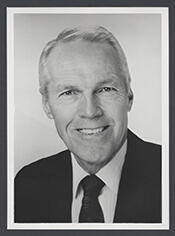
Here you will find contact information for Representative Dick Nichols, including email address, phone number, and mailing address.
| Name | Dick Nichols |
| Position | Representative |
| State | Kansas |
| District | 5 |
| Party | Republican |
| Status | Former Representative |
| Term Start | January 3, 1991 |
| Term End | January 3, 1993 |
| Terms Served | 1 |
| Born | April 29, 1926 |
| Gender | Male |
| Bioguide ID | N000094 |
About Representative Dick Nichols
Richard “Dick” Nichols was born on April 29, 1926, in Fort Scott, Kansas. Raised in the American Midwest, he came of age during the Great Depression and the Second World War, experiences that shaped his outlook on public service and economic stability. His early years in Kansas grounded him in the concerns of rural and small‑town communities, which would later inform his approach to both banking and politics. From an early point in his life, Nichols’s trajectory was closely tied to the economic and civic life of his home state.
Nichols pursued higher education after his wartime generation’s formative years, preparing himself for a career that would bridge finance and public affairs. While specific details of his formal schooling are less prominently documented than his professional achievements, his subsequent rise in the banking industry indicates a solid grounding in business and financial principles. This educational and experiential foundation enabled him to navigate complex economic issues and later to translate those skills into legislative work in Washington, D.C.
Before entering national politics, Nichols established himself as an American banker, building a reputation in the financial sector that would become central to his public profile. Working within Kansas’s banking community, he gained firsthand experience with credit markets, agricultural finance, and the needs of local businesses and consumers. This background gave him practical insight into how federal monetary and regulatory policies affected everyday life in his state. His professional standing as a banker helped him cultivate relationships and credibility among constituents who valued fiscal prudence and economic growth.
Nichols’s transition from banking to elective office culminated in his service as a Representative from Kansas in the United States Congress from January 3, 1991, to January 3, 1993. A member of the Republican Party, he was elected to the U.S. House of Representatives during a period marked by the end of the Cold War, the Gulf War, and significant debates over domestic fiscal policy. Serving one term in office, he contributed to the legislative process in the 102nd Congress, participating in committee work, floor debates, and votes that reflected both national priorities and the specific concerns of his Kansas district. As a member of the House of Representatives, Richard “Dick” Nichols participated in the democratic process and represented the interests of his constituents, bringing his banking expertise to bear on questions of economic policy, regulation, and federal spending.
Nichols’s congressional service occurred during a significant period in American history, as the United States adjusted to a post–Cold War international order and grappled with budgetary and economic challenges at home. Within this context, he aligned with the broader Republican emphasis on limited government, fiscal responsibility, and support for private enterprise. His single term did not diminish the importance of his role as a voice for Kansas in national deliberations, and his work in Congress formed the capstone of a public career rooted in both financial stewardship and civic engagement.
After leaving Congress in January 1993, Nichols returned to private life, drawing on his long experience in banking and public service. While he no longer held elective office, his career remained emblematic of the close relationship between local economic leadership and national policymaking. Richard “Dick” Nichols died on March 7, 2019, in McPherson, Kansas. His life spanned more than nine decades of American history, from the interwar years through the dawn of the twenty‑first century, and his legacy reflects the contributions of a Kansas banker and Republican legislator who brought the perspectives of his state and his profession to the halls of Congress.