Representative Richard Henry Norton
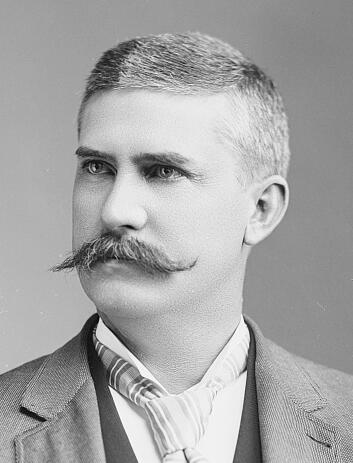
Here you will find contact information for Representative Richard Henry Norton, including email address, phone number, and mailing address.
| Name | Richard Henry Norton |
| Position | Representative |
| State | Missouri |
| District | 7 |
| Party | Democratic |
| Status | Former Representative |
| Term Start | December 2, 1889 |
| Term End | March 3, 1893 |
| Terms Served | 2 |
| Born | November 6, 1849 |
| Gender | Male |
| Bioguide ID | N000157 |
About Representative Richard Henry Norton
Richard Henry Norton (November 6, 1849 – March 15, 1918) was an American lawyer and Democratic politician who represented Missouri in the United States House of Representatives from 1889 to 1893. Born in Troy, Lincoln County, Missouri, he was the son of Elias Norton. He attended the common schools in his native town and pursued further studies at Westminster College in Fulton, Missouri, and at Saint Louis University, where he took a classical course. Norton then enrolled in the law school of Washington University in St. Louis, from which he graduated in 1870, completing his formal legal education at the age of twenty.
In 1870 Norton was admitted to the bar and commenced the practice of law in Troy, Missouri. Establishing himself as an attorney in his home community, he built a career in private practice that would remain the foundation of his professional life before and after his service in Congress. During these early years he also developed interests in agriculture, which he would later pursue more actively alongside his legal work. On the personal front, Norton married Annie Ward in 1874; the couple had one child together, and Troy remained their principal home for much of his career.
Norton’s path to national office was marked by persistence within Missouri’s Democratic Party. Before his eventual election to Congress, he ran in five Democratic primaries for a congressional nomination. In the Democratic primary preceding the 1888 election, he faced Judge Elijah Robinson in a closely contested race that ended in a tie. The nomination was ultimately decided not by additional balloting but by the flip of a penny, which awarded Norton the Democratic candidacy. This unusual episode attracted attention within Missouri politics and is noted for having helped persuade future Speaker of the House Champ Clark to support the adoption of more formalized primary election procedures.
A Democrat, Norton was elected to represent Missouri’s 7th congressional district in the Fifty-first and Fifty-second Congresses, serving from March 4, 1889, to March 3, 1893. His tenure in the House of Representatives, which constituted his first and only position in public service, coincided with a significant period in American political and economic history, including debates over tariffs, monetary policy, and internal improvements. As a member of the House, he participated in the legislative process and represented the interests of his Missouri constituents. He served on the Committee on Levees and Improvements of the Mississippi River, working alongside fellow Missouri Representative Frederick G. Niedringhaus on issues related to river navigation, flood control, and infrastructure along the Mississippi. Although his work was steady, a later assessment in Ainslee’s Magazine in 1900 characterized his congressional career as largely overlooked and described him as “neither a favorite nor an object of dislike,” suggesting a low-profile but serviceable record.
Norton’s service in Congress ended after two terms. He was an unsuccessful candidate for reelection in 1892 to the Fifty-third Congress, bringing his formal congressional career to a close on March 3, 1893. Following his departure from Washington, he returned to Missouri and resumed the practice of law. At the same time, he continued and expanded his engagement in agricultural pursuits, reflecting both his personal interests and the economic character of his home region. He remained a figure of local prominence in Troy, drawing on his experience as a former member of Congress while devoting himself primarily to his professional and business affairs rather than seeking further elective office.
In his later years, Norton divided his time between his legal and agricultural activities and life with his family. He died on March 15, 1918, at Barnes-Jewish Hospital in St. Louis, Missouri, at the age of sixty-eight. His body was returned to his hometown, and he was interred in City Cemetery in Troy, Missouri, closing a life that had begun and largely unfolded in the same community he went on to represent in the national legislature.