Representative Richard W. Pombo
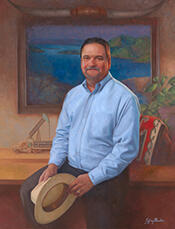
Here you will find contact information for Representative Richard W. Pombo, including email address, phone number, and mailing address.
| Name | Richard W. Pombo |
| Position | Representative |
| State | California |
| District | 11 |
| Party | Republican |
| Status | Former Representative |
| Term Start | January 5, 1993 |
| Term End | January 3, 2007 |
| Terms Served | 7 |
| Born | January 8, 1961 |
| Gender | Male |
| Bioguide ID | P000419 |
About Representative Richard W. Pombo
Richard William Pombo, GOIH (born January 8, 1961) is an American lobbyist for mining and water‑management companies and a former Republican member of the United States House of Representatives, having represented California’s 11th congressional district from 1993 to 2007. Over seven terms in office, he participated in the legislative process during a significant period in American history, representing the interests of his constituents and playing a prominent role in debates over natural resources, property rights, and environmental regulation.
Pombo was born in Tracy, California, a largely agricultural community located approximately 18 miles south of Stockton. He is a descendant of Portuguese immigrants and was raised in a Roman Catholic family. He attended California State Polytechnic University, Pomona (Cal Poly Pomona) for three years before leaving college to work full time in his family’s cattle and dairy business. His early professional life was closely tied to agriculture and ranching, and he maintained a strong connection to his roots; even after his election to Congress, he regularly returned each week to his 500‑acre ranch near Tracy. Pombo married Annette Cole, and the couple has three children.
Pombo’s entry into public service began at the local level. From 1990 to 1992, he served on the Tracy City Council, where he gained experience in municipal governance and local land‑use issues. His involvement with property rights advocacy emerged from a dispute over the Southern Pacific Railroad’s abandonment of its Altamont Pass route through Tracy. Owning land adjacent to the abandoned railroad line, Pombo argued that the easement should revert to adjacent property owners rather than to a local park district, contending that the easement had been granted solely for railroad purposes and should terminate upon abandonment. This controversy helped spur his broader association with the private property rights movement and contributed to congressional consideration of the Rails to Trails Act, which addressed the conversion of abandoned rail corridors into recreational trails.
In 1992, following the 1990 census and a subsequent redistricting that added seven new House seats in California, Pombo sought an open seat in the newly created 11th congressional district. He won the Republican primary by defeating several candidates, including his strongest opponent, moderate Republican Sandra Smoley, a Sacramento County Supervisor. In the general election that November, despite the district having a Democratic registration majority and being carried at the presidential level by Bill Clinton, Pombo defeated Democrat Patti Garamendi, the wife of future California Congressman John Garamendi. He was reelected from this district in 1994, 1996, 1998, and 2000, solidifying his position as a Republican representative from California’s Central Valley.
For his first five terms in Congress, Pombo represented a district that encompassed almost all of San Joaquin County and a substantial portion of Sacramento County. After the 2000 round of redistricting, his district was significantly altered: he lost his share of Sacramento County to the 3rd district and most of Stockton to the 18th district. The 11th district was pushed westward into the San Francisco Bay Area, taking in more Republican‑leaning areas of Alameda and Contra Costa counties that had previously been part of the East Bay–based 10th district. Pombo successfully adapted to the new political geography and was reelected in 2002 and 2004. Throughout his tenure, he maintained a consistently conservative voting record. He was an early supporter of the 1994 Republican Revolution and was one of the signatories of the Contract with America. He joined the conservative Republican Study Committee and was given the nickname “The Marlboro Man” by President George W. Bush, reflecting his ranching background and Western political persona.
Pombo’s legislative focus in Congress centered on natural resources, energy, and property rights. From 2003 to 2007, he served on the House Agriculture Committee and was Chairman of the House Resources Committee, which has jurisdiction over public lands, energy resources, Indian Country and Indian gaming, and other natural resource issues. As chairman, he became a leading advocate for reform of the Endangered Species Act and for policies favoring expanded resource development on federal lands. He was also a co‑chair of the House Energy Action Team (HEAT), a Republican working group whose stated goal was to identify and promote alternative energy solutions and broader energy policy initiatives. In 1996, he co‑authored a book with Joseph Farah of WorldNetDaily titled “This Land Is Our Land: How to End the War on Private Property,” which articulated his views on limiting government encroachment on private land. He was associated with the San Joaquin County Citizen’s Land Alliance, described as a group co‑founded by Pombo in July 1997, bringing together farmers and landowners to advocate for private property rights and to oppose what they viewed as excessive government regulation; the organization was later listed as terminated after its registration expired.
Pombo’s positions often placed him at the center of national policy debates. He supported the Iraq War, and by August 2006 anti‑war activists criticized him, citing an estimate that taxpayers in California’s 11th congressional district had paid $974 million for the conflict by that time. Civil liberties and surveillance policy also became an issue in his 2006 reelection campaign. In a 2006 debate, Pombo stated that intelligence agents should obtain surveillance warrants before monitoring phone calls, but less than five months later he voted in favor of legislation allowing certain forms of warrantless wiretapping. He later told the Tracy Press that his vote was consistent with his earlier statement, arguing that the bill permitted only delayed warrants and required notification of the congressional intelligence committees and the Foreign Intelligence Surveillance Court, thereby maintaining separation of powers. Advocates at the Center for Democracy and Technology disputed his characterization, contending that the bill allowed broad warrantless collection of data so long as no specific individual was targeted, and that it redefined “electronic surveillance” to exclude such activity. His 2006 Democratic opponent, Jerry McNerney, opposed the bill and used the issue to draw a contrast with Pombo.
Pombo’s prominence on resource and land‑use issues also drew criticism from government watchdogs and environmental advocates. In 2005, he proposed legislation that would have allowed mining companies to purchase federal lands on which they had staked claims, even in the absence of evidence of valuable minerals, prompting a New York Times editorial to describe the measure as having “nothing to do with mining, and everything to do with stealing land that is owned by the American people,” and to label Pombo “an outspoken product of the extreme property rights movement.” In 2006, Citizens for Responsibility and Ethics in Washington, a nonpartisan watchdog group founded by liberal and Democratic Party activists, named Pombo one of the 13 “most corrupt” members of Congress in a report alleging ethical lapses. Pombo denied the allegations and dismissed the organization as “a liberal‑activist organization masquerading as a government watchdog group.”
In addition to his committee work, Pombo was active in several congressional caucuses, reflecting both his regional and ethnic heritage. He was an early member of the Congressional Hispanic Conference, a Republican caucus that promotes the interests of Hispanic and Portuguese Americans. He was also a member and former chairman of the Congressional Western Caucus, a group of Western‑state members concerned with issues such as Endangered Species Act reform, water rights, and private property rights. As of 2007, he served as co‑chair of the Portuguese Caucus, a coalition of members of Congress focused on promoting positive Portuguese‑American relations. In that role, he hosted prominent visitors from Portugal to the United States. In recognition of his efforts to strengthen ties between Portugal and the United States and to highlight Portuguese‑American heritage, the Portuguese government awarded him the Grand Order of Infante D. Henrique (GOIH), one of Portugal’s highest civilian honors.
Richard W. Pombo’s congressional service came to an end following the 2006 election. On November 7, 2006, he lost his bid for an eighth term to Democratic challenger Jerry McNerney, who capitalized on concerns about the Iraq War, environmental policy, and ethics issues. After leaving Congress in January 2007, Pombo transitioned to work as a lobbyist, focusing on mining and water‑management companies and drawing on his experience with natural resources and Western land‑use policy. On January 4, 2010, he announced his candidacy for Congress in California’s 19th congressional district, seeking to succeed retiring Republican Representative George Radanovich, even though he did not reside within the district’s boundaries. In the June 2010 Republican primary, Pombo finished third in a four‑way race, receiving 20.8 percent of the vote, and did not return to elective office.