Senator Richard S. Schweiker
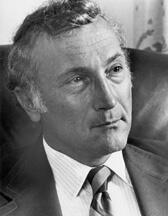
Here you will find contact information for Senator Richard S. Schweiker, including email address, phone number, and mailing address.
| Name | Richard S. Schweiker |
| Position | Senator |
| State | Pennsylvania |
| Party | Republican |
| Status | Former Representative |
| Term Start | January 3, 1961 |
| Term End | January 3, 1981 |
| Terms Served | 10 |
| Born | June 1, 1926 |
| Gender | Male |
| Bioguide ID | S000159 |
About Senator Richard S. Schweiker
Richard Schultz Schweiker (June 1, 1926 – July 31, 2015) was an American businessman and politician who served as the 14th United States secretary of health and human services under President Ronald Reagan from 1981 to 1983. A member of the Republican Party, he previously served as a U.S. Representative from 1961 to 1969 and a U.S. Senator from 1969 to 1981 from Pennsylvania. In 1976, Schweiker was Ronald Reagan’s announced running mate during Reagan’s unsuccessful presidential campaign, an unusual move made before the Republican National Convention convened. Over six terms in Congress, he contributed significantly to the legislative process during a period of major social, political, and economic change in the United States.
Schweiker was born in Norristown, Pennsylvania, on June 1, 1926, the son of Malcolm Alderfer Schweiker Sr. and the former Blanche R. Schultz. He was raised in a family active in the tiling business; his father and uncle worked in that trade for several decades. The family were Schwenckfelders, a small Protestant sect with roots in central Europe, and Schweiker himself was a member of the Schwenckfelder Church. He attended public schools in Worcester, Pennsylvania, and graduated as valedictorian from Norristown Area High School in 1944. During World War II, he served in the United States Navy aboard the aircraft carrier USS Tarawa (CV-40), and was discharged in 1946 with the rank of electronics technician second class.
Following his military service, Schweiker attended Slippery Rock State College for two years before transferring to Pennsylvania State University. He received a Bachelor of Arts degree in psychology from Penn State in 1950 and was a member of the Phi Kappa Sigma fraternity. After graduation, he joined his family’s firm, the American Olean Tile Company, beginning as an assistant in the personnel department and rising within a few years to become the company’s president. At the same time, he became active in local Republican politics in Montgomery County, Pennsylvania, serving as a precinct committeeman and founding the Montgomery County chapter of the Young Republicans, of which he was president from 1952 to 1954. He was selected as an alternate delegate to the Republican National Conventions in 1952 and 1956. On September 10, 1955, he married Claire Joan Coleman, a former host of the children’s television show “Romper Room” in Philadelphia (1954–1956); the couple had two sons and three daughters.
In 1960, Schweiker was elected to the U.S. House of Representatives from Pennsylvania’s 13th congressional district, a Montgomery County–based district that included his hometown of Norristown and several affluent suburban communities on the Philadelphia Main Line. Running as a moderate to liberal Republican, he defeated conservative incumbent John A. Lafore Jr. in the Republican primary and went on to defeat Democrat Warren Ballard, a Temple University law professor, by a margin of 62 percent to 38 percent in the general election. He was reelected to three additional terms, never receiving less than 59 percent of the vote. During his House service from 1961 to 1969, he served on the Armed Services Committee and the Government Operations Committee. He sponsored legislation, signed into law in 1965 and known as the Schweiker Act of 1965, that provided cash awards to United States Armed Forces personnel for cost‑cutting ideas, ultimately saving taxpayers more than $1 billion. He voted for the Civil Rights Acts of 1964 and 1968 and the Voting Rights Act of 1965, supported the creation of Medicare, backed increases in Social Security benefits, and favored federal rent subsidies. An advocate of ending conscription, he coauthored the book “How to End the Draft,” which became a blueprint for the transition to an all‑volunteer military. He considered a run for governor of Pennsylvania in 1966, but state Republican leaders persuaded him to defer in favor of Lieutenant Governor Raymond P. Shafer.
In 1968, Schweiker was elected to the United States Senate, defeating two‑term Democratic incumbent Joseph S. Clark Jr. by more than 280,000 votes. He was the only successful Republican statewide candidate in Pennsylvania that year, when Democratic presidential nominee Hubert Humphrey carried the state by over 170,000 votes. In the Senate, where he served from January 3, 1969, to January 3, 1981, Schweiker initially maintained a reputation as a progressive Republican. He opposed the Vietnam War and voted against President Richard Nixon’s nominations of Clement Haynsworth and G. Harrold Carswell to the U.S. Supreme Court, and he held an 89 percent rating from the liberal Americans for Democratic Action. At the same time, he supported school prayer and opposed broad gun‑control measures. He became a leading Republican voice on health issues, serving as ranking member on both the Labor and Human Resources Committee and the Labor, Health, and Human Services Appropriations Subcommittee. He was a pioneer in expanding federal support for diabetes research, authoring and sponsoring the National Diabetes Mellitus Research and Education Act, passed in 1974, which established the National Commission on Diabetes to develop a long‑term strategy against the disease. As ranking Republican on the Senate health subcommittee, he also worked on legislation to combat cancer, heart disease, sickle cell anemia, and lead paint poisoning, and he pushed for the creation of the National Commission on Diabetes Advisory Board and passage of the National Diabetes Act in 1972. His sustained efforts in this field led some colleagues and advocates to refer to him as the “Patron Saint of the Pancreas.”
Schweiker was reelected to the Senate in 1974, defeating Democratic Pittsburgh mayor Peter F. Flaherty in a year when many Republican incumbents were swept out of office in the aftermath of the Watergate scandal. He won 53 percent of the vote, the highest percentage received by any Pennsylvania senator since 1946 at that time, and became the first Republican senator ever endorsed by the Pennsylvania AFL–CIO, receiving 49 percent of the vote in heavily Democratic Philadelphia. From 1975 to 1976, he served on the Senate Select Committee to Study Governmental Operations with Respect to Intelligence Activities, commonly known as the Church Committee, which investigated illegal domestic activities by U.S. intelligence agencies. Appointed by Chairman Frank Church, Schweiker and Senator Gary Hart formed a two‑member subcommittee to examine the “performance or non‑performance” of intelligence agencies in the investigation of President John F. Kennedy’s assassination. Schweiker publicly criticized the Warren Commission’s findings, stating in 1975 that the Commission was “like a house of cards” and asserting that the CIA and FBI had misled investigators. The Church Committee’s final report found serious deficiencies in the original investigation and the conduct of the CIA and FBI, though it concluded that it had not uncovered evidence sufficient to establish a conspiracy to assassinate President Kennedy.
In the 1976 Republican presidential primaries, former California Governor Ronald Reagan mounted a strong challenge to incumbent President Gerald Ford. In an effort to attract moderate delegates on the eve of the Republican National Convention, Reagan took the unusual step of announcing that he would select Schweiker, whose Senate voting record was considered moderate to liberal, as his running mate if nominated. The announcement surprised Schweiker, who did not previously know Reagan well, and provoked a backlash among some conservatives, including Senator Jesse Helms of North Carolina, who attempted to draft Senator James L. Buckley as an alternative nominee. Ford ultimately secured the nomination on the first ballot and chose Senator Bob Dole as his vice-presidential running mate. Following this episode, Schweiker’s voting record shifted in a more conservative direction; by 1977 his rating from Americans for Democratic Action had dropped to 15 percent. In 1980, he announced that he would not seek reelection to the Senate. Reagan won the Republican presidential nomination that year and the general election, selecting George H. W. Bush rather than Schweiker as his vice-presidential running mate.
In January 1981, President Reagan appointed Schweiker as United States Secretary of Health and Human Services. He held the post until his resignation in February 1983. As secretary, he worked with Reagan and House Speaker Thomas P. “Tip” O’Neill Jr. on efforts to reform Social Security, place greater emphasis on preventive medicine, and restructure federal health and welfare spending. He supported reductions in Medicare and food stamp grants to the states and sought to tighten eligibility for welfare programs. Among his more controversial proposals was a plan to reduce Social Security benefits for individuals who retired before age 65, an idea that met strong bipartisan opposition in Congress and was not enacted. His tenure at the department reflected the broader Reagan administration agenda of restraining federal spending while attempting to preserve the long‑term solvency of major entitlement programs.
After leaving federal office, Schweiker entered the private sector as an industry leader. From 1983 to 1994, he served as president of the American Council of Life Insurance, later known as the American Council of Life Insurers, representing major life insurance companies on regulatory and policy matters. He lived for many years in McLean, Virginia, while maintaining close ties to Pennsylvania and the mid‑Atlantic region. In later life he resided with one of his daughters in Herndon, Virginia, and owned a home in Ocean City, New Jersey. Richard Schultz Schweiker died on July 31, 2015, of complications from an infection at AtlantiCare Regional Medical Center in Pomona, New Jersey.