Representative Richard H. Stallings
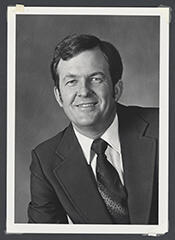
Here you will find contact information for Representative Richard H. Stallings, including email address, phone number, and mailing address.
| Name | Richard H. Stallings |
| Position | Representative |
| State | Idaho |
| District | 2 |
| Party | Democratic |
| Status | Former Representative |
| Term Start | January 3, 1985 |
| Term End | January 3, 1993 |
| Terms Served | 4 |
| Born | October 7, 1940 |
| Gender | Male |
| Bioguide ID | S000785 |
About Representative Richard H. Stallings
Richard Howard Stallings (October 7, 1940 – October 26, 2025) was an American politician and educator who served as a member of the United States House of Representatives for Idaho’s 2nd congressional district from 1985 to 1993. A member of the Democratic Party, he represented a predominantly Republican district for four consecutive terms and contributed to the legislative process during a significant period in late twentieth-century American political history.
Stallings was born in Ogden, Utah, on October 7, 1940, to Howard and Elizabeth (née Austin) Stallings. He was raised in Ogden alongside his younger sister, Marilyn. As a youth he was active in the Boy Scouts of America, earning the rank of Eagle Scout at age sixteen and receiving the Silver Award a year later. He graduated from Ben Lomond High School in Ogden in the class of 1958. A lifelong member of The Church of Jesus Christ of Latter-day Saints, he served as a missionary in New Zealand from 1960 to 1962, an experience that preceded and helped shape his later career in education and public service.
Following his missionary service, Stallings pursued higher education in the Intermountain West. He earned a Bachelor of Science degree in history and political science from Weber State College (now Weber State University) in Ogden. He then undertook graduate study in history, completing a Master of Science degree at Utah State University, where part of his master’s coursework was fulfilled at Colorado College. This academic training in history and political science provided the foundation for his subsequent work as a teacher and legislator.
Stallings began his professional career in academia. In 1969 he joined the faculty of what is now Brigham Young University–Idaho in Rexburg, Idaho, then known as Ricks College, where he taught history. He remained on the faculty from 1969 until his election to Congress in 1984, becoming well known in eastern Idaho as an educator and community figure. His move into electoral politics came through the Idaho Democratic Party, which sought to expand its presence in a state long dominated by Republicans.
Idaho Democrats first nominated Stallings in 1982 to challenge four-term Republican incumbent George V. Hansen for the U.S. House seat in Idaho’s 2nd congressional district. Although he was unsuccessful in that initial bid, losing in the general election, he remained a visible figure in state politics. In 1984, after Hansen was censured by the House of Representatives, Stallings again became the Democratic nominee and defeated Hansen in a closely contested race by fewer than 200 votes. He took office on January 3, 1985, beginning the first of four terms in the U.S. House of Representatives. Despite representing a heavily Republican district, Stallings was re-elected three times, serving until January 3, 1993. Identified as a conservative Democrat, he occasionally drew national attention within his party; at the 1988 Democratic National Convention, he unexpectedly received three votes for the presidential nomination from anti-abortion delegates. During his eight years in Congress, Stallings participated fully in the legislative process and represented the interests of his Idaho constituents during a period marked by the final years of the Cold War and the beginning of the post–Cold War era.
In 1992, rather than seek another term in the House, Stallings ran as the Democratic nominee for an open United States Senate seat from Idaho. He was defeated in the general election by Dirk Kempthorne, the popular two-term mayor of Boise. The following year, in 1993, President Bill Clinton appointed him United States Nuclear Waste Negotiator, a federal position charged with working with states and Native American tribes on issues related to the siting and management of nuclear waste facilities. Stallings served in that capacity until the office was eliminated in early 1995. He later attempted to return to the House of Representatives in 1998, seeking his old 2nd district seat. In that race he was defeated in the general election by Republican state house Speaker Mike Simpson of Blackfoot; the seat was open because three-term incumbent Mike Crapo had successfully run for an open U.S. Senate seat. On March 14, 2014, Stallings again filed to run as the Democratic candidate for his former House seat in Idaho’s 2nd congressional district. After winning an uncontested primary, he faced Simpson once more in the general election and was again defeated.
After leaving Congress, Stallings remained active in public and community affairs in Idaho. He served as executive director of Pocatello Neighborhood Housing Services, working on housing and community development issues in Pocatello. He later won election to the Pocatello City Council, on which he served from 2001 until his resignation on December 20, 2007. In addition to his municipal service, Stallings played a prominent role in state party politics. In 2005 he was elected chairman of the Idaho Democratic Party and was re-elected to that post in 2007. He resigned as state Democratic chair on December 20, 2007, the same day he left the Pocatello City Council, concluding a period of intensive involvement in party leadership.
Stallings’s personal life was closely intertwined with his educational and religious background. He met his first wife, Ranae Garner, while they were classmates at Weber State College. The couple married in 1963 in the Salt Lake Temple of The Church of Jesus Christ of Latter-day Saints in a ceremony officiated by future church president Spencer W. Kimball. Their marriage lasted more than fifty years, until Ranae’s death in 2015. In 2018, Stallings met and married his second wife, Rebecca “Becci” Richards. Becci was the granddaughter of Latter-day Saint apostle LeGrand Richards and the matriarch of the Jacobs family of entertainers, whose work in film and television includes the creation of the children’s program “Yo Gabba Gabba!” and the band The Aquabats!. She remained by Stallings’s side for seven years until his death.
Richard Howard Stallings died in Pocatello, Idaho, on October 26, 2025, at the age of 85. His career encompassed service as an educator, four terms in the U.S. House of Representatives, a presidential appointment as United States Nuclear Waste Negotiator, leadership of the Idaho Democratic Party, and local office on the Pocatello City Council, marking more than four decades of engagement in public life in Idaho and the Intermountain West.