Representative Richard Stockton
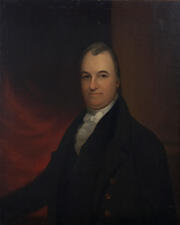
Here you will find contact information for Representative Richard Stockton, including email address, phone number, and mailing address.
| Name | Richard Stockton |
| Position | Representative |
| State | New Jersey |
| District | 2 |
| Party | Federalist |
| Status | Former Representative |
| Term Start | January 1, 1796 |
| Term End | March 3, 1815 |
| Terms Served | 2 |
| Born | April 17, 1764 |
| Gender | Male |
| Bioguide ID | S000941 |
About Representative Richard Stockton
Richard Stockton was a Representative from New Jersey in the United States Congress from 1795 to 1815. A member of the Federalist Party, he contributed to the legislative process during two terms in office and represented the interests of his constituents in the House of Representatives during a formative period in the early republic. His congressional service took place against the backdrop of the first party system and the consolidation of federal authority following the ratification of the Constitution.
The name Richard Stockton is associated with several notable American public figures across different generations and professions. The earliest and most historically prominent was Richard Stockton (1730–1781), often referred to as Richard Stockton, Continental Congressman. Born in 1730, he became a leading New Jersey lawyer and statesman and served as a delegate to the Continental Congress from New Jersey during the American Revolution. As a delegate, he took part in the deliberations that guided the colonies toward independence, and he is historically remembered as one of the signers of the Declaration of Independence. His public career and revolutionary service established the Stockton family as an influential political dynasty in New Jersey.
Another prominent member of this lineage was Richard Stockton (1764–1828), a United States senator from New Jersey and the son of the New Jersey delegate to the Continental Congress. Born into the political and social prominence created by his father’s revolutionary service, he pursued a legal and political career that culminated in his election to the United States Senate. As a senator from New Jersey, he participated in national debates during the early decades of the federal government, a period marked by the presidencies of John Adams, Thomas Jefferson, and James Madison, and by the evolving contest between Federalists and Democratic-Republicans. His service in the Senate extended the Stockton family’s influence in both state and national affairs.
Beyond politics, the name Richard Stockton has appeared in American arts and sports. Richard Stockton (1932–1997) was an American playwright whose career unfolded in the mid- to late twentieth century. Active in the world of theater, he contributed to American dramatic literature during a period of significant experimentation and change on the stage, though his work is less directly connected to the political legacy of the earlier Stocktons. His career illustrates the diffusion of the Stockton name into cultural and artistic fields beyond public office.
In the realm of broadcasting and athletics, the name is also associated with two prominent figures known professionally as Dick Stockton. Dick Stockton, born Richard Edward Stokvis in 1942, is an American sportscaster who became widely recognized for his play-by-play coverage of major sporting events, including professional football, basketball, and baseball. His long career in national sports broadcasting made him a familiar voice to American audiences. Another contemporary figure, Dick Stockton (born 1951), is an American tennis player who achieved prominence on the professional tennis circuit in the 1970s and early 1980s. Competing in an era that saw the global expansion of professional tennis, he earned recognition for his performances in major tournaments and international competition.
The name Richard Stockton is also associated with the judiciary in the early nineteenth century American South. Richard Stockton (c. 1792–1827), a Mississippi politician, served as an Associate Justice of the Supreme Court of Mississippi. His tenure on the state’s highest court placed him at the center of the development of Mississippi’s early legal system during a period of rapid growth and political change in the southwestern frontier of the United States. His judicial service extended the Stockton name into the legal and political life of a region far from the family’s New Jersey origins.
The Stockton legacy is further reflected in American higher education. Richard Stockton College in New Jersey, United States, later known as Stockton University, was named in honor of the Revolutionary-era Richard Stockton, the Continental Congressman and signer of the Declaration of Independence. The institution’s name underscores the enduring historical significance of the Stockton family in New Jersey and the broader narrative of the nation’s founding, linking the educational mission of the college to the civic and political contributions of its namesake.