Representative Richard Smith Whaley
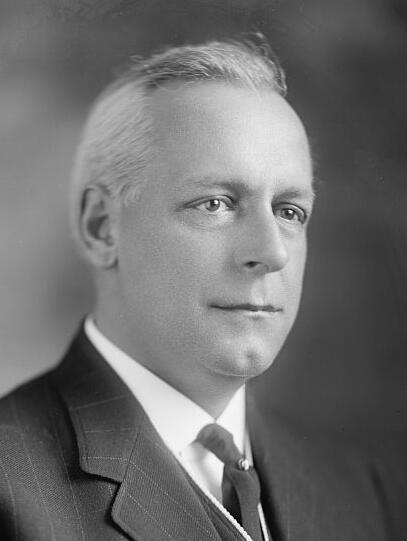
Here you will find contact information for Representative Richard Smith Whaley, including email address, phone number, and mailing address.
| Name | Richard Smith Whaley |
| Position | Representative |
| State | South Carolina |
| District | 1 |
| Party | Democratic |
| Status | Former Representative |
| Term Start | April 7, 1913 |
| Term End | March 3, 1921 |
| Terms Served | 4 |
| Born | July 15, 1874 |
| Gender | Male |
| Bioguide ID | W000319 |
About Representative Richard Smith Whaley
Richard Smith Whaley (July 15, 1874 – November 8, 1951) was a United States Representative from South Carolina and later Chief Justice of the United States Court of Claims. A member of the Democratic Party, he served four terms in the United States House of Representatives from 1913 to 1921, representing his South Carolina constituents during a significant period in American history that encompassed the Progressive Era and World War I.
Whaley was born on July 15, 1874, in Charleston, South Carolina. He attended Episcopal High School in Alexandria, Virginia, receiving a preparatory education that led him toward the study of law. He then enrolled at the University of Virginia School of Law, where he earned a Bachelor of Laws degree in 1897. Shortly thereafter, he was admitted to the bar and began practicing law in Charleston, establishing a private practice that he maintained from 1897 until his election to Congress in 1913.
In addition to his early legal work, Whaley briefly played a role in the development of collegiate athletics in South Carolina. In 1896, he served as the first head coach of the University of South Carolina football team. During his single season guiding the Gamecocks, he compiled an overall record of one win and three losses (1–3), an early chapter in what would become a long-standing football program at the university.
Whaley’s political career began in state government. He was elected to the South Carolina House of Representatives, serving from 1900 to 1913. During this period, he rose to positions of leadership within the chamber, serving as Speaker of the South Carolina House from 1907 to 1910 and as Speaker Pro Tempore in 1913. Beyond the legislature, he was active in party affairs, serving as presiding officer of the South Carolina Democratic state convention in 1910 and of the Democratic city convention in Charleston in 1911. He also participated in national party politics as a delegate to the Democratic National Convention in 1912, a pivotal convention that nominated Woodrow Wilson for the presidency.
Whaley entered national office when he was elected as a Democrat to the United States House of Representatives to fill the vacancy in the 63rd Congress caused by the death of Representative George Swinton Legaré. He took his seat on April 29, 1913, and was subsequently reelected to the 64th, 65th, and 66th Congresses, serving continuously until March 3, 1921. During these four terms in Congress, he contributed to the legislative process at a time when the federal government was expanding its role in economic regulation, social policy, and wartime mobilization. As a member of the House of Representatives, Richard Smith Whaley participated in the democratic process and represented the interests of his South Carolina constituents. He chose not to be a candidate for renomination in 1920, concluding his House service at the end of the 66th Congress. He later returned to national party politics as a delegate to the Democratic National Convention in 1920.
After leaving Congress, Whaley resumed the practice of law in Charleston from 1921 to 1923. He then accepted a federal administrative post in Washington, D.C., serving as Chairman of the District of Columbia Rent Commission from 1923 to 1925, a position that involved oversight of housing and rent issues in the nation’s capital during a period of postwar adjustment and urban growth. His work in this role helped establish his credentials for subsequent judicial service.
Whaley’s judicial career began with his appointment as a Trial Judge of the United States Court of Claims, where he served from 1925 to 1930. On May 23, 1930, President Herbert Hoover nominated him to a full judgeship on the Court of Claims, filling the seat vacated by Judge Samuel Jordan Graham. The United States Senate confirmed his nomination on June 2, 1930, and he received his commission the same day. He served as a judge of the Court of Claims until 1939, adjudicating claims against the federal government in a court that played a central role in resolving financial and contractual disputes involving the United States.
Whaley reached the pinnacle of his judicial service when President Franklin D. Roosevelt nominated him on June 23, 1939, to be Chief Justice of the Court of Claims, succeeding Chief Justice Fenton W. Booth. The Senate confirmed him on June 26, 1939, and he received his commission on June 27, 1939. Under his leadership, the court continued its work as the principal forum for monetary claims against the federal government; from June 25, 1948, the tribunal was officially designated the United States Court of Claims. Whaley assumed senior status on July 9, 1947, but remained associated with the court until the end of his life. His service as Chief Justice and then as a senior judge terminated on November 8, 1951, upon his death in Charleston, South Carolina. He was interred in Magnolia Cemetery in Charleston, closing a career that spanned private law practice, state legislative leadership, congressional service, and high federal judicial office.