Representative Richard Williams
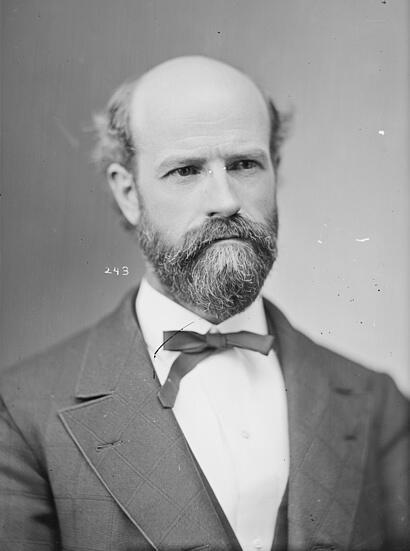
Here you will find contact information for Representative Richard Williams, including email address, phone number, and mailing address.
| Name | Richard Williams |
| Position | Representative |
| State | Oregon |
| District | 1 |
| Party | Republican |
| Status | Former Representative |
| Term Start | October 15, 1877 |
| Term End | March 3, 1879 |
| Terms Served | 1 |
| Born | November 15, 1836 |
| Gender | Male |
| Bioguide ID | W000533 |
About Representative Richard Williams
Richard Williams was born on April 3, 1836, in Findlay, Hancock County, Ohio. He spent his early years in the Midwest before moving westward as a young man, part of the broader migration that was reshaping the United States in the mid-nineteenth century. In 1851 he relocated with his family to Oregon, which was then still a relatively new American territory. The Williams family settled in Washington County, Oregon, where Richard came of age amid the social and political changes that accompanied the region’s transition toward statehood.
Williams received his early education in the common schools of Ohio and Oregon, reflecting the modest but expanding educational opportunities available on the American frontier. After his family’s move to Oregon, he continued his studies while working to support himself, and he soon turned his attention to the law. He read law in the traditional manner of the period—through apprenticeship and self-directed study—rather than through formal legal schooling, and was admitted to the bar in 1857. His admission to practice law in Oregon marked the beginning of a professional career that would intertwine with the state’s early legal and political development.
Following his admission to the bar, Williams established himself as an attorney in Portland, Oregon. He quickly became a prominent member of the local bar, practicing law in a city that was emerging as the commercial and political center of the state. Over the next two decades he built a reputation as a capable lawyer and an active participant in Republican Party politics. His legal work and party involvement brought him into contact with many of the leading figures of Oregon’s public life during the post–Civil War era, a time when questions of reconstruction, economic development, and western expansion dominated public debate. Although he did not hold major elective office before going to Congress, his standing in the community and within the Republican Party positioned him as a viable candidate for national office.
Williams’s national political career began with his election as a Republican to the United States House of Representatives. He was elected to represent Oregon at large in the Forty-fifth Congress and served a single term from March 4, 1877, to March 3, 1879. His service in Congress occurred during a significant period in American history, immediately following the contested presidential election of 1876 and at the close of the Reconstruction era. As a member of the House of Representatives, Richard Williams participated in the democratic process and represented the interests of his Oregon constituents in a Congress that grappled with issues of federal authority, economic policy, and the integration of western states and territories into the national framework. A member of the Republican Party, he contributed to the legislative process during his one term in office, taking part in debates and votes that reflected both the priorities of his party and the needs of a rapidly developing Pacific Northwest.
After the conclusion of his term on March 3, 1879, Williams was not returned to Congress and resumed the practice of law in Portland. He continued to be an influential figure in Oregon’s legal community, maintaining an active practice and remaining engaged in public affairs, though he did not again hold federal elective office. His later years were spent in the city where he had built his professional life, witnessing Portland’s growth from a frontier town into a major urban center of the Pacific Coast. Richard Williams died on June 19, 1914, in Portland, Oregon. He was interred in that city, leaving behind a legacy as one of the early Republican representatives of Oregon in the United States Congress and as a participant in the broader story of the American West’s incorporation into the national political order.