Representative Richard Alsop Wise
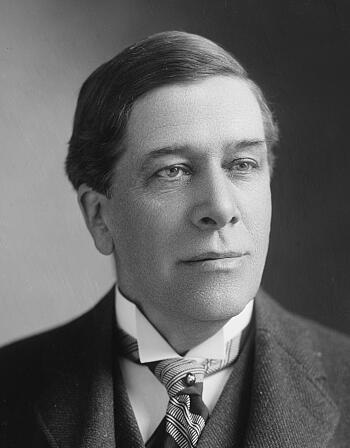
Here you will find contact information for Representative Richard Alsop Wise, including email address, phone number, and mailing address.
| Name | Richard Alsop Wise |
| Position | Representative |
| State | Virginia |
| District | 2 |
| Party | Republican |
| Status | Former Representative |
| Term Start | March 15, 1897 |
| Term End | March 3, 1901 |
| Terms Served | 2 |
| Born | September 2, 1843 |
| Gender | Male |
| Bioguide ID | W000653 |
About Representative Richard Alsop Wise
Richard Alsop Wise (September 2, 1843 – December 21, 1900) was an American educator, physician, and politician from Virginia who served as a Republican Representative in the United States Congress from 1897 to 1901. He was born in Philadelphia, Pennsylvania, into a prominent political family. His father was Henry Alexander Wise, a former governor of Virginia and U.S. representative; his grandfather was John Sergeant, a noted Pennsylvania congressman; his brother, John Sergeant Wise, also served in Congress; and his cousin, George Douglas Wise, was likewise a member of the U.S. House of Representatives. This lineage placed him within a well-established tradition of public service and national politics.
Wise received his early education in private schools in Philadelphia and later attended the Pennsylvania Military Academy at Chester, Pennsylvania. During the American Civil War, he entered Confederate service as a young man, serving in the Army of Northern Virginia. He rose through the ranks and ultimately served as a captain and assistant inspector general. His wartime experience, in which he was wounded and saw extensive field service, shaped his early adult life and provided him with organizational and leadership skills that would later inform his public career.
After the war, Wise pursued medical studies. He attended the Medical College of Virginia in Richmond and completed his medical education at the University of Pennsylvania, graduating in 1867. He then practiced medicine for several years. In addition to his medical work, he developed an interest in education and public institutions. He moved to Williamsburg, Virginia, where he became associated with the College of William and Mary, one of the nation’s oldest institutions of higher learning. There he served as a professor of chemistry and physiology, contributing to the academic life of the college and helping to rebuild educational structures in Virginia during the postwar period.
Wise’s public career in Virginia extended beyond the classroom. He became involved in state affairs and was appointed to positions that reflected his interest in institutional governance and veterans’ issues. He served as superintendent of the Eastern Lunatic Asylum (later Eastern State Hospital) in Williamsburg, where he oversaw the administration of mental health care at a time when such institutions were undergoing reform. He also took part in Confederate veterans’ organizations and local civic activities, reinforcing his standing in the community and within Republican political circles in a state still largely dominated by Democrats.
Wise’s congressional service began in the closing years of the nineteenth century, a significant period in American history marked by industrial expansion, the aftermath of Reconstruction, and emerging debates over imperialism and economic policy. A member of the Republican Party, he was elected to the U.S. House of Representatives from Virginia and served from 1897 to 1901, representing his constituents during parts of two terms in office. In Congress, he participated in the legislative process and the broader democratic deliberations of the era, working to represent the interests of Virginians at a time when the state’s political alignment was shifting and Republican influence was comparatively limited. His tenure placed him in the national legislature during the Spanish–American War and the early phase of the United States’ emergence as a global power.
Wise’s time in the House of Representatives was marked by the challenges of maintaining Republican representation in a predominantly Democratic state and by the broader national issues confronting the Fifty-fifth and Fifty-sixth Congresses. He contributed to debates and legislative activity consistent with his party affiliation and his background in education and public institutions, though the historical record preserves fewer details of specific measures associated with his name than with some of his contemporaries. Nonetheless, his service from 1897 until his death in 1900 ensured that his district had an active voice in Congress during a period of significant national transition.
Richard Alsop Wise died in office on December 21, 1900, in Williamsburg, Virginia. His death brought to a close a career that had spanned military service in the Civil War, medical practice, academic work at the College of William and Mary, institutional leadership, and representation in the United States Congress. He was interred in Bruton Parish Church Cemetery in Williamsburg, a city that had been central to his professional and public life. Through both his own achievements and his connection to a family deeply embedded in American political history, Wise occupied a distinctive place in Virginia’s public life at the turn of the twentieth century.