Senator Richard Yates
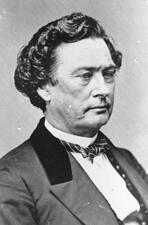
Here you will find contact information for Senator Richard Yates, including email address, phone number, and mailing address.
| Name | Richard Yates |
| Position | Senator |
| State | Illinois |
| Party | Republican |
| Status | Former Representative |
| Term Start | December 1, 1851 |
| Term End | March 3, 1871 |
| Terms Served | 3 |
| Born | January 18, 1815 |
| Gender | Male |
| Bioguide ID | Y000012 |
About Senator Richard Yates
Richard Yates Sr. (January 18, 1815 – November 27, 1873) was an American attorney and politician who became one of Illinois’s most prominent leaders during the mid-nineteenth century, serving as the state’s 13th governor from 1861 to 1865 during the American Civil War and later representing Illinois in both houses of the United States Congress. A member of the Whig Party early in his career and later a Republican, he served in the United States House of Representatives from 1851 to 1855 and in the United States Senate from 1865 to 1871, completing three terms in Congress in all. As a senator from Illinois, he contributed to the legislative process during a significant period in American history, participating in the democratic process and representing the interests of his constituents. Yates is widely regarded as one of the most effective “war governors” of the Civil War era and was popularly known as the “Soldiers’ Friend.”
Yates was born in a log cabin in Warsaw, Gallatin County, Kentucky, on January 18, 1815, to a family of English descent. In 1831 his family moved to Illinois, a relocation that would shape his lifelong identification with the state. He pursued his early education at Miami University in Ohio and at Georgetown College (now Georgetown College in Kentucky), before enrolling at Illinois College in Jacksonville, Illinois. He graduated from Illinois College in 1835, becoming closely associated with Jacksonville, which would remain his home base for much of his professional and political life. Seeking a legal career, Yates then studied law at Transylvania University in Lexington, Kentucky, a leading law school of the era. He was admitted to the bar in 1837 and commenced the practice of law in Jacksonville, where he quickly became known as an able advocate and rising young politician.
Yates’s political career began in the Illinois General Assembly. He served as a member of the Illinois House of Representatives from 1842 to 1845 and again from 1848 to 1849. Aligning himself with the Whig Party, he gained a reputation as an energetic and persuasive orator. In 1850 he was elected as a Whig to the United States House of Representatives, becoming the youngest member of the Thirty-second Congress. He represented Illinois in the House from 1851 to 1855 and was reelected in 1852. During his second term in Congress, the repeal of the Missouri Compromise through the Kansas–Nebraska Act reignited the national controversy over slavery. Yates opposed the repeal, which opened the possibility of slavery’s expansion into Kansas, and this stance led him to identify with the emerging Republican Party. Illinois Democrats subsequently redrew the boundaries of his congressional district to favor their own candidate, and Yates narrowly lost his bid for a third term in the House.
After leaving the House of Representatives in 1855, Yates remained active in public life and business. He served for a time as president of a railroad company, reflecting the era’s close ties between politics and railroad development. Politically, he threw his support behind the new Republican Party and campaigned vigorously for Republican presidential candidate John C. Frémont in the 1856 election. Yates was widely regarded as an excellent and forceful speaker, a skill that enhanced his influence within the party. At the same time, contemporaries noted his personal struggle with alcohol; he had a weakness for whiskey and, although he periodically attempted to practice temperance and by 1867 had resolved “to quit drink altogether,” he was often conspicuously drunk even at public functions and was unable to sustain his resolution.
In 1860 Yates was elected governor of Illinois as a Republican, running in tandem politically with Abraham Lincoln, with whom he was friendly and whose presidential campaign he supported in Illinois. In his inaugural address as governor, Yates denied that states possessed any right to secede from the Union, declaring that “a claim so presumptuous and absurd could never be acquiesced in,” and predicting that the Union would “in the end, be stronger and richer and more glorious, renowned and free, than it has ever been heretofore, by the necessary reaction of the crisis through which [they were] passing.” When the Civil War began, Yates emerged as an outspoken opponent of slavery and a vigorous Unionist. On April 12, 1861, the day after the attack on Fort Sumter, he convened the Illinois legislature in extra session and took military possession of Cairo, Illinois, garrisoning it with regular troops to secure the strategic confluence of the Ohio and Mississippi Rivers. At his suggestion, President Lincoln authorized Illinois troops to protect the federal arsenal in St. Louis, Missouri, and Illinois banks made $1,000,000 available to Yates to equip the new Illinois troops raised in response to Lincoln’s call for volunteers.
As governor, Yates took energetic measures to secure both Cairo, Illinois, and St. Louis, Missouri, against Confederate attack and played a central role in organizing the Illinois contingent of Union soldiers. In his office, Ulysses S. Grant received his first distinct recognition as a soldier in the Civil War when Yates appointed him mustering officer for the state and later commissioned him as colonel of the 21st Illinois Infantry Regiment. Yates also secured military commissions for prominent Illinois Democrats John A. Logan, John A. McClernand, and John M. Palmer, demonstrating his willingness to cross party lines in the interest of the Union war effort. Lincoln declined a hint from Yates that he would accept a commission as a brigadier general, insisting that Yates was too important as a loyal war governor to be spared from Springfield. After the Battle of Shiloh in 1862, Yates personally transported hospital supplies to aid wounded Illinois soldiers, an act that, along with his consistent advocacy for veterans and their families, helped cement his popularity and earned him the enduring nickname “Soldiers’ Friend.” In September 1862 he attended the Loyal War Governors’ Conference in Altoona, Pennsylvania, which ultimately rallied support among Union governors for Lincoln’s Emancipation Proclamation. Yates strongly supported the Emancipation Proclamation and continued to denounce slavery and secession throughout the conflict.
During the war, Yates’s close relationship with Lincoln helped bring significant federal financial resources to Illinois, particularly to Chicago. Under his administration, Chicago became the site of Camp Douglas, the largest prisoner-of-war encampment in the state, established on the former estate of Lincoln’s onetime political rival, the late Senator Stephen A. Douglas. Yates enlisted the services of former Chicago mayor James Hutchinson Woodworth, a Republican with strong anti-slavery views, to oversee the disbursement and management of the federal funds that flowed into Illinois during the war. In his 1863 annual message, Yates denounced proposals by some secession sympathizers that the Union might be reconstructed without New England, reaffirming his commitment to a restored Union including all loyal states. Relations with the Democratic-dominated Illinois legislature deteriorated after the Emancipation Proclamation, as Yates came to fear that the Democrats had been infiltrated by the pro-secession Knights of the Golden Circle. On June 10, 1863, he took the extraordinary step of dissolving the Illinois legislature, declaring that “the past history of the Assembly hold[s] out no reasonable hope of beneficial results to the citizens of the State, or the army in the field, from its further continuance.”
After his term as governor ended in 1865, Yates was elected as a Republican to the United States Senate from Illinois, serving from March 4, 1865, to March 3, 1871. His Senate service thus completed his three terms in the United States Congress, following his earlier tenure in the House of Representatives from 1851 to 1855. In the Senate, he was identified with the Radical Republicans and was considered an associate and “disciple” of Massachusetts senator Charles Sumner. Yates served as chairman of the Committee on Revolutionary Claims during the Thirty-ninth and Forty-first Congresses and as chairman of the Committee on Territories during the Fortieth Congress, positions that placed him at the center of debates over historical claims and the governance of western territories during Reconstruction. He strongly supported the impeachment and removal of President Andrew Johnson, whom he denounced as a “most pestilent disturber of public peace … who, through murder succeeded to the chief command and seeks to betray us to the enemy.” Yates voted for Johnson’s conviction and consistently backed Radical Republican measures to secure civil and political rights for the formerly enslaved. He did not seek reelection to the Senate at the conclusion of his term in 1871.
In his later years, Yates continued to hold federal responsibilities. After leaving the Senate, President Ulysses S. Grant appointed him a United States commissioner to inspect a land-subsidy railroad, a role that reflected the ongoing federal involvement in railroad expansion and internal improvements during the postwar period. Despite his continuing public service, his long-standing struggle with alcohol persisted. On November 27, 1873, Yates died suddenly in St. Louis, Missouri. He was interred in Diamond Grove Cemetery in Jacksonville, Illinois, the community with which he had been closely associated since his youth. His legacy in Illinois politics endured beyond his lifetime: in 1923 a statue of Yates by sculptor Albin Polasek was erected on the grounds of the Illinois State Capitol in Springfield, commemorating his service as the state’s Civil War governor, and his son, Richard Yates Jr., followed in his footsteps by becoming active in Illinois politics and eventually serving as governor of Illinois as well.