Senator Richard Montgomery Young
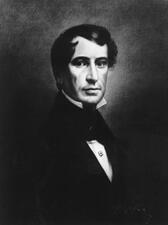
Here you will find contact information for Senator Richard Montgomery Young, including email address, phone number, and mailing address.
| Name | Richard Montgomery Young |
| Position | Senator |
| State | Illinois |
| Party | Democratic |
| Status | Former Representative |
| Term Start | September 4, 1837 |
| Term End | March 3, 1843 |
| Terms Served | 1 |
| Born | February 20, 1798 |
| Gender | Male |
| Bioguide ID | Y000050 |
About Senator Richard Montgomery Young
Richard Montgomery Young (February 20, 1798 – November 28, 1861) was an American lawyer, jurist, and Democratic politician who represented Illinois in the United States Senate from 1837 to 1843. Over the course of a long public career, he held a succession of influential positions at both the state and federal levels, including service in the Illinois House of Representatives, on the Illinois circuit courts and Supreme Court, and as Clerk of the United States House of Representatives. His life and work unfolded during a formative period in the political and legal development of both Illinois and the expanding United States.
Young was born in Fayette County, Kentucky, on February 20, 1798. Details of his family background and early education are not extensively documented, but he pursued legal studies at a young age and was admitted to the bar in 1816, while still in his late teens. His early admission to practice law reflected both the opportunities and demands of the early nineteenth-century frontier, where formal legal training was often compressed and ambitious young men could advance rapidly into professional and public life.
In 1817, Young moved from Kentucky to Jonesboro, Illinois, then a developing community in the southern part of the new state. He established a law practice there and quickly became involved in public affairs on the Illinois frontier. That same year he was appointed a captain in the state militia, a role that underscored his standing in the community and the importance of local military organization in the early statehood period. Young entered elective office as a member of the Illinois House of Representatives, serving from 1820 to 1822. After his legislative service, he returned to the judiciary and was appointed a circuit court judge in Illinois, a position he held from 1825 to 1837. His long tenure on the circuit court bench gave him substantial influence over the development of the state’s legal system during a time when Illinois was transitioning from a sparsely settled frontier to a more structured and populous state.
Young resigned his circuit judgeship after being elected by the Illinois legislature to the United States Senate in 1837 as a member of the Democratic Party. He served in the Senate from March 4, 1837, to March 3, 1843, completing one full six-year term. During the first four years of his service he was chairman of the Senate Committee on Roads and Canals, placing him at the center of national debates over internal improvements and transportation infrastructure. At a time when canals, roads, and emerging rail projects were critical to western expansion and economic development, Young’s committee work was particularly significant for a growing western state such as Illinois. In the Senate he aligned with the Democratic Party’s positions and represented Illinois during the presidencies of Martin Van Buren and John Tyler, participating actively in the legislative process at a moment of intense political realignment and sectional tension.
At the conclusion of his Senate term in 1843, Young returned to judicial service in Illinois. He was appointed to the Illinois Supreme Court, where he served from 1843 to 1847. During this period he presided over one of the most notable legal proceedings of his career: in 1844 he was the presiding judge at the trial of the accused killers of Joseph Smith, the founder of the Latter Day Saint movement, and Smith’s brother Hyrum. The trial arose from violent conflict surrounding the Latter Day Saints in Illinois, drew national attention, and underscored Young’s prominence within the state’s judiciary at a time when questions of religious liberty, local authority, and mob violence were sharply contested.
After leaving the Illinois Supreme Court, Young continued his federal public service. He was appointed by President James K. Polk as a land office commissioner, a position that involved oversight of federal public lands during a period of rapid territorial expansion and settlement in the 1840s. In 1850, he was chosen to serve as Clerk of the United States House of Representatives, an important administrative and procedural office within the legislative branch that managed the records and day-to-day operations of the House. Following his tenure as House Clerk, Young remained in the nation’s capital and resumed the practice of law in Washington, D.C., where he worked from 1851 until his death.
Richard Montgomery Young died in Washington, D.C., on November 28, 1861. Like many public figures of his era who came from or were connected to slaveholding regions, Young owned slaves, a fact that situates him within the broader context of American political and social life in the antebellum period. His career, spanning frontier Illinois courts, the United States Senate, a state supreme court, and key federal administrative posts, reflected both the opportunities and contradictions of public service in the United States in the decades leading up to the Civil War.