Representative Rick Renzi
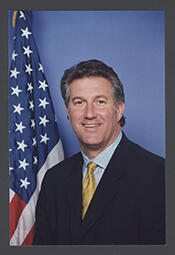
Here you will find contact information for Representative Rick Renzi, including email address, phone number, and mailing address.
| Name | Rick Renzi |
| Position | Representative |
| State | Arizona |
| District | 1 |
| Party | Republican |
| Status | Former Representative |
| Term Start | January 7, 2003 |
| Term End | January 3, 2009 |
| Terms Served | 3 |
| Born | June 11, 1958 |
| Gender | Male |
| Bioguide ID | R000574 |
About Representative Rick Renzi
Richard George Renzi (born June 11, 1958) is an American politician and businessman who served as a Republican member of the United States House of Representatives from Arizona’s 1st congressional district from January 3, 2003, to January 3, 2009. A member of the Republican Party, he served three terms in Congress during a period marked by the wars in Afghanistan and Iraq, debates over national security and immigration, and significant domestic policy changes. During his tenure, he participated in the legislative process and represented the interests of a geographically large and politically competitive district in northern and eastern Arizona.
Renzi was born into an Italian-American family at Fort Monmouth, New Jersey, one of five siblings. His father, Eugene Carmen Renzi, who later became a U.S. Army Major General and a senior executive with the defense contractor ManTech International, was stationed at various posts during Renzi’s youth. Renzi attended high school in Annandale, Virginia, before the family moved in 1975 to Sierra Vista, Arizona, where his father served at Fort Huachuca. He graduated from Buena High School in Sierra Vista. Renzi and his wife, Roberta S. Renzi, would later become the parents of twelve children, all of whose first names, like those of his siblings, begin with the letter “R.”
After high school, Renzi attended Northern Arizona University (NAU) in Flagstaff, where he played football as a starting offensive lineman. He earned a Bachelor of Science degree in criminal justice from NAU in 1980. Following his graduation, Renzi’s residential and professional history between approximately 1986 and 1997 became a subject of later scrutiny and some ambiguity. In a 2002 letter to the Arizona Daily Sun, he stated that the only times he had not lived in Arizona were when he served overseas on a Defense Department program and when he entered law school at age 39, in 1997 or 1998. However, an Associated Press report in August 2002 noted that Renzi said he had lived in Flagstaff for only about seven years between college and his return some two decades later, and that he had made much of his money while living in Burke, Virginia, where he had owned a substantial home since 1991.
In 1989, Renzi founded Renzi & Company, later known as the Patriot Insurance Agency, which specialized in providing insurance coverage to nonprofit organizations, including crisis pregnancy centers, pregnancy care clinics, maternity homes, parent-teacher associations and organizations, and local service groups. He worked as a property and casualty insurance agent and was active in the National Association of Professional Insurance Agents (PIA), particularly the PIA of Virginia and the District of Columbia. Renzi later said that attending a PIA Federal Legislative Summit in Washington, D.C., where he interacted with members of Congress and senators, gave him his first direct exposure to the political process and helped inspire his decision to seek public office. During these years he also developed business and real estate interests, including ownership of more than 400 acres in northern Arizona through a development and improvement business, as well as a small vineyard and ranch in Sonoita, Arizona, and a home in Kingman.
Around 1997 or 1998, Renzi began law studies at The Catholic University of America’s Columbus School of Law in Washington, D.C. He completed his coursework in December 2001 and received his Juris Doctor degree in 2002. While in law school, he said he served as an unpaid intern in Senator Jon Kyl’s office for two months in 1999 and later spent several months in 2001 as an unpaid intern for Representative Jim Kolbe. Senator Kyl subsequently questioned the accuracy of Renzi’s description of his work in Kyl’s office, stating that Renzi had never been employed there. During this period, Renzi maintained ties to both Virginia and Arizona. He moved his official residence from Virginia to Arizona in 1999, registering to vote in Santa Cruz County, and in 2001 he purchased a home in Flagstaff for approximately $216,000, transferring his voter registration there in December of that year. Renzi later acknowledged that he returned to Arizona with the intention of running for Congress, while defending the depth of his Arizona roots and noting that several of his children had been born in Sierra Vista.
Renzi entered electoral politics in 2002, seeking the open seat in Arizona’s newly created 1st congressional district, established after the 2000 census added two House seats to the state’s delegation. In the Republican primary, he faced five opponents, including former Navajo County supervisor Lewis Noble Tenney and conservative radio personality Sydney Ann Hay. Renzi heavily self-financed his campaign, investing $585,000 of his own money and raising about $100,000 more, which he used for extensive radio and television advertising across the district. He won the primary with 24.4 percent of the 46,585 votes cast, with roughly half of his support coming from Yavapai County. The Democratic primary was also closely contested and was narrowly won by George Cordova, a party outsider. In the general election, Renzi received strong backing from national Republican leaders: President George W. Bush visited the district twice, including for a fundraiser; Vice President Dick Cheney appeared at a fundraising luncheon; and Cabinet officials such as Secretary of the Interior Gale Norton and Secretary of Housing and Urban Development Mel Martinez campaigned on his behalf. The race was marked by heavy negative advertising against Cordova, including accusations regarding his business dealings, taxes, and residency, which Cordova denied but had limited resources to counter. Renzi later said he “took no joy” in the negative tone and claimed he had urged the National Republican Congressional Committee to avoid such tactics. During the campaign, he also proposed renaming Walnut Canyon National Monument as the “National Park of the American Flag” and adding extensive flag-themed displays, an idea widely ridiculed and later abandoned. On election day, Renzi defeated Cordova by a margin of 49 percent to 46 percent, a difference of about 6,000 votes. He ultimately spent $436,590 of his own money on the campaign, and contributions from ManTech International and its executives, associated with his father, were among the largest outside sources of funds.
Rick Renzi’s service in Congress spanned three terms from 2003 to 2009. As a member of the House of Representatives, he participated in the democratic process and represented the interests of his constituents in a sprawling district that included Native American reservations, rural communities, and rapidly growing exurban areas. Early in his congressional career, he was named one of the American Legion’s “Unsung Heroes” of the 108th Congress. American Legion National Commander John Brieden cited Renzi’s leadership role in securing a record increase in Department of Veterans Affairs health care funding and in reducing the number of service-disabled military retirees subject to the so‑called “disability tax” on their retired pay. Renzi’s legislative positions reflected a generally conservative Republican orientation. He supported expanded legal immigration and favored enlarging guest worker programs and the H‑1B visa program, while strongly advocating the use of technology and enhanced enforcement to secure the U.S. border. In domestic policy, he backed measures such as allowing the self‑employed to take annual tax deductions for health-care costs and enabling employees to purchase and personally own their health insurance policies, arguing this would increase portability, choice, and competition, thereby lowering premiums. He voted on December 14, 2005, to reauthorize the USA PATRIOT Act and on June 29, 2005, to increase funding by $25 million for anti‑marijuana print and television advertising. In June 2006, the House adopted an amendment he proposed to increase tribal law enforcement funding by $5 million, offset by a corresponding reduction in spending for international organizations, including the United Nations.
Renzi’s electoral position in the district remained competitive. In 2004, Democrats recruited Coconino County commissioner Paul Babbitt, brother of former Interior Secretary and Arizona Governor Bruce Babbitt, to challenge him. National Democratic organizations and liberal activists made the race a high priority, given the district’s Democratic registration plurality and Renzi’s narrow 2002 victory. Despite this focus, Babbitt was unable to match Renzi’s fundraising and organizational support, and Renzi won re‑election. In 2006, Renzi faced no Republican primary opposition. Five Democrats—Bob Donahue, Mike Caccioppoli, Susan Friedman, Ellen Simon, and Vic McKerlie—competed for the nomination, with attorney and community activist Ellen Simon emerging as the nominee. Libertarian David Schlosser also appeared on the general election ballot. Renzi won re‑election over Simon by a margin of 52 percent to 43 percent. During his time in office, he joined efforts with Representative Jon Porter in 2004 to introduce legislation to split the U.S. Court of Appeals for the Ninth Circuit, then the nation’s largest circuit, into three smaller circuits, with Senator John Ensign of Nevada introducing companion legislation in the Senate. Renzi also served on the House Intelligence Committee until he temporarily resigned from that assignment in 2007 amid a federal investigation.
Renzi’s political career became increasingly overshadowed by ethics and legal controversies. In 2004, the Federal Election Commission completed an audit of his 2002 campaign committee, “Rick Renzi for Congress,” finding that the campaign had overstated its cash on hand by about $64,000 and had failed to report employers or occupations for approximately 200 contributors, as required by law. The FEC concluded that the committee had improperly financed much of the 2002 campaign with $369,090 in loans derived from impermissible corporate funds, most of which were part of the $436,000 Renzi had put into his own campaign. In November 2005, the FEC fined the campaign $1,000 for underreported receipts, which the campaign attributed to a software glitch, and in the summer before the 2006 election, the FEC dropped all charges related to the alleged use of impermissible corporate funds. Nonetheless, in January 2006 and again in September 2006, the watchdog group Citizens for Responsibility and Ethics in Washington (CREW) named Renzi among the “Most Corrupt Members of Congress,” citing concerns over outside income earned by his administrative assistant and legislation he sponsored that allegedly benefited his father. He continued to appear in CREW’s 2007 and 2008 reports as one of the “20 Most Corrupt Members of Congress.”
The federal investigation into Renzi intensified in 2007. On April 19 of that year, the Federal Bureau of Investigation raided his family business, and Renzi temporarily resigned from the House Intelligence Committee. On April 27, he publicly denied reports that he was considering resigning from Congress. However, on August 23, 2007, he announced that he would not seek re‑election in 2008, effectively ending his congressional career at the conclusion of his third term. On February 22, 2008, Renzi was indicted on 35 counts related to land transactions and other matters, including allegations that he had used his office to engineer a land‑swap deal for personal financial gain exceeding $700,000. He pleaded not guilty to all charges. The indictment and subsequent proceedings focused on whether Renzi had improperly leveraged his congressional position to benefit his private business interests and those of associates.
Renzi’s legal troubles culminated in a high‑profile federal trial. On June 12, 2013, he was convicted on 17 of 32 counts in his corruption case, including charges arising from the land‑swap scheme and related financial conduct. On October 28, 2013, he was sentenced to three years in federal prison. His conviction and sentence marked a dramatic fall from his earlier status as a rising Republican officeholder from a competitive Western district. After serving his sentence, Renzi continued to contest aspects of the case and sought clemency. On January 20, 2021, in one of his final acts in office, President Donald J. Trump granted Renzi a presidential pardon, vacating his federal convictions and closing the legal chapter that had overshadowed the latter part of his public life.