Representative Rob Bishop
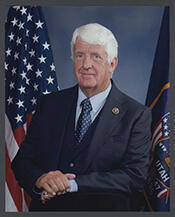
Here you will find contact information for Representative Rob Bishop, including email address, phone number, and mailing address.
| Name | Rob Bishop |
| Position | Representative |
| State | Utah |
| District | 1 |
| Party | Republican |
| Status | Former Representative |
| Term Start | January 7, 2003 |
| Term End | January 3, 2021 |
| Terms Served | 9 |
| Born | July 13, 1951 |
| Gender | Male |
| Bioguide ID | B001250 |
About Representative Rob Bishop
Robert William Bishop (born July 13, 1951) is an American politician and educator who served as the U.S. Representative for Utah’s 1st congressional district from January 3, 2003, to January 3, 2021. A member of the Republican Party, he completed nine consecutive terms in the House of Representatives and became the dean of Utah’s congressional delegation following the retirement of U.S. Senator Orrin Hatch in 2019. During his tenure in Congress, Bishop participated actively in the legislative process and represented the interests of his northern Utah constituents through a period of significant political and economic change in the United States.
Bishop was born in Kaysville, Davis County, Utah, and grew up in the surrounding area. He graduated from Davis High School and, as a young adult, served as a missionary in Germany from 1970 to 1972 for the Church of Jesus Christ of Latter-day Saints. After returning to Utah, he enrolled at the University of Utah in Salt Lake City, where he studied political science. He received a bachelor’s degree in political science from the University of Utah in 1974, laying the academic foundation for a career that would combine education, state politics, and national legislative service.
Following his graduation, Bishop embarked on a long career as a public school teacher. Beginning in 1974, he taught civics at Box Elder High School in Brigham City, Utah, a position he held until 1980. He then taught German at Ben Lomond High School in Ogden, Utah, before returning to Box Elder High School, where he resumed teaching government and history. Bishop remained in the classroom until his retirement from teaching in 2002, just prior to entering Congress. While at Box Elder High School, he partnered with the Close Up Foundation to help students participate in Washington, D.C.–based civic education programs, encouraging firsthand engagement with the federal government and the democratic process.
Bishop’s formal political career began at the state level. He was elected to the Utah House of Representatives in 1978 and served there until 1994. Over his 16-year tenure in the state legislature, he rose through the leadership ranks, serving as House Majority Leader and ultimately as Speaker of the Utah House of Representatives from 1992 to 1994. After leaving the legislature, Bishop remained active in party politics. In 1997 he was elected chairman of the Utah Republican Party, a post he held for two terms until 2001. During his chairmanship, the party decided to close its primaries to non–party members in the late 1990s, a move he later defended as protecting the integrity of the Republican nominating process. He also worked as a legislative lobbyist in Washington, D.C., further deepening his familiarity with federal policymaking.
In 2002, Bishop returned to elective politics by running for the open seat in Utah’s 1st congressional district, after 22-year incumbent Republican Jim Hansen announced his retirement. At the state Republican convention, Bishop finished first in a seven-candidate field, advancing to a primary against State Representative Kevin Garn. He won the primary with 59.8 percent of the vote, effectively securing the seat in the heavily Republican district, and went on to win the general election with 61 percent of the vote. Bishop was subsequently reelected with increasing margins in 2004, 2006, 2008, 2010, and 2012, and again in 2014 with 64 percent of the vote, ultimately serving in the House from 2003 to 2021. In the 2016 election cycle, 92.6 percent of contributions to his political campaign came from outside Utah—the highest out-of-state percentage of any member of the House—according to an analysis by OpenSecrets, with much of that support originating in the energy and agribusiness sectors.
During his congressional service, Bishop became particularly identified with public lands, federalism, and constitutional issues. He served on the House Committee on Natural Resources, eventually becoming its chairman and later ranking member, and was active on the Subcommittee on Public Lands and Environmental Regulation. He also served on the House Armed Services Committee, reflecting the importance of defense installations in his district. Bishop co-founded the Tenth Amendment Task Force, emphasizing states’ rights, and was involved in several caucuses, including the Second Amendment Task Force, the Congressional Lupus Caucus, the House GOP Policy Committee (as vice chair), the Western States Coalition (as co-founder), and the Congressional Western Caucus, where he served as past chairman. He was also a member of the Tea Party Caucus, the Republican Study Committee, the House Baltic Caucus, the Congressional Constitution Caucus (as co-chair), and the United States Congressional International Conservation Caucus.
Bishop’s legislative record reflected a strong skepticism of expansive federal regulatory authority, particularly in environmental and land-use policy. In 2010, he introduced a proposed constitutional amendment known as the “repeal amendment,” which would have allowed a majority of state legislatures to overturn acts of Congress. He has been a vocal critic of the Endangered Species Act of 1973, arguing that it has been “hijacked” to control land and block economic development and stating that he “would love to invalidate” the law. He has likewise been among the most critical members of Congress regarding the Antiquities Act of 1906. Bishop opposed the designation of Bears Ears National Monument in Utah and supported efforts to repeal or reduce that designation, and he has been a prominent advocate for transferring certain federal public lands to state control. At the same time, he sponsored a successful amendment to the 2006 National Defense Authorization Act that created the Cedar Mountain Wilderness in Tooele County, Utah, specifically to block transportation access to the proposed Private Fuel Storage nuclear waste facility on the Skull Valley Goshute Indian Reservation. In February 2011, he introduced a budget amendment that would have defunded the National Landscape Conservation System, which manages 27 million acres of Bureau of Land Management lands, including national monuments, national conservation areas, wilderness areas, and other protected systems; after criticism, he withdrew the amendment. On April 10, 2013, he introduced the Ensuring Public Involvement in the Creation of National Monuments Act, which would have subjected presidential monument designations under the Antiquities Act to review under the National Environmental Policy Act of 1969, arguing that the public deserved a greater role in land-use decisions regardless of whether they were made by Congress or the President.
Bishop was also known for his outspoken commentary on contemporary policy debates. In March 2019, he described the ideas behind the Green New Deal as “tantamount to genocide,” later explaining that, as a “westerner,” he believed full implementation of the proposal’s provisions would be devastating to his region’s way of life. He maintained that the Green New Deal was “not ready for prime time.” In Utah politics, he continued to defend closed Republican primaries and criticized efforts by Democrats to temporarily change party affiliation to vote in Republican contests, calling such tactics “dishonorable” and a “slimy way of doing things” aimed at “pervert[ing] the process” to advance preferred candidates. In an editorial, he reiterated his view that attempts by Democrats to influence Republican primaries were designed to create “havoc in the system” and to help elect the “correct” candidates from their perspective.
In July 2019, Bishop announced that he would not seek reelection to the House in 2020, bringing his nine-term congressional career to a close at the end of the 116th Congress. That same year, he publicly considered a bid for governor of Utah but described himself as a “horrible” candidate for that office. Instead, he joined former Utah Republican Party chairman Thomas Wright’s ticket as the candidate for lieutenant governor in the 2020 Utah gubernatorial election. The Wright–Bishop ticket competed in the Republican primary but did not prevail, and Bishop left elective office when his final House term ended in January 2021.
Bishop is married to Jeralynn Hansen, a former Miss Peach Queen for Brigham City, Utah, and they reside in Brigham City. The couple has four sons and one daughter. Known for his distinctive personal style, Bishop was recognized in Washington social and political circles for his three-piece suits and was named the third-best-dressed member of Congress in 2012 by Washingtonian magazine.