Representative Robert Low Bacon
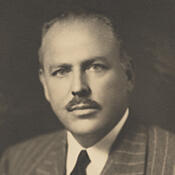
Here you will find contact information for Representative Robert Low Bacon, including email address, phone number, and mailing address.
| Name | Robert Low Bacon |
| Position | Representative |
| State | New York |
| District | 1 |
| Party | Republican |
| Status | Former Representative |
| Term Start | December 3, 1923 |
| Term End | January 3, 1939 |
| Terms Served | 8 |
| Born | July 23, 1884 |
| Gender | Male |
| Bioguide ID | B000019 |
About Representative Robert Low Bacon
Robert Low Bacon (July 23, 1884 – September 12, 1938) was an American politician, banker, and military officer who represented New York in the United States House of Representatives from 1923 until his death in 1938. A member of the Republican Party, he served eight terms in Congress and became known nationally as one of the authors of the Davis–Bacon Act of 1931, which regulates wages for employees on federal construction projects. His congressional service spanned a significant period in American history, encompassing the Roaring Twenties, the onset of the Great Depression, and the early New Deal era, during which he participated actively in the legislative process and represented the interests of his Long Island and New York constituents.
Bacon was born in Jamaica Plain, Massachusetts, on July 23, 1884, the son of Martha Waldron Cowdin and Robert Bacon, who later served as United States Secretary of State under President William Howard Taft. Raised in a prominent family, he received a common school education before attending Harvard University, from which he graduated in 1907. He continued his studies at Harvard Law School, earning his law degree in 1910. His family background and education placed him within the social and political elite of the Northeast, and he maintained close ties to both Massachusetts and New York throughout his life.
After completing his legal education, Bacon entered public service at the federal level, working in the United States Treasury Department until 1911. That year he moved to Old Westbury, New York, on Long Island, where he engaged in banking in New York City. His early professional years combined financial experience with growing political and social connections. In his personal life, he became engaged to Cecilia May in 1911, though the engagement did not result in marriage. On April 14, 1913, he married Virginia Murray, further consolidating his ties to New York society.
Bacon’s career was also marked by extensive military service. In 1915 he attended the business men’s training camp at Plattsburgh, New York, one of the preparedness camps that helped train potential officers before the United States entered World War I. In 1916 he served on the Texas border with the New York National Guard during the period of heightened tensions with Mexico. With the American entry into World War I, he joined the Field Artillery of the United States Army, serving from April 24, 1917, to January 2, 1919. He attained the rank of major and was awarded the Distinguished Service Medal for his wartime service. In 1919 he was commissioned in the United States Officers’ Reserve Corps with the rank of lieutenant colonel, was promoted to colonel in January 1923, and remained in the Reserve Corps until his death, continuing his military association while pursuing his political career.
Bacon’s formal entry into national politics came in the early 1920s. He served as a delegate to the Republican National Convention in Chicago, Illinois, in 1920, participating in the nomination process that brought Warren G. Harding to the presidency. In 1922, when Representative Frederick C. Hicks declined to seek another term, Bacon became a candidate for the open congressional seat from New York. In the general election he faced fellow Long Islander S. A. Warner Baltazzi and defeated him in the fall, securing his first term in the House of Representatives. He entered Congress as a “wet,” opposing national Prohibition at a time when the 18th Amendment and the Volstead Act were still in force, and he continued to balance his legislative responsibilities with his ongoing service in the Officers’ Reserve Corps.
As a member of the House of Representatives from New York from 1923 to 1939, Bacon served eight consecutive terms and encountered relatively little serious opposition in most of his reelection campaigns. His most challenging race came in 1932, during the landslide election that brought Franklin D. Roosevelt to the presidency. That year he faced Cornelius Vanderbilt Whitney, another wealthy member of Long Island society. Both men moved in many of the same social circles and belonged to many of the same private clubs, and the contest became notably bitter. Despite the national Democratic wave, Bacon prevailed and retained his seat. Throughout his tenure, he participated in the democratic process on behalf of his district, contributing to debates on economic policy, military affairs, and social legislation during a period of profound national change.
Bacon’s most enduring legislative achievement was his role in the enactment of the Davis–Bacon Act of 1931. For years he had introduced similar measures aimed at ensuring that workers on federal construction projects received locally prevailing wages. During the early years of the Great Depression, as federal spending on public works increased, Bacon and his allies argued that without such protections, contractors would import cheaper labor from other regions, undercutting local workers. The Davis–Bacon Act, which he co-authored, ultimately passed in 1931 and established federal requirements for the payment of prevailing wages on public works projects. The statute, later amended but still in force, became a cornerstone of federal labor standards policy and remains closely associated with his name.
In addition to his work on labor and public works legislation, Bacon was a prominent opponent of national Prohibition. Consistent with his “wet” stance, he supported efforts to modify and ultimately overturn the 18th Amendment. He introduced a proposal to amend the Constitution to allow individual states to regulate alcohol, seeking to return control over liquor policy to state governments. Although his specific amendment failed, the broader movement to end Prohibition gained strength, and the 18th Amendment was repealed in 1933 by the 21st Amendment, aligning national policy more closely with the position he had long advocated.
Bacon’s family remained active in public life beyond his own career. His brother, Gaspar G. Bacon, served as President of the Massachusetts Senate from 1929 to 1932 and as Lieutenant Governor of Massachusetts from 1933 to 1935, reinforcing the Bacon family’s prominence in Republican politics. His nephew, Gaspar G. Bacon Jr., became an actor under the stage name David Bacon, achieving recognition in the entertainment industry. These connections underscored the family’s influence across both political and cultural spheres in the early twentieth century.
Robert Low Bacon died in office on September 12, 1938, at the age of 54. He suffered a heart attack near the State Police barracks in Lake Success, New York, while returning home from a speaking engagement in New York City. His death brought an abrupt end to a career that combined military service, financial experience, and sustained legislative activity during a transformative era in American history. He was interred with military honors at Arlington National Cemetery, reflecting both his distinguished wartime service and his long tenure in the United States Congress.