Representative Robert Raymond Barry
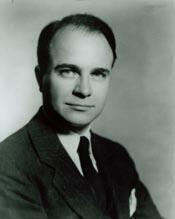
Here you will find contact information for Representative Robert Raymond Barry, including email address, phone number, and mailing address.
| Name | Robert Raymond Barry |
| Position | Representative |
| State | New York |
| District | 25 |
| Party | Republican |
| Status | Former Representative |
| Term Start | January 7, 1959 |
| Term End | January 3, 1965 |
| Terms Served | 3 |
| Born | May 15, 1915 |
| Gender | Male |
| Bioguide ID | B000190 |
About Representative Robert Raymond Barry
Robert Raymond Barry (May 15, 1915 – June 14, 1988) was an American businessman and politician who served as a Republican member of the United States House of Representatives from New York from 1959 to 1965. Over three consecutive terms in Congress, he represented New York districts that included his hometown of Yonkers and participated actively in the legislative process during a significant period in American history, contributing to the work of the House of Representatives and representing the interests of his constituents.
Barry was born in Omaha, Nebraska, on May 15, 1915. During his childhood his family moved, and he received his early education in the public schools of Evanston, Illinois. He went on to attend Hamilton College in Clinton, New York, from 1933 to 1936, and pursued further business studies at the Tuck School of Business at Dartmouth College in 1937 and at New York University in 1938. As a young man he became a member of the International Seamen’s Union, an experience that exposed him to labor and international trade issues, and he later played a role in helping to organize the International Chamber of Commerce. He was a member of the Alpha Delta Phi fraternity and maintained connections with various civic and social organizations throughout his life.
Before entering elective office, Barry developed a substantial career in business and public service. He began in investment banking with Kidder, Peabody & Co., and later moved into commercial banking with Manufacturers Trust Company. In industry, he served as an executive with Bendix Aviation from 1940 to 1943 and with Yale & Towne Manufacturing from 1945 to 1950. During World War II, he worked in the office of the Undersecretary of the Navy, contributing to the wartime administrative effort. Beyond finance and manufacturing, Barry engaged in farming, mining, and real estate development, including mining operations in Portola, California, and real estate ventures near California’s Salton Sea. These varied business activities helped shape his later views on economic and regulatory policy.
Barry also built a significant political résumé before his own congressional service. He served on the political staffs of Republican presidential nominee Wendell Willkie, New York Governor Thomas E. Dewey, and Presidents Dwight D. Eisenhower and Richard M. Nixon, gaining experience in national campaigns and federal policy. He was appointed as a United States delegate to several NATO Parliamentary Assemblies and to the United Nations Educational, Scientific and Cultural Organization (UNESCO), reflecting his interest in international affairs and transatlantic cooperation. In addition, he served as chairman of the United Nations Committee to Build the Perry World House, a project associated with international understanding and diplomacy.
In 1958, Barry was elected as a Republican to the Eighty-sixth Congress as the representative of New York’s 27th Congressional District, which then included Yonkers. He took office on January 3, 1959, and was reelected in 1960 and 1962, serving three terms in the House of Representatives from January 3, 1959, to January 3, 1965. During his final term, redistricting altered his constituency, and he continued his service in what was designated as the 27th District. As a member of the House, Barry participated in the democratic process during a transformative era in American politics, contributing to debates and legislation affecting both his district and the nation. A loyal member of the Republican Party, he aligned with its positions on economic and foreign policy issues of the period. He was an unsuccessful candidate for reelection to the Eighty-ninth Congress in 1964.
Even while representing New York in Congress, Barry spent considerable time in California, where he had ongoing business interests. After his defeat in 1964, he made California his permanent residence and continued to seek public office there. In 1966, he was the unsuccessful Republican nominee for California’s 38th Congressional District. He ran unsuccessfully in the 1967 special election for California’s 11th District and again in the 1968 general election for that seat. In 1970, he sought but did not secure the Republican nomination for the United States Senate from California. He later ran unsuccessfully for the Republican nomination in California’s 17th Congressional District in 1972. Despite these defeats, he remained active in public affairs, and in 1982 President Ronald Reagan appointed him to the advisory council of the Peace Corps, recognizing his long-standing engagement with national and international service.
In his personal and civic life, Barry was involved with several organizations. He was a member of the Farm Bureau, reflecting his interests in agriculture and farming, and belonged to the Friendly Sons of St. Patrick, a fraternal and charitable organization. His fraternity affiliation with Alpha Delta Phi, begun in his college years, continued as part of his social and professional network. On July 19, 1945, he married Anne Rogers Benjamin; the couple had two children, a son, Henry, and a daughter, Cynthia.
Robert Raymond Barry died in Redwood City, California, on June 14, 1988, at the age of 73 years and 30 days. The location of his interment is not publicly recorded. His career combined business, international engagement, and public service, including three terms in the United States House of Representatives from New York and later advisory work at the federal level.