Representative Robert E. Bauman
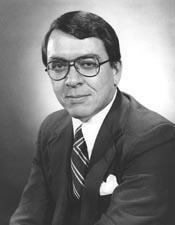
Here you will find contact information for Representative Robert E. Bauman, including email address, phone number, and mailing address.
| Name | Robert E. Bauman |
| Position | Representative |
| State | Maryland |
| District | 1 |
| Party | Republican |
| Status | Former Representative |
| Term Start | January 3, 1973 |
| Term End | January 3, 1981 |
| Terms Served | 4 |
| Born | April 4, 1937 |
| Gender | Male |
| Bioguide ID | B000244 |
About Representative Robert E. Bauman
Robert Edmund Bauman, commonly known as Robert E. “Bob” Bauman, was born on April 4, 1937, in Bryn Mawr, Pennsylvania, to an unwed single mother. During his youth he moved to Easton, Maryland, where he attended Easton High School until 1953. In 1955 he graduated from the Capitol Page School at the Library of Congress in Washington, D.C., an experience that introduced him early to the workings of the federal government and the legislative process. A Roman Catholic, he later married Carol Dawson, a co-founder of Young Americans for Freedom, and the couple had four children.
Bauman pursued higher education at Georgetown University in Washington, D.C. He earned a Bachelor of Science degree in international affairs from the School of Foreign Service in 1959, followed by a Juris Doctor degree from Georgetown University Law Center in 1964. That same year he was admitted to the Maryland Bar and subsequently to the District of Columbia Bar. After his admission to practice, he entered private practice as a lawyer, establishing the professional foundation that would support his later political and advocacy work.
Bauman became active in Republican politics and conservative organizing in the 1960s and 1970s. He was a founding member of several conservative activist organizations, most notably Young Americans for Freedom (YAF) and the American Conservative Union (ACU), and he served as national chairman of both groups. Within the Republican Party, he gained prominence as a delegate to the Republican National Conventions of 1964, 1972, 1976, and 1980. From 1970 to 1973 he served as a member of the Federal Hospital Council of the United States Department of Health, Education, and Welfare, contributing to federal health policy deliberations. In 1970 he was elected to the Maryland Senate, where he served from 1971 to 1973, further solidifying his reputation as a rising conservative figure.
Bauman entered national office in 1973, when he was elected as a Republican to the United States House of Representatives from Maryland’s 1st congressional district in an August special election held to fill the vacancy caused by the death by suicide of Representative William O. Mills the previous May. He served four consecutive terms in the House, from 1973 to 1981, representing his Eastern Shore and Chesapeake Bay–area constituents during a period of significant political and social change in the United States. As a member of the House of Representatives, Bauman participated actively in the legislative process and was known for his strong command of parliamentary procedure. He quickly established a reputation as a staunch conservative, frequently criticizing what he viewed as a decline in morality in the United States and advocating positions consistent with the emerging New Right of the 1970s. His prominence within conservative circles led many to regard him as a rising star in the Republican Party during the late 1970s.
Bauman’s congressional career was abruptly derailed in 1980. On October 3 of that year, while running for re-election, he was charged with soliciting sex from a 16-year-old male prostitute. After the charges became public, Bauman acknowledged that he was suffering from alcoholism and entered a court-supervised rehabilitation program. Under the terms of that program, successful completion resulted in the charges being dropped. Bauman apologized to voters for his indiscretions and announced that he would continue his re-election campaign. Nonetheless, the scandal severely damaged his political standing. On November 4, 1980, he was defeated by Democrat Roy Dyson, who had not been considered a serious contender for the seat before the charges were filed. In 1982 Bauman sought to regain the Republican nomination for his former House seat but withdrew from the race before the primary election day, effectively ending his congressional ambitions.
Following his departure from Congress, Bauman returned to legal and advisory work and became involved in international financial and tax planning circles. He served as co-founder and legal counsel for The Sovereign Society, an organization dedicated to promoting offshore banking and investment. In that role, the group funneled clients to the Panamanian law firm Mossack Fonseca to help them avoid paying taxes to the United States government. Bauman publicly maintained that the organization’s philosophy emphasized tax avoidance rather than tax evasion, stating that The Sovereign Society served as a conduit for individuals seeking to arrange certain financial affairs offshore. He authored numerous books on offshore finance, tax havens, and asset protection, extending his influence into the realm of international financial strategy.
Bauman also wrote about his personal and political life. In 1986 he published an autobiography, The Gentleman from Maryland: The Conscience of a Gay Conservative, in which he reflected on his career, his conservative convictions, and his experiences as a closeted gay man in public life. His later writings and public commentary placed him among the notable LGBT figures in American political history, and his congressional career is frequently cited in discussions of federal political and sex scandals in the United States.