Representative Bob Bergland
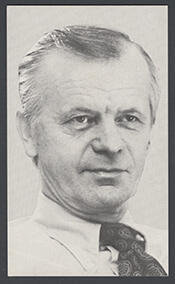
Here you will find contact information for Representative Bob Bergland, including email address, phone number, and mailing address.
| Name | Bob Bergland |
| Position | Representative |
| State | Minnesota |
| District | 7 |
| Party | Republican |
| Status | Former Representative |
| Term Start | January 21, 1971 |
| Term End | January 3, 1979 |
| Terms Served | 4 |
| Born | July 22, 1928 |
| Gender | Male |
| Bioguide ID | B000408 |
About Representative Bob Bergland
Robert Selmer Bergland (July 22, 1928 – December 9, 2018) was an American politician who represented Minnesota in the United States House of Representatives and later served as U.S. Secretary of Agriculture. He was born near Roseau, Roseau County, Minnesota, the son of Mabel (Evans) Bergland and Selmer Bennett Bergland, a garage mechanic. Raised in a rural community in northern Minnesota, Bergland grew up in an agricultural environment that would shape his professional life and public service. In 1950 he married Helen Elaine Grahn; the couple had seven children.
Bergland studied agriculture at the University of Minnesota in a two-year program, receiving practical training that complemented his work as a farmer. Returning to Roseau County, he operated a farm and became deeply involved in production agriculture, gaining firsthand experience with the economic and environmental challenges facing family farmers in the Upper Midwest. His background as a working farmer informed his later policy positions and gave him credibility among rural constituents and agricultural organizations.
In the early 1960s, Bergland moved from farming into federal agricultural administration. From 1963 to 1968 he served as an official of the Agricultural Stabilization and Conservation Service (ASCS) in the United States Department of Agriculture. In that role he helped administer federal farm programs, including price supports and conservation initiatives, at a time of significant change in American agriculture. His work with the ASCS provided him with detailed knowledge of federal farm policy and program implementation, experience that later proved central to both his legislative and executive-branch careers.
Bergland entered electoral politics at the end of the 1960s as a member of the Democratic-Farmer-Labor Party (DFL), the Minnesota affiliate of the Democratic Party. In 1970 he ran for the U.S. House of Representatives from Minnesota’s 7th congressional district, a largely rural district in the northwestern part of the state, and defeated Republican incumbent Odin Langen. He took office on January 3, 1971, and served as a Representative from Minnesota in the United States Congress from 1971 to 1979, being elected to the 92nd, 93rd, 94th, and 95th Congresses. As a member of the House of Representatives, Bergland participated in the democratic process during a significant period in American history, representing the interests of his constituents through the end of the Vietnam War, the Watergate era, and the economic challenges of the 1970s.
During his congressional service, Bergland was particularly active on agricultural issues. He served on the House Committee on Agriculture, including its subcommittees on Conservation and Credit and on Livestock, Grains, Dairy, and Poultry. In these roles he worked on legislation affecting farm credit, soil and water conservation, commodity programs, and the marketing of agricultural products. A member of the Democratic Party and the DFL, he contributed to the legislative process over four terms in office, becoming recognized as a knowledgeable advocate for farmers, rural communities, and agricultural cooperatives.
On January 22, 1977, shortly after the beginning of a new congressional term, Bergland resigned his House seat to join the Cabinet of President Jimmy Carter. Carter appointed him U.S. Secretary of Agriculture, and Bergland served in that position from January 23, 1977, until January 20, 1981. As Secretary of Agriculture, he oversaw federal farm, food, and rural development programs during a period marked by volatile commodity markets, evolving trade relationships, and growing attention to conservation and nutrition policy. His tenure also included a minor but much-noted episode involving a dispute between the United States Department of Agriculture and the General Services Administration over food service contracts. In an effort to shame the General Services Administration into terminating a Nixon-era cafeteria services contract, the USDA executive cafeteria was ironically dedicated in honor of Alfred Packer, a 19th-century figure associated with cannibalism, a symbolic gesture that drew public attention to the quality of the cafeteria services.
After the end of the Carter administration in 1981, Bergland returned to the private and cooperative sectors of the agricultural and rural economy. He became chairman of Farmland World Trade, a division of the Farmland Industries agricultural cooperative, serving in that capacity until 1982. He then joined the National Rural Electric Cooperative Association as vice president and general manager. In that role he lobbied both Congress and federal regulatory agencies on behalf of rural electric cooperatives, working to secure reliable and affordable electricity for rural communities and to influence national energy and utility policy in ways that supported cooperative business models.
Bergland retired from his executive positions in 1994 but remained active in public and educational service. That same year he was elected by the Minnesota State Legislature to the University of Minnesota Board of Regents, where he served one term, contributing his experience in agriculture, rural development, and public policy to the governance of the state’s land-grant university. In retirement he continued to live in Minnesota and owned and operated a 600-acre (2.4 km²) farm, maintaining his lifelong connection to agriculture. Robert Selmer Bergland died on December 9, 2018, at a nursing home in Roseau, Minnesota, at the age of 90. His congressional papers, documenting his years in the House of Representatives, are preserved at the Minnesota Historical Society as the Bob Bergland Papers, and additional materials relating to his service as Secretary of Agriculture are held in the Robert Selmer Bergland Collection at the National Agricultural Library.