Representative Robert A. Borski
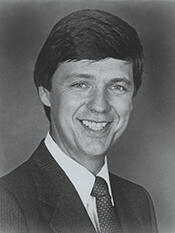
Here you will find contact information for Representative Robert A. Borski, including email address, phone number, and mailing address.
| Name | Robert A. Borski |
| Position | Representative |
| State | Pennsylvania |
| District | 3 |
| Party | Democratic |
| Status | Former Representative |
| Term Start | January 3, 1983 |
| Term End | January 3, 2003 |
| Terms Served | 10 |
| Born | October 20, 1948 |
| Gender | Male |
| Bioguide ID | B000644 |
About Representative Robert A. Borski
Robert Anthony Borski Jr. (born October 20, 1948) is an American politician who served as a Democratic member of the United States House of Representatives from Pennsylvania from 1983 to 2003. Over the course of 10 consecutive terms in Congress, he represented Pennsylvania’s 3rd congressional district and contributed to the legislative process during a significant period in modern American political history, participating actively in the democratic process and representing the interests of his constituents.
Borski was born in Philadelphia, Pennsylvania, and was raised in the city’s working- and middle-class neighborhoods that would later form the core of his political base. He attended Philadelphia’s Frankford High School, from which he graduated before pursuing higher education. He went on to attend the University of Baltimore, earning his degree there in 1971. His early life and education in urban Pennsylvania helped shape his later focus on transportation, infrastructure, and neighborhood concerns in the Philadelphia area.
Borski began his political career in state government. A member of the Democratic Party, he was elected to the Pennsylvania House of Representatives, where he served from 1977 to 1982. During his tenure in the state legislature, he developed a reputation as a committed representative of his district’s interests and built the political and community relationships that would support his subsequent bid for federal office. His service in Harrisburg provided him with legislative experience and familiarity with statewide issues that would prove valuable in Congress.
In 1982, following the reapportionment that resulted from the 1980 United States Census, Borski ran for the U.S. House of Representatives in Pennsylvania’s 3rd Congressional District, which had been renumbered from the 4th District. He challenged incumbent Republican Representative Charles F. Dougherty in a year that was difficult for Republicans nationally due to a recession. Benefiting from public discontent, as well as favorable redistricting that shifted several heavily Democratic Philadelphia wards into the 3rd District, Borski won a narrow victory by fewer than 3,000 votes. In doing so, he unseated the last Republican to represent a significant portion of Philadelphia in the House of Representatives. The contest between Borski and Dougherty became a recurring feature of Philadelphia politics, with rematches in 1992, 1998, and 2000; Borski prevailed in each of those races, solidifying his hold on the seat.
During his 20 years in Congress, from January 3, 1983, to January 3, 2003, Borski rose to become one of the more senior members of the House Democratic caucus on transportation issues. He became the second-ranking Democrat on the House Committee on Transportation and Infrastructure, a key panel with jurisdiction over highways, transit, water resources, and public works. In this role, he was positioned to influence federal investment in transportation and infrastructure projects, particularly those affecting Pennsylvania and the Philadelphia region. Although generally regarded as a liberal Democrat on many economic and social issues, he opposed abortion in most cases, reflecting a more socially conservative stance on that particular issue than many in his party.
Borski’s congressional service coincided with major national and international developments, including the end of the Cold War, the Persian Gulf War, and the post–September 11 era. On October 10, 2002, in one of the most consequential votes of his career, he was among the 81 House Democrats who voted in favor of the resolution authorizing the use of military force against Iraq, thereby supporting the invasion of Iraq. His vote placed him on the side of a bipartisan coalition that backed the Bush administration’s policy at that time. Over the course of his tenure, he was recognized locally for his advocacy on behalf of his district; in 2003, the post office where Borski’s father had once carried mail was renamed in his honor, symbolically linking his public service to his family’s working-class roots.
The redistricting process following the 2000 United States Census brought Borski’s congressional career to a close. Pennsylvania was slated to lose two seats in the U.S. House, and the Republican-controlled state legislature dismantled his northeast Philadelphia-based 3rd District. His home was drawn into the Montgomery County–centered 13th District, represented at the time by two-term Democrat Joe Hoeffel. The redistricting plan was widely seen as an effort to force a potentially divisive Democratic primary between Borski and Hoeffel. Rather than engage in what promised to be a costly and bruising intraparty contest, Borski chose not to run for reelection in 2002, thereby retiring from Congress at the end of his tenth term and allowing Hoeffel to avoid a primary challenge.
After leaving Congress in 2003, Borski transitioned to work in government relations and lobbying. He established his own firm, Borski Associates, through which he has represented various clients before federal and state government bodies. That same year, Pennsylvania Governor Ed Rendell hired Borski to assist in lobbying on behalf of the Commonwealth in Washington, drawing on his two decades of congressional experience and relationships. His continued influence in state and national Democratic politics was recognized in 2010, when Politics Magazine named him one of the most influential Democrats in Pennsylvania, underscoring his enduring role in the political life of the state beyond his years in elected office.