Senator Robert Johns Bulkley
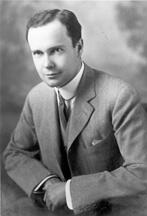
Here you will find contact information for Senator Robert Johns Bulkley, including email address, phone number, and mailing address.
| Name | Robert Johns Bulkley |
| Position | Senator |
| State | Ohio |
| Party | Democratic |
| Status | Former Representative |
| Term Start | April 4, 1911 |
| Term End | January 3, 1939 |
| Terms Served | 4 |
| Born | October 8, 1880 |
| Gender | Male |
| Bioguide ID | B001045 |
About Senator Robert Johns Bulkley
Robert Johns Bulkley (October 8, 1880 – July 21, 1965) was an American attorney and Democratic politician from Ohio who served in both the United States House of Representatives and the United States Senate. Over the course of his congressional career, which extended from 1911 to 1939, he represented his Cleveland-area constituents during a period of profound political and economic change and contributed significantly to federal banking and agricultural credit legislation.
Bulkley was born on October 8, 1880, into a wealthy family in Cleveland, Cuyahoga County, Ohio. He was educated in that city’s private University School, an elite preparatory institution, before entering Harvard College. At Harvard he became acquainted with fellow student Franklin D. Roosevelt, with whom he worked on the Harvard Crimson student newspaper, forming a personal and political connection that would later influence his Senate career. After completing his undergraduate studies, Bulkley continued at Harvard Law School, receiving his legal education there before returning to Ohio.
In 1906 Bulkley commenced the practice of law in Cleveland, Ohio, establishing himself in the legal profession in his native city. On February 17, 1909, he married Katherine Pope of Helena, Montana, thereby linking his Cleveland-based professional life with a family connection to the American West. As a young attorney, he built a reputation that soon led him into public service and national politics.
Bulkley entered Congress as a member of the United States House of Representatives, serving two terms from March 4, 1911, to March 3, 1915, from Ohio’s 21st Congressional District, which encompassed Cleveland’s East Side. A Democrat, he quickly developed expertise in banking and financial legislation. During his House service he played a notable role in framing the Federal Reserve Act of 1913, which restructured the nation’s banking system, and he also helped draft the Federal Farm Loan Act, designed to improve credit access for farmers; the latter measure was not enacted until 1916, after his House tenure had ended. His early legislative work placed him at the center of major reforms in the American financial and agricultural credit systems.
During World War I, after leaving the House, Bulkley continued his public service in the executive branch. He served as chief of the legal section of the War Industries Board, the federal body responsible for coordinating industrial production and procurement for the war effort. In this capacity he dealt with complex legal and regulatory issues arising from wartime mobilization, drawing on his legal training and prior legislative experience.
Bulkley returned to Congress as a United States Senator from Ohio in 1930. He was elected as a Democrat to the Senate to fill the vacancy caused by the death of Senator Theodore E. Burton, and he took office during the onset of the Great Depression. He was re-elected in 1932, thus serving in the United States Senate from 1930 until January 3, 1939. His Senate career coincided with the administration of President Franklin D. Roosevelt, his former Harvard classmate, and with the implementation of the New Deal. Bulkley generally praised Roosevelt and most aspects of the New Deal and dispensed a significant amount of federal patronage in Ohio. Ideologically, he was regarded as a moderate, positioned between the liberal and conservative wings of the Democratic Party.
Despite his overall support for Roosevelt, Bulkley’s voting record on New Deal legislation was complex. He opposed several key New Deal measures, including the National Industrial Recovery Act, the Tennessee Valley Authority, the Agricultural Adjustment Act, the Works Progress Administration, soil conservation programs, and wages and hours legislation. However, he cast crucial votes in favor of two highly controversial 1937 administration proposals: Roosevelt’s plan to expand the Supreme Court, often referred to as the “court-packing” bill, and the executive reorganization bill aimed at restructuring the federal government. These yea votes were decisive for Roosevelt, who, during his 1938 effort to purge conservative Democrats, traveled to Ohio specifically to praise and endorse Bulkley despite the senator’s opposition to other major New Deal programs. Bulkley’s Senate service thus reflected both independence and loyalty to the administration on its most institutional questions.
In 1938 Bulkley sought another full term in the Senate but was defeated by Republican Robert A. Taft, son of former President William Howard Taft. His loss ended his Senate career on January 3, 1939, concluding his long period of congressional service that had begun in the House in 1911. After leaving the Senate, Bulkley resumed the practice of law in Cleveland, returning to the profession in which he had first made his name. He remained a prominent figure in his hometown, where the Bulkley Building in Playhouse Square in downtown Cleveland was named in his honor, commemorating his public career and local influence.
Robert Johns Bulkley died on July 21, 1965. His life encompassed service in both houses of Congress, key roles in shaping early twentieth-century financial and agricultural credit legislation, important wartime administrative responsibilities, and participation in the legislative battles of the New Deal era.