Representative Robert Henry Clancy
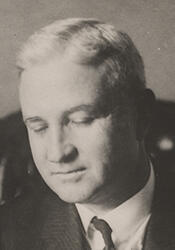
Here you will find contact information for Representative Robert Henry Clancy, including email address, phone number, and mailing address.
| Name | Robert Henry Clancy |
| Position | Representative |
| State | Michigan |
| District | 1 |
| Party | Republican |
| Status | Former Representative |
| Term Start | December 3, 1923 |
| Term End | March 3, 1933 |
| Terms Served | 4 |
| Born | March 14, 1882 |
| Gender | Male |
| Bioguide ID | C000412 |
About Representative Robert Henry Clancy
Robert Henry Clancy (March 14, 1882 – April 23, 1962) was a Michigan journalist, public official, and United States Representative who served four terms in Congress during the 1920s and early 1930s. Over the course of his career he was affiliated with both the Democratic and Republican parties, and he represented Michigan in the U.S. House of Representatives from 1923 to 1925 and again from 1927 to 1933, participating in the legislative process during a period marked by World War I’s aftermath, Prohibition, and the onset of the Great Depression.
Clancy was born in Detroit, Michigan, where he attended the city’s public schools. He enrolled at the University of Michigan at Ann Arbor and graduated from the literary department in 1907. Following his undergraduate studies, he remained at the university for an additional year to study law, although he did not complete a law degree. His early professional life was rooted in journalism; he worked as a reporter on Detroit newspapers for four years, gaining familiarity with local politics, civic affairs, and the concerns of urban constituents in a rapidly growing industrial city.
Transitioning from journalism to public service, Clancy became secretary to U.S. Representative Frank E. Doremus, a Democrat from Michigan, serving in that capacity from 1911 to 1913. He then moved to the federal executive branch, serving from 1913 to 1917 as secretary to Edwin F. Sweet, the Assistant Secretary of Commerce. These positions provided him with experience in both legislative and administrative operations of the federal government and helped establish his reputation in Democratic political circles. During World War I, Clancy held several wartime assignments: he served as manager of the War Trade Board at Detroit, acted as chief inspector of purchases in Michigan for the Medical Corps of the War Department, and worked as a recruiting officer for the aviation division in Detroit. From 1917 to 1922 he was United States customs appraiser for Michigan, a post that placed him at the intersection of federal regulation, trade, and the state’s industrial economy. During the Prohibition era, he drew public attention when he was arrested along with the mayor of Detroit and the Wayne County sheriff at the Deutsches Hall while consuming alcohol, an incident that underscored the contentious and often uneven enforcement of Prohibition laws in urban centers.
Clancy’s formal congressional career began when he was elected as a Democrat from Michigan’s 1st Congressional District to the Sixty-eighth Congress in the 1922 election. He served from March 4, 1923, to March 3, 1925, representing a district centered on Detroit at a time of significant industrial expansion and demographic change. As a member of the House of Representatives, he participated in the democratic process and represented the interests of his constituents in Michigan, contributing to legislative deliberations during a period of postwar adjustment and national debate over issues such as immigration, labor, and Prohibition. In the 1924 election he was defeated for reelection by Republican John B. Sosnowski, temporarily interrupting his congressional service.
After leaving Congress in 1925, Clancy returned to private life in Detroit and engaged in the real-estate business. He remained active in politics, however, and in the 1926 election he changed his party affiliation, running as a Republican in Michigan’s 1st District. In that campaign he defeated the incumbent Sosnowski in the Republican primary and went on to defeat Democratic candidate William M. Donnelly in the general election, winning a seat in the Seventieth Congress. He took office again on March 4, 1927. Clancy consolidated his position within the Republican Party and the district by repeating this pattern in subsequent elections: in both 1928 and 1930 he again defeated Sosnowski in the Republican primary and Donnelly in the general election, securing reelection to the Seventy-first and Seventy-second Congresses and serving continuously from March 4, 1927, to March 3, 1933. During these terms, which spanned the late 1920s economic boom and the early years of the Great Depression, he continued to participate in the legislative process as a Republican member of the House, representing Detroit’s interests in matters of commerce, industry, and federal relief.
Following the 1930 Census, congressional redistricting in Michigan altered the political landscape in Detroit. In 1932, Clancy became a candidate in the newly drawn Fourteenth Congressional District rather than seeking reelection in his previous district. Running as a Republican in a year of strong national gains for the Democratic Party, he was defeated by Democrat Carl M. Weideman. This loss ended his service in Congress, which had encompassed four terms and a decade of intermittent representation of Michigan in the House.
After his congressional career, Clancy entered the private sector in an executive capacity with a manufacturing company in Michigan. He remained in that role until his retirement in 1948, maintaining ties to Detroit’s business and civic community during the post–World War II industrial expansion. Robert Henry Clancy died in Detroit on April 23, 1962. He was interred in Mount Olivet Cemetery in Detroit, closing a life that had been closely intertwined with the city’s political, economic, and social development in the first half of the twentieth century.