Representative Robert Lewis Coffey
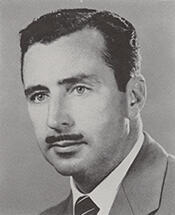
Here you will find contact information for Representative Robert Lewis Coffey, including email address, phone number, and mailing address.
| Name | Robert Lewis Coffey |
| Position | Representative |
| State | Pennsylvania |
| District | 26 |
| Party | Democratic |
| Status | Former Representative |
| Term Start | January 3, 1949 |
| Term End | January 3, 1951 |
| Terms Served | 1 |
| Born | October 21, 1918 |
| Gender | Male |
| Bioguide ID | C000586 |
About Representative Robert Lewis Coffey
Robert Lewis Coffey Jr. (October 21, 1918 – April 20, 1949) was an American coal miner, World War II fighter pilot, and Democratic politician who served briefly as a member of the U.S. House of Representatives from Pennsylvania. A former military air ace and combat squadron commander, he represented his Pennsylvania constituents in the 81st Congress for approximately four months before his death in a military aviation accident during an experimental flight.
Coffey was born in Chattanooga, Tennessee, and moved with his parents in early boyhood to Pennsylvania, where he was raised and later established his professional and political life. He attended the University of Pittsburgh and Pennsylvania State University, pursuing higher education while becoming familiar with the industrial economy of his adopted state. Before entering military and political service, he worked in the coal industry, employed in coal mines in positions ranging from coal loader to engineer, gaining firsthand experience with the working conditions and economic concerns of miners and industrial workers.
With the onset of World War II, Coffey entered the United States Army Air Forces and trained as a fighter pilot. He was assigned to the 365th Fighter Group, known as the “Hell Hawks,” where he flew the P-47 Thunderbolt in combat operations in the European Theater. Rising rapidly through the ranks, he commanded the group’s 388th Fighter Squadron and later served as deputy commander of the entire group. Coffey distinguished himself as the group’s top air ace, receiving official credit for six aerial victories over the course of 97 combat missions. During his service he was shot down in action but successfully evaded capture, returning to Allied lines. For his military service he received multiple decorations and awards in recognition of his skill, leadership, and valor in combat.
After the war, Coffey continued his military career in a diplomatic and liaison capacity. From October 1945 to April 1948, he served as military air attaché at the United States Embassy in Santiago, Chile, representing American air interests and assisting in military-diplomatic relations in South America. He held the rank of lieutenant colonel while on active duty. In 1948, seeking to pursue public office, he resigned his active-duty commission as a lieutenant colonel in order to become a candidate for Congress, though he was subsequently commissioned a colonel in the United States Air Force Reserve, maintaining his connection to military aviation.
Coffey entered electoral politics as a member of the Democratic Party in Pennsylvania. In the 1948 elections he ran for the U.S. House of Representatives and was elected as a Democrat to the 81st Congress, defeating incumbent Republican Congressman Harve Tibbott. He took his seat on January 3, 1949, representing his Pennsylvania district in the House of Representatives. His service in Congress occurred during a significant period in American history, as the nation transitioned from World War II to the early Cold War era and addressed issues of postwar economic adjustment, veterans’ affairs, and international security. During his one term in office, he participated in the legislative process and represented the interests of his constituents, contributing to the work of the House until his untimely death in 1949.
In his personal life, Coffey was married to Eileen Mercado Parra. The couple had three children: Robert Lewis, Eileen María, and David Mario. His family life unfolded alongside his demanding military and political careers, both in wartime service abroad and in his brief tenure in Washington, D.C.
On April 20, 1949, while still a sitting member of Congress, Coffey was killed in an aviation accident at Kirtland Air Force Base near Albuquerque, New Mexico. He was co-piloting a Lockheed F-80A-10-LO Shooting Star, serial number 44-85438 (construction number 080-1461), during a cross-country proficiency and experimental flight. At approximately 1640 hours, after refueling at Kirtland and departing for March Air Force Base, California, the aircraft apparently suffered an engine failure on takeoff. The jet never rose above about 25 feet, skidded off the end of the runway, cartwheeled across an arroyo, and broke apart, though it did not burn. Coffey was killed instantly in the crash. His fellow “Hell Hawks” pilot, Lieutenant Colonel William D. Ritchie, was also aboard. Coffey’s death came only months into his first term, cutting short both a promising political career and a distinguished record of military service.
Robert Lewis Coffey Jr. was interred at Arlington National Cemetery, reflecting national recognition of his wartime achievements and public service. In honor of his memory and his service as a Representative from Pennsylvania, the U.S. House of Representatives recessed for one day following the announcement of his death. His name is included among the members of the United States Congress who died in office between 1900 and 1949, marking his place in the historical record as both a combat veteran and a fallen legislator.