Representative Robert Corbett
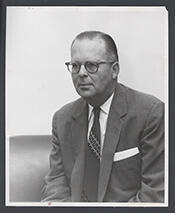
Here you will find contact information for Representative Robert Corbett, including email address, phone number, and mailing address.
| Name | Robert Corbett |
| Position | Representative |
| State | Pennsylvania |
| District | 18 |
| Party | Republican |
| Status | Former Representative |
| Term Start | January 3, 1939 |
| Term End | January 3, 1971 |
| Terms Served | 15 |
| Born | August 25, 1905 |
| Gender | Male |
| Bioguide ID | C000772 |
About Representative Robert Corbett
Robert James Corbett (August 25, 1905 – April 25, 1971) was a Republican member of the U.S. House of Representatives from Pennsylvania who served as a Representative from Pennsylvania in the United States Congress from 1939 to 1973. Born in Avalon, Pennsylvania, near Pittsburgh, he grew up in the Pittsburgh area in a family that would become active in public service; his brother, William Corbett, later served as interim Governor of Guam. His early life in western Pennsylvania rooted him in the communities he would go on to represent in Congress.
Corbett pursued higher education in the state, graduating from Allegheny College in Meadville, Pennsylvania, in 1927. He continued his studies at the University of Pittsburgh, from which he graduated in 1929. Following his formal education, he embarked on a career in teaching. From 1929 to 1938 he worked as a senior high school instructor in Coraopolis, Pennsylvania, gaining experience in public education and community affairs. In 1938 he also served as an instructor in the Pittsburgh Academy Evening School, further extending his engagement with adult and continuing education in the region.
Corbett entered electoral politics as a member of the Republican Party and was elected as a Republican to the Seventy-sixth United States Congress in 1938, beginning his first term in the U.S. House of Representatives in 1939. His initial service in Congress thus commenced at the end of the Great Depression and on the eve of World War II, a significant period in American history. Although he contributed to the legislative process during this first term, he was an unsuccessful candidate for reelection in 1940. After leaving the House, he remained active in public service, joining the staff of Senator James J. Davis in Pittsburgh, where he gained additional experience in federal legislative affairs from the Senate perspective.
In addition to his federal work, Corbett held local office in Allegheny County. He was elected Sheriff of Allegheny County, which includes Pittsburgh, and served in that capacity from 1942 to 1944. His tenure as sheriff provided him with administrative and law-enforcement experience at the county level and kept him closely connected to the concerns of his constituents during the World War II era. This combination of legislative and executive experience in both federal and local roles helped shape his subsequent long tenure in the House of Representatives.
Corbett returned to Congress when he was elected to the Seventy-ninth United States Congress in 1944. He took office on January 3, 1945, and from that point served continuously in the House of Representatives until his death in 1971. Over these years he was repeatedly returned to office by his Pennsylvania constituents, ultimately serving a total of 15 terms in Congress. His service spanned the end of World War II, the early Cold War, the civil rights era, and the social and political transformations of the 1960s. As a member of the House of Representatives, Robert James Corbett participated in the democratic process and represented the interests of his constituents while contributing to national legislative debates.
During his long congressional career, Corbett took notable positions on major civil rights legislation. He voted in favor of the Civil Rights Acts of 1957, 1960, 1964, and 1968, supporting measures to expand federal protection of voting rights, public accommodations, and equal opportunity. He also voted for the Twenty-fourth Amendment to the United States Constitution, which prohibited the use of poll taxes in federal elections, and supported the Voting Rights Act of 1965, a landmark statute aimed at eliminating racial discrimination in voting. These votes placed him among those Republican members who backed key elements of the mid-twentieth-century civil rights agenda.
Robert James Corbett’s congressional service ended with his death in office. He died of a heart attack in Pittsburgh, Pennsylvania, on April 25, 1971, while still serving in the U.S. House of Representatives. His death marked the conclusion of more than three decades of intermittent but ultimately long-standing service in Congress, during which he remained a consistent Republican voice from Pennsylvania and an active participant in the legislative process during a pivotal era in American history.