Representative Robert J. Cornell
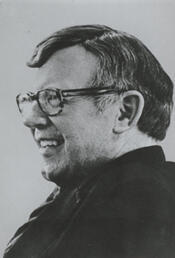
Here you will find contact information for Representative Robert J. Cornell, including email address, phone number, and mailing address.
| Name | Robert J. Cornell |
| Position | Representative |
| State | Wisconsin |
| District | 8 |
| Party | Democratic |
| Status | Former Representative |
| Term Start | January 14, 1975 |
| Term End | January 3, 1979 |
| Terms Served | 2 |
| Born | December 16, 1919 |
| Gender | Male |
| Bioguide ID | C000782 |
About Representative Robert J. Cornell
Robert John Cornell, O.Praem (December 16, 1919 – May 10, 2009) was an American Catholic priest, professor, and politician who served as a member of the United States House of Representatives from Wisconsin from 1975 to 1979. A member of the Democratic Party and of the Norbertine Order, he represented Wisconsin’s 8th congressional district for two terms and contributed to the legislative process during a significant period in American history, participating in the democratic process and representing the interests of his constituents.
Cornell was born in Gladstone, Michigan, and moved as a child to Wisconsin, where he attended parochial schools in Green Bay. He entered St. Norbert College in De Pere, Wisconsin, earning a Bachelor of Arts degree in 1941. Drawn to religious life and scholarship, he joined the Norbertine Order and, after six years in the order, was ordained a priest on June 17, 1944. He later pursued graduate studies at The Catholic University of America in Washington, D.C., receiving both a Master of Arts and a Doctor of Philosophy in 1957. His doctoral dissertation examined the Coal Strike of 1902, reflecting an early and sustained interest in labor issues and social justice.
Cornell began his career in education even before his ordination, teaching social sciences in parochial schools in Philadelphia, Pennsylvania, from 1941 to 1947. After returning to Wisconsin, he taught at St. Norbert High School and Abbot Pennings High School, as well as at St. Norbert College. At St. Norbert College he became a professor of history and political science, serving on the faculty from 1947 to 1974 and again from 1979 until 2001. In addition to his academic work, he became well known locally in the 1960s and 1970s for organizing concerts at the old Brown County Arena in Green Bay, including several performances by Johnny Cash. All proceeds from these concerts were directed to local charities, underscoring his commitment to community service and charitable work.
Cornell’s entry into partisan politics grew out of his pastoral and educational concern for social justice. In 1961, after a group of affluent Catholic laypeople in Green Bay sharply criticized a speech he gave on the importance of promoting social justice, he concluded that teaching and preaching alone were insufficient to effect needed change. As he later wrote in his memoir, the incident convinced him that “only by advocating public policy was there a hope of making needed changes,” since some in his audience appeared to place self-interest above broader concerns for human rights. Over the next decade he became increasingly active in the Democratic Party of Wisconsin. From 1969 to 1974 he served as chairman of the Eighth Congressional District of the Democratic Party of Wisconsin and sat on the party’s State Administrative Committee, helping to shape strategy and candidate recruitment in northeastern Wisconsin.
Cornell first sought a seat in the United States House of Representatives in 1970 and again in 1972, running unsuccessfully as a Democrat from Wisconsin’s 8th congressional district. Persisting in his efforts, he ran once more in 1974. That year he secured the Democratic nomination by defeating Brown County District Attorney Donald Zuidmulder with 55 percent of the primary vote. In the general election he defeated freshman Republican Representative Harold Vernon Froehlich, becoming the first Democrat to represent the district in 30 years and only the fourth Democrat in the 20th century to represent that district or its predecessors (it had been designated the 9th District prior to 1933). He was reelected in 1976 to the 95th Congress with a reduced margin, becoming the first Democrat in 62 years to win a second term in what is now the 8th district. His tenure in Congress thus marked a notable break in the district’s long-standing Republican dominance.
During his service in the House of Representatives from 1975 to 1979, Cornell served on the Committee on Education and Labor and the Committee on Veterans’ Affairs. His legislative interests reflected his background in labor history, education, and social policy. In 1978 he worked closely with Senator William Proxmire to secure passage of the Wisconsin Wilderness Act, which added the Whisker Lake and Blackjack Springs Wilderness areas to the Chequamegon–Nicolet National Forest, expanding federal protection for key tracts of Wisconsin’s northwoods. Cornell maintained a strongly pro-life voting record in Congress, opposing abortion in all stages and situations and giving firm support to the Hyde Amendment, which restricted the use of federal funds for abortion. In the 1978 election he sought a third term but was defeated by Republican State Representative Toby Roth in a bid for the 96th Congress. Contemporary analysis in the Congressional Quarterly Weekly Report on November 18, 1978, attributed his defeat in part to an extremely low turnout among Democratic voters and the strength of Republican gubernatorial candidate Lee S. Dreyfus.
After leaving Congress in January 1979, Cornell returned to St. Norbert College, resuming his role as a professor of history and political science and continuing to teach there until 2001. He remained active in public affairs and, in 1980, initially decided to seek a rematch against Toby Roth. However, he abandoned this congressional bid when the Vatican directed all Catholic priests to withdraw from active electoral politics. Cornell was one of only two Catholic priests ever to serve as a voting member of the United States House of Representatives, the other being Father Robert Drinan of Massachusetts, underscoring the unusual nature of his dual vocation as priest and legislator.
In his later years, Cornell reflected on his political and religious life in a self-published memoir, Is There a Priest in the House?, in which he provided an overview of his political career, focusing especially on his time in Congress and the issues he worked on there. The memoir includes numerous anecdotes that illustrate the dry sense of humor for which he was widely known, as well as his reflections on the intersection of faith, politics, and public service. Cornell lived in De Pere, Wisconsin, in the Norbertine community near St. Norbert College and St. Norbert Abbey, until his death on May 10, 2009, at the age of 89. He was buried on the grounds of St. Norbert Abbey, leaving a legacy as a priest, educator, and public servant whose career bridged the worlds of religious life and national politics.