Representative Robert Crosser
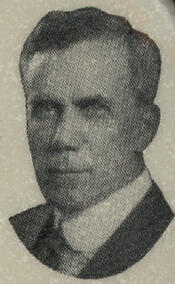
Here you will find contact information for Representative Robert Crosser, including email address, phone number, and mailing address.
| Name | Robert Crosser |
| Position | Representative |
| State | Ohio |
| District | 21 |
| Party | Democratic |
| Status | Former Representative |
| Term Start | April 7, 1913 |
| Term End | January 3, 1955 |
| Terms Served | 19 |
| Born | June 7, 1874 |
| Gender | Male |
| Bioguide ID | C000932 |
About Representative Robert Crosser
Robert Crosser (June 7, 1874 – June 3, 1957) was an American lawyer and Democratic politician who served 19 terms as a U.S. Representative from Ohio. He remains the longest-serving member of the United States House of Representatives from the state of Ohio, with service spanning from 1911 to 1919 and then from 1923 until 1955. Over more than four decades in public life, he contributed to the legislative process during a significant period in American history and represented the interests of his Ohio constituents through 19 terms in office.
Crosser was born in Holytown, Lanarkshire, Scotland, on June 7, 1874. In 1881 he emigrated to the United States with his parents, and the family initially settled in Cleveland, Ohio, before moving that same year to Salineville, Ohio. He attended the public schools there, beginning a long association with the state that would define his professional and political career. His early experience as an immigrant and resident of industrial Ohio communities helped shape his later political outlook and commitment to democratic participation.
Pursuing higher education in Ohio, Crosser graduated from Kenyon College in Gambier, Ohio, in 1897. He then undertook legal studies, first at Columbia Law School in New York City, and subsequently at Cincinnati Law School, from which he graduated in 1901. That same year he was admitted to the bar and commenced the practice of law in Cleveland, Ohio. In addition to his private practice, he contributed to legal education, teaching law at the Baldwin-Wallace Law School in 1904 and 1905. He was also a member of the legal fraternity Phi Delta Phi, reflecting his professional engagement with the broader legal community.
Crosser’s political career began at the state level. He served as a member of the Ohio House of Representatives in 1911 and 1912, where he quickly became involved in questions of state governance and reform. In 1912 he served as a member of Ohio’s fourth constitutional convention. At that convention, he was the author of the initiative and referendum amendment that was subsequently adopted by Ohio voters in 1912, a significant reform that expanded direct democratic participation in the state’s legislative process.
Building on his state-level experience, Crosser was elected as a Democrat to the Sixty-third, Sixty-fourth, and Sixty-fifth Congresses, serving in the U.S. House of Representatives from March 4, 1913, to March 3, 1919. During this initial period in Congress, he served as chairman of the Committee on Expenditures in the Department of Commerce in the Sixty-fifth Congress. His service in Congress during these years coincided with major national developments, including the Progressive Era and World War I, and he participated in the democratic process at the federal level as a representative of Ohio. He was an unsuccessful candidate for renomination in 1918 and also failed in a bid for election in 1920, temporarily interrupting his congressional career.
Crosser returned to Congress when he was elected to the Sixty-eighth Congress and to the fifteen succeeding Congresses, serving from March 4, 1923, to January 3, 1955. Over this extended tenure, he became one of the most senior Democratic members of the House and a prominent figure in Ohio’s delegation. His long service covered the interwar period, the Great Depression, the New Deal, World War II, and the early Cold War, and he consistently participated in shaping federal legislation during these transformative decades. From 1913 to 1955, across his nonconsecutive terms, he represented his district as a member of the Democratic Party and contributed to the legislative work of the House over 19 terms in office.
During his later years in Congress, Crosser held important committee leadership positions. He served as chairman of the Committee on Interstate and Foreign Commerce in the Eighty-first and Eighty-second Congresses, a key assignment that placed him at the center of legislative oversight and policymaking related to transportation, communications, and commercial regulation at a time of rapid economic and technological change. Despite his seniority, he was an unsuccessful candidate for renomination in 1954. In that Democratic primary, he was defeated by Charles Vanik in a multi-candidate field that also included African-American challenger John Holly, founder of the Negro Future Outlook League, reflecting evolving political dynamics within his district and party.
In his personal life, Crosser was married to Isabelle Dargarvel Hogg. After leaving Congress, he resided in Bethesda, Maryland, where he lived until his death on June 3, 1957. He was interred in Highland Park Cemetery in Warrensville, Ohio, underscoring his enduring connection to the state he had served for so many years.