Representative Robert W. Daniel Jr.
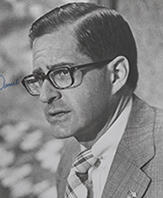
Here you will find contact information for Representative Robert W. Daniel Jr., including email address, phone number, and mailing address.
| Name | Robert W. Daniel Jr. |
| Position | Representative |
| State | Virginia |
| District | 4 |
| Party | Republican |
| Status | Former Representative |
| Term Start | January 3, 1973 |
| Term End | January 3, 1983 |
| Terms Served | 5 |
| Born | March 17, 1936 |
| Gender | Male |
| Bioguide ID | D000037 |
About Representative Robert W. Daniel Jr.
Robert Williams Daniel, Jr. (March 17, 1936 – February 4, 2012) was an American farmer, businessman, teacher, intelligence and defense official, and Republican politician from Virginia who served five terms in the United States House of Representatives. First elected in 1972, he represented Virginia’s 4th congressional district from 1973 to 1983, contributing to the legislative process during a significant period in American history and becoming the first Republican to hold that seat since the Reconstruction Era.
Daniel was born in Richmond, Virginia, the son of banker and state legislator Robert Williams Daniel and his third wife, Charlotte Randolph Christian (née Bemiss). His father, a bank executive who survived the sinking of the RMS Titanic in 1912, later served in the Senate of Virginia; he died when his son was four years old. Through his family, Daniel was a descendant of Peter V. Daniel, an Associate Justice of the Supreme Court of the United States, and Edmund Randolph, the seventh Governor of Virginia, the first Attorney General of the United States, and the second Secretary of State. He grew up in a milieu shaped by Virginia’s political and legal traditions and by the legacy of Brandon Plantation, the family estate in Prince George County.
Daniel received his early education at the Fay School in Southborough, Massachusetts, and at Woodberry Forest School in Woodberry Forest, Virginia. He went on to earn a Bachelor of Arts degree from the University of Virginia in Charlottesville, where he was a member of the Phi Kappa Psi fraternity. Pursuing graduate study in business, he received a Master of Business Administration from Columbia University in New York City, training that would later inform both his private-sector work and his management of agricultural and family enterprises.
Before entering elective office, Daniel worked as a financial analyst and later taught economics at the University of Richmond. He served in the United States Army and with the Central Intelligence Agency from 1964 to 1968, gaining experience in national security and intelligence matters. Following the death of his mother in 1968, he returned to Virginia to assume management of Brandon Plantation in Prince George County. As owner and operator, he oversaw one of the oldest continuous agricultural operations in the United States, a property designated a U.S. National Historic Landmark, and combined his interests in agriculture, business, and historic preservation.
Raised as a conservative Democrat like his father, Daniel shifted his political allegiance during the 1960s, becoming a Republican at a time when many Southern Democrats were realigning in response to national party positions on civil rights and desegregation. He first entered public service at the local level as a member of the Prince George County Planning Commission. In 1972, following a redistricting controversy and the retirement of long-time Democratic incumbent Watkins Abbitt, Daniel ran for the open seat in Virginia’s 4th congressional district. In the five-candidate general election that year, he was elected to the U.S. House of Representatives with 55.67 percent of the vote, defeating Democrat Robert E. Gibson and Independents Robert R. Hardy, William E. Ward, and John G. Vonetes.
Daniel took his seat in Congress in January 1973 and served continuously until January 1983. During his tenure, he was a member of the House Armed Services Committee and various of its subcommittees, where he drew on his military and intelligence background to participate in oversight of defense policy, military readiness, and national security issues during the later stages of the Vietnam War era, the post-Vietnam drawdown, and the early years of the Reagan administration. He was re-elected in 1974 with 47.21 percent of the vote, defeating Democrat Lester E. Schlitz and Independent Curtis W. Harris; in 1976 with 53.03 percent of the vote, defeating Democrat Joseph William O’Brien, Jr.; and in 1978 he was re-elected without opposition. In 1980 he secured a fifth term with 60.7 percent of the vote, defeating Democrat Cecil Y. Jenkins. In 1982, however, amid changing political dynamics in the district, he lost his bid for a sixth term to Democrat Norman Sisisky. Over the course of his five terms, Daniel represented the interests of his constituents in a period marked by economic challenges, Cold War tensions, and evolving federal policy on defense and agriculture.
After leaving Congress in 1983, Daniel continued his involvement in national security and intelligence affairs. From 1984 to 1986 he served as deputy assistant Secretary of Defense, working within the Department of Defense during a period of significant defense buildup and strategic competition with the Soviet Union. Later, from 1990 to 1993, he was director of intelligence for the Department of Energy, overseeing intelligence activities related to energy security, nuclear materials, and associated national security concerns. In recognition of his service in the intelligence community, he received the National Intelligence Distinguished Service Medal.
Throughout his adult life, Daniel remained closely associated with Brandon Plantation and with civic and social institutions in Virginia and beyond. He was a member of The Commonwealth Club in Richmond and the Knickerbocker Club in New York City. Daniel was married twice. With his first wife, Sally (born Sally Lewis Chase), he had three children: two daughters and a son, Robert Williams Daniel III, who predeceased him. At the time of his death, he was married to his second wife, Linda.
Robert Williams Daniel, Jr. died of a heart attack at his vacation home on Jupiter Island, Florida, on February 4, 2012. He was buried with military honors at Hollywood Cemetery in Richmond, Virginia. He was survived by his second wife, Linda, and his two daughters, and was remembered for his service as a farmer and businessman, his stewardship of a historic Virginia plantation, his decade in the U.S. House of Representatives as a Republican from Virginia, and his subsequent roles in the Department of Defense and the Department of Energy.