Representative Robert Carlos De Large
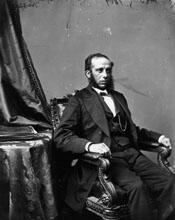
Here you will find contact information for Representative Robert Carlos De Large, including email address, phone number, and mailing address.
| Name | Robert Carlos De Large |
| Position | Representative |
| State | South Carolina |
| District | 2 |
| Party | Republican |
| Status | Former Representative |
| Term Start | March 4, 1871 |
| Term End | March 3, 1873 |
| Terms Served | 1 |
| Born | March 15, 1842 |
| Gender | Male |
| Bioguide ID | D000208 |
About Representative Robert Carlos De Large
Robert Carlos De Large (March 15, 1842 – February 14, 1874) was a Republican member of the United States House of Representatives from South Carolina, serving from 1871 to 1873. He served one term in Congress during the Reconstruction era, representing South Carolina as a member of the Republican Party and contributing to the legislative process at a critical moment in American history. Earlier, he had been a delegate to the 1868 South Carolina constitutional convention and was elected in 1868 to the South Carolina House of Representatives for one term.
De Large was born in Aiken, South Carolina, on March 15, 1842. He was of mixed race, the son of an African American mother and a mixed-race father, according to scholar Benjamin Ginsberg, while historian Timothy P. McCarthy suggests that both parents were mulatto or mixed race. His parents’ names are not known, but they were slaveholders and part of the mulatto elite of Charleston, South Carolina. His father worked as a tailor and his mother as a seamstress. As members of Charleston’s free Black and mixed-race artisan class, they occupied a relatively privileged position in the city’s hierarchy of people of color before the Civil War.
Encouraged by his parents to pursue education, De Large was sent to North Carolina for primary schooling and later returned to Charleston, where he graduated from Wood High School. Following his education, he became a tailor and farmer, continuing in the skilled trade of his father while also engaging in agriculture. As a young man in Charleston, he joined the Brown Fellowship Society, an exclusive organization of free people of color who had been free before the Civil War. The society’s members were among the city’s African American elite, largely composed of skilled artisans and community leaders, and De Large’s membership reflected his family’s status and his own emerging role in civic life.
During the American Civil War, De Large was employed by the Confederate Navy. In that capacity he was able to save a considerable sum of money, which provided him with a financial foundation in the immediate postwar years. After the war, as Reconstruction reshaped political and social structures in the South, he turned to public life and quickly became active in Republican politics in South Carolina.
De Large’s political career advanced rapidly during Reconstruction. In 1868 he was elected as a delegate to the South Carolina constitutional convention, which drafted a new state constitution in the aftermath of the Civil War. That same year he was elected as a Republican member of the South Carolina House of Representatives, where he served one term until 1870. In 1870 he was elected state land commissioner, a position of considerable importance in a period when land policy and access to property were central issues for newly freed African Americans. He also served as one of the commissioners of the state’s sinking fund, participating in the management of South Carolina’s public debt.
Later in 1870, De Large was elected to the United States House of Representatives. He served in Congress from March 4, 1871, until January 24, 1873, during the Forty-second Congress. As a member of the House of Representatives, he participated in the democratic process and represented the interests of his South Carolina constituents at a time when African American political participation was expanding under Reconstruction. His tenure, however, was overshadowed by a contested election brought by his Democratic opponent, Christopher C. Bowen. After investigating the matter, the House Committee on Elections found extensive “abuses and irregularities” on both sides during the campaign and concluded that it was impossible to determine a clear victor. The committee also determined that De Large had simultaneously held two positions in South Carolina state government that were incompatible with his service in Congress. On January 18, 1873, the committee recommended that the seat be declared vacant for the remainder of the Forty-second Congress, and on January 24, 1873, the full House agreed, vacating his seat a few weeks before the Congress adjourned in March.
Following his departure from Congress, De Large continued in public service at the local level. He served as a magistrate in South Carolina, remaining engaged in the administration of justice and community affairs during the final months of his life. His post-congressional service reflected his ongoing commitment to public life despite the controversies that had ended his term in the national legislature.
Robert Carlos De Large died of tuberculosis in Charleston, South Carolina, on February 14, 1874, at the age of 31. He was buried in the Brown Fellowship Graveyard, associated with the same Brown Fellowship Society in which he had been a member as a young man. His brief but notable career placed him among the early African American officeholders in the United States Congress during Reconstruction, and he is remembered as part of the first generation of African American representatives who sought to shape national policy in the years immediately following the Civil War.