Representative Robert Edward Difenderfer
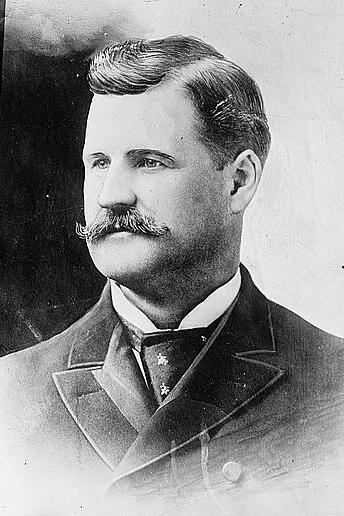
Here you will find contact information for Representative Robert Edward Difenderfer, including email address, phone number, and mailing address.
| Name | Robert Edward Difenderfer |
| Position | Representative |
| State | Pennsylvania |
| District | 8 |
| Party | Democratic |
| Status | Former Representative |
| Term Start | April 4, 1911 |
| Term End | March 3, 1915 |
| Terms Served | 2 |
| Born | June 7, 1849 |
| Gender | Male |
| Bioguide ID | D000343 |
About Representative Robert Edward Difenderfer
Robert Edward Difenderfer (June 7, 1849 – April 25, 1923) was an American dentist, businessman, and Democratic politician from Pennsylvania who served as a Representative in the United States Congress from 1911 to 1915. He represented Pennsylvania’s 8th congressional district, then composed of Bucks and Montgomery Counties, and contributed to the legislative process during two terms in the House of Representatives.
Difenderfer was born on June 7, 1849, in Lewisburg, Union County, Pennsylvania. He attended the common schools in his native area and pursued the study of dentistry as a young man. His early education and professional training prepared him for a career that initially combined medical practice with later entrepreneurial ventures, both in the United States and abroad.
After completing his dental studies, Difenderfer practiced dentistry for fourteen years in Lewisburg and in Pottsville, Pennsylvania. He subsequently expanded his professional interests beyond dentistry and entered into industrial and commercial pursuits. In a notable international undertaking, he built and operated the first woolen mill at Tianjin, China, reflecting both his entrepreneurial initiative and his engagement with overseas economic opportunities at the turn of the twentieth century.
Difenderfer returned to the United States in August 1900 and settled in the Philadelphia region. He engaged in the wholesale lumber business and worked as a contractor in Jenkintown, Pennsylvania, further solidifying his standing as a businessman. In addition to his lumber and contracting activities, he later entered the retail confectionery business in Jenkintown. During this period he resided in Ashbourne, Pennsylvania, a suburban community in the same general area.
A member of the Democratic Party, Difenderfer was elected to the United States House of Representatives as a Democrat to the Sixty-second and Sixty-third Congresses, serving from 1911 to 1915. He represented Pennsylvania’s 8th congressional district, then consisting of Bucks and Montgomery Counties. His service in Congress occurred during a significant period in American history, overlapping with the early years of the Progressive Era and the administration of President Woodrow Wilson. As a member of the House of Representatives, he participated in the democratic process and represented the interests of his constituents in southeastern Pennsylvania.
During his congressional tenure, Difenderfer served on the Committee on Foreign Affairs, the Committee on Pensions, and the Committee on Expenditures in the War Department (often referred to as the Army expenditure committee). He took an active role in oversight and investigative matters. He brought before the House committee on expenditures in the United States Department of War an investigation concerning alleged favoritism by the government in awarding shoe contracts. In 1912 he also requested that Secretary of Commerce and Labor Charles Nagel investigate high coal prices, reflecting his concern with economic conditions and consumer costs. Although some sources state his service as extending from 1911 to 1914, his two full terms in office correspond to service through March 3, 1915, at the close of the Sixty-third Congress.
Difenderfer sought to continue his congressional career but was unsuccessful in securing renomination. He was an unsuccessful candidate for the Democratic renomination in 1914, 1916, and 1918. In 1914 he was defeated for the Democratic nomination by Harry Grim. Difenderfer challenged the result, questioned the vote count, and requested a recount, but the outcome stood, and he was succeeded in Congress by Republican Henry W. Watson. After leaving office, he returned to his business pursuits in the Philadelphia area.
In his later years, Difenderfer continued to reside in the Philadelphia region, living in Ashbourne and maintaining business interests in nearby communities. He died on April 25, 1923, at his home in Philadelphia, Pennsylvania. Robert Edward Difenderfer was interred in Westminster Cemetery, closing a life that encompassed professional practice in dentistry, international industrial enterprise, domestic business activity, and two terms of service in the United States House of Representatives.