Representative Robert Lee Doughton
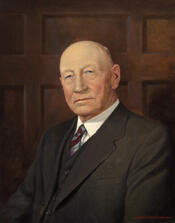
Here you will find contact information for Representative Robert Lee Doughton, including email address, phone number, and mailing address.
| Name | Robert Lee Doughton |
| Position | Representative |
| State | North Carolina |
| District | 9 |
| Party | Democratic |
| Status | Former Representative |
| Term Start | April 4, 1911 |
| Term End | January 3, 1953 |
| Terms Served | 21 |
| Born | November 7, 1863 |
| Gender | Male |
| Bioguide ID | D000448 |
About Representative Robert Lee Doughton
Robert Lee “Bob” Doughton (November 7, 1863 – October 1, 1954) was a Democratic Representative from North Carolina who served in the United States House of Representatives for 42 consecutive years, from 1911 to 1953. Born in Laurel Springs, Alleghany County, North Carolina, he became widely known as “Farmer Bob,” reflecting both his rural background and his political identity as an advocate for agrarian and working-class interests. Over the course of 21 terms in office, he became the longest-serving member of the House of Representatives in North Carolina’s history and, in his final months in Congress, held the honorary title of Dean of the United States House of Representatives.
Doughton grew up in the mountain region of northwestern North Carolina, where agriculture and small-scale farming shaped the local economy and culture. His early life in Alleghany County, a sparsely populated and largely rural area, informed his political outlook and helped establish his reputation as a practical, plainspoken representative of his constituents. Before entering national politics, he was engaged in farming and local affairs, gaining experience that would later underpin his legislative focus on tax policy, infrastructure, and social welfare measures affecting ordinary citizens and rural communities.
Elected to Congress in 1910 as a Democrat, Doughton took his seat in the Sixty-second Congress on March 4, 1911, beginning a congressional career that would span the administrations of numerous presidents and encompass World War I, the Great Depression, World War II, and the early Cold War. As a member of the House of Representatives from North Carolina, he consistently participated in the legislative process and represented the interests of his district’s constituents during a period of profound economic and social transformation in the United States. His long tenure allowed him to accumulate seniority and influence, positioning him as a central figure in fiscal and social policy debates.
Doughton’s most significant institutional role came through his service on the powerful House Committee on Ways and Means, which has jurisdiction over taxation, tariffs, and many aspects of federal revenue policy. He served as chairman of the committee for a total of 18 years, from 1933 to 1947 and again from 1949 to 1953. In this capacity he co-sponsored, held extensive hearings on, and oversaw the passage of the Social Security Act of 1935, one of the cornerstone pieces of New Deal legislation. His leadership on Ways and Means made him a key architect of federal tax and social insurance policy during the Roosevelt and Truman administrations.
During the presidency of Herbert Hoover, Doughton played a notable role in defeating a proposal for a general national sales tax, which he opposed as regressive and harmful to ordinary consumers. He later described this outcome as “the greatest victory…achieved for the common people since the days of Woodrow Wilson,” underscoring his self-conception as a defender of working- and middle-class Americans. According to one study, Doughton was part of a “hardy band of southern liberals in Congress” that was “inspired and directed” by President Franklin D. Roosevelt’s leadership, and he frequently aligned himself with New Deal initiatives that expanded the federal government’s role in economic and social welfare.
Doughton was also instrumental in the creation of the Blue Ridge Parkway, a scenic highway running through the Appalachian Highlands that became one of the most-traveled parkways in the United States. In the 1930s he used his influence in Congress to secure funding and federal support for the project, which not only promoted conservation and tourism but also provided employment during the Depression. In recognition of his efforts, the largest park and recreational area on the Blue Ridge Parkway was named in his honor, cementing his legacy in the region’s landscape as well as in its political history.
In addition to his work on social insurance and infrastructure, Doughton is known for introducing the Marihuana Tax Act of 1937. Framed as a revenue measure under Congress’s taxing power, the act effectively served as a federal ban on marijuana in the United States at a time when the federal government lacked clear constitutional authority to directly regulate medicines or drugs. By imposing prohibitive taxes and strict regulatory requirements, the legislation sharply curtailed the legal cultivation and distribution of cannabis and marked a major turning point in federal drug policy.
Robert Lee Doughton retired from Congress at the conclusion of his final term in 1953, after more than four decades of continuous service. He died on October 1, 1954, in North Carolina, leaving behind a legacy as one of the most influential legislators in his state’s history. His long career, marked by leadership on tax policy, social security, infrastructure development, and regulatory legislation, reflected both his deep roots in rural North Carolina and his prominent role in shaping national policy during a transformative era in American history.