Representative Robert B. Duncan
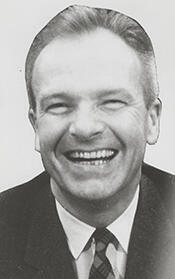
Here you will find contact information for Representative Robert B. Duncan, including email address, phone number, and mailing address.
| Name | Robert B. Duncan |
| Position | Representative |
| State | Oregon |
| District | 3 |
| Party | Democratic |
| Status | Former Representative |
| Term Start | January 9, 1963 |
| Term End | January 3, 1981 |
| Terms Served | 5 |
| Born | December 4, 1920 |
| Gender | Male |
| Bioguide ID | D000537 |
About Representative Robert B. Duncan
Robert Blackford Duncan (December 4, 1920 – April 29, 2011) was an American politician and attorney from the state of Oregon. A member of the Democratic Party, he served multiple terms in the Oregon Legislative Assembly and as a U.S. Representative from Oregon between 1963 and 1981, contributing to the legislative process during five terms in Congress and representing two different congressional districts. An Illinois native and World War II veteran, he also ran three unsuccessful campaigns for the United States Senate. In the Oregon House of Representatives he served as Speaker for four years, and later became a prominent figure in Oregon and Pacific Northwest public affairs.
Duncan was born in Normal, Illinois, on December 4, 1920. His father, Eugene Duncan, came to Illinois from a family in Missouri whose ancestors were originally from Scotland, and his mother, Catherine Blackford, was of Welsh origin, her parents having immigrated from Wales to the United States in the late nineteenth century. He was the second of four boys—Carter, Bob, Clark, and John Bruce—and grew up attending public schools in nearby Bloomington. In 1939, at age eighteen, he traveled with a friend to Alaska, where he worked in the gold fields and enrolled at the University of Alaska. He remained there through 1940 before transferring to Illinois Wesleyan University. While a student he also worked for a bank and a seed company, experiences that helped support his education.
Duncan graduated from Illinois Wesleyan University in 1942 with a bachelor’s degree. During his college years he met fellow student Marijane Beverly Dill (born June 30, 1920), and the two were married on December 19, 1942; they would have seven children together. With the United States’ entry into World War II, Duncan entered military service. From 1942 to 1945 he served in the United States Merchant Marine and in the United States Naval Air Force as a pilot, gaining experience that would shape his later public service and outlook on national security and foreign policy.
After the war, Duncan pursued legal training. He enrolled at the University of Michigan Law School, where he earned an LL.B. in 1948, and he passed the bar examination in October of that year. Following his graduation, he and his family moved from Michigan to Portland, Oregon, and then to Medford in southern Oregon. In Medford he joined the law practice of William M. McAllister, beginning a legal career that soon led him into elective office. His early years in Oregon established him as a community leader and positioned him for rapid advancement in state politics.
Duncan’s formal political career began in the mid-1950s. In 1954 he was nominated as a write-in candidate for the Oregon House of Representatives, but he declined the opportunity for economic reasons. Two years later, in 1956, he successfully ran for the Oregon House and was elected as a Democrat. He served three terms in the Oregon House of Representatives and was chosen by his colleagues as Speaker, a position he held for four years. His leadership in the state legislature, combined with his growing prominence in Democratic politics, led to his election in 1962 to the United States House of Representatives from Oregon’s 4th congressional district, based in Medford.
Duncan entered Congress at a significant period in American history, taking office in 1963 as the nation confronted the civil rights movement, the escalation of the Vietnam War, and major changes in domestic policy. As a member of the U.S. House of Representatives, he participated in the democratic process and represented the interests of his Oregon constituents, contributing to the legislative work of the chamber over five terms in office. In 1966, he sought higher office as the Democratic nominee for the U.S. Senate seat being vacated by Senator Maurine B. Neuberger. Duncan strongly supported President Lyndon B. Johnson’s Vietnam War policies, while his Republican opponent, Governor Mark Hatfield, was an outspoken critic of the war. The sharp contrast between their positions produced a major split within the Oregon Democratic Party. The state’s senior Democratic U.S. Senator, Wayne Morse, a staunch opponent of the Vietnam War, endorsed Hatfield over his fellow Democrat Duncan, angering many party regulars. Hatfield’s statewide popularity and the intra-party division contributed to Duncan’s narrow defeat in the general election.
Following the 1966 Senate race, Duncan moved to Portland in 1967 and returned to the practice of law, where he remained until 1974. He continued to seek a Senate seat, challenging Senator Morse in the 1968 Democratic primary. Once again, the Vietnam War was central to the campaign. Duncan, initially leading the anti-war Morse, saw his advantage erode as the beginning of the Paris Peace Accords raised hopes for an end to the conflict; Morse ultimately won a narrow primary victory and then lost the general election to Republican state Representative Bob Packwood, who favored continued funding of the war. Duncan resumed his Portland law practice but made a third bid for the Senate in 1972, again losing the Democratic nomination to Morse, this time by a wider margin; Morse went on to lose to Senator Hatfield in the general election.
Duncan returned to the U.S. House of Representatives in the mid-1970s. After Representative Edith Green retired from Congress, he ran in 1974 for her Portland-based seat in Oregon’s 3rd congressional district. He won the election and reentered Congress, serving three additional terms from 1975 to 1981. Over the course of his congressional career he thus represented two different Oregon districts, the 4th and the 3rd, reflecting both his southern Oregon and Portland political bases. His service in Congress during these years coincided with the aftermath of the Vietnam War, the Watergate era, and significant debates over energy, environmental policy, and economic issues. In 1980, he was defeated in the Democratic primary in an upset by Ron Wyden, who went on to win the general election and later became a U.S. Senator.
After leaving Congress, Duncan remained active in public affairs in the Pacific Northwest. In 1985 he returned to live in Oregon’s coastal community of Yachats, having already begun service on the Northwest Power Planning Council in 1984. He served on the Council until 1988 and was its chairperson in 1987, helping to shape regional energy and resource policy. After stepping down from the Council, he devoted more time to personal pursuits, including working on his house in Yachats, restoring and maintaining a collection of old cars, and spending time with his seven grandchildren.
Duncan’s personal life was marked by long-standing ties to Oregon and to public service. His first wife, Marijane, died on November 9, 1990. In 1995 he married Kathryn Boe, the widow of Jason Boe, who had served in the Oregon Senate from 1970 to 1980 and held the position of Senate president for four terms. In his later years Duncan lived in Portland. He died at the age of 90 on April 29, 2011, at the Mirabella retirement home in Portland. His papers are preserved in the Robert Blackford Duncan collection at the University of Oregon, which includes a four-volume compilation of his writings. Copies of this work are also held in the archival collections of Illinois Wesleyan University in Normal, Illinois; the University of Alaska in Fairbanks; and the Oregon Historical Society in Portland, documenting the life and career of a significant Oregon legislator and congressman.