Representative Robert W. Edgar
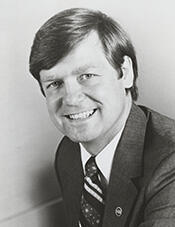
Here you will find contact information for Representative Robert W. Edgar, including email address, phone number, and mailing address.
| Name | Robert W. Edgar |
| Position | Representative |
| State | Pennsylvania |
| District | 7 |
| Party | Democratic |
| Status | Former Representative |
| Term Start | January 14, 1975 |
| Term End | January 3, 1987 |
| Terms Served | 6 |
| Born | May 29, 1943 |
| Gender | Male |
| Bioguide ID | E000043 |
About Representative Robert W. Edgar
Robert William Edgar (May 29, 1943 – April 23, 2013) was an American politician, administrator, and religious leader who served six terms as a Democratic Representative from Pennsylvania in the United States House of Representatives from 1975 to 1987. Representing Pennsylvania’s 7th congressional district, a traditionally Republican, Delaware County-based district, he became the first Democrat in 36 years to hold the seat and played an active role in legislative initiatives related to public transportation, environmental safety, and veterans’ benefits. After leaving Congress, he held prominent leadership positions in religious and public-interest organizations, including the Claremont School of Theology, the National Council of the Churches of Christ in the USA, and Common Cause.
Edgar was born in Philadelphia, Pennsylvania, on May 29, 1943, and grew up in nearby Springfield, Pennsylvania, in the greater Philadelphia area. He attended Lycoming College in Williamsport, Pennsylvania, where he received a Bachelor of Arts degree. Pursuing a religious vocation, he enrolled at the Theological School of Drew University in Madison, New Jersey, earning a Master of Divinity degree and subsequently being ordained as a minister in the United Methodist Church. In 1969, he received a certificate in pastoral psychiatry from Hahnemann University Hospital in Philadelphia, further strengthening his pastoral and counseling skills. Edgar married Merle Louise Deaver, and the couple had three sons.
Before entering elective office, Edgar began his career as a Methodist pastor and chaplain. He served as pastor of a Methodist church in Lansdowne, Pennsylvania, and worked as the United Protestant Chaplain at Drexel University in Philadelphia, ministering to students and faculty in a campus setting. He also gained experience in the political arena as a special assistant to Congressman Bill Gray of Pennsylvania, an assignment that introduced him to federal legislative processes and constituent service. These combined experiences in ministry and public service helped shape his later approach to politics, emphasizing ethics, social justice, and public accountability.
Edgar was elected to the United States House of Representatives in 1974 and took office on January 3, 1975, representing Pennsylvania’s 7th congressional district. His election marked a significant political shift, as he became the first Democrat in 36 years to represent this traditionally Rockefeller Republican district. He was reelected five times, serving continuously until January 3, 1987, often facing vigorous Republican opposition. His closest contests came in 1978, when he was returned to office by a margin of approximately 1,300 votes, and in 1984, when he won by only 412 votes even as President Ronald Reagan carried the district by more than 20 percentage points in a landslide reelection. During his six terms in Congress, Edgar sought to improve public transportation, authored the community “Right to Know” provisions of Superfund legislation to ensure communities had access to information about hazardous substances, and co-authored the new G.I. Bill for the all-volunteer armed services, expanding educational and other benefits for veterans.
During his congressional service, Edgar held several notable assignments and leadership roles. From 1976 through 1978, he served as a member of the House Select Committee on Assassinations, which investigated the deaths of Dr. Martin Luther King Jr. and President John F. Kennedy, contributing to the reexamination of these pivotal events in American history. From 1982 through 1986, he chaired the Congressional Clearinghouse on the Future, a bipartisan forum that examined long-term policy issues and emerging trends affecting the United States. His legislative record and committee work reflected a focus on environmental protection, government transparency, and support for veterans and working families. In 1986, rather than seek reelection to the House, Edgar ran for the United States Senate from Pennsylvania. He won the Democratic primary, defeating Auditor General Don Bailey, a former congressman from western Pennsylvania, but lost the general election to incumbent Republican Senator Arlen Specter by more than 12 percentage points. The experience of the Senate campaign, particularly the role of money in politics, left him increasingly frustrated with the campaign finance system and helped move him toward advocacy for clean elections and comprehensive campaign finance reform, themes he later articulated publicly, including at the 2004 Democracy Matters Conference in Albany, New York.
After leaving Congress in 1987, Edgar returned to religious and educational leadership on a national scale. In 1990, he became president of the Claremont School of Theology in Claremont, California, a graduate-professional institution related to the United Methodist Church and part of the Claremont Colleges consortium east of Los Angeles. Assuming the presidency during a period of financial difficulty for the school, he oversaw a decade of institutional strengthening, including increased enrollment and growth of the endowment, serving in that role until 2000. During this period he remained active in Methodist denominational life, later becoming a member of the Greater New Jersey Annual Conference in 2001 after transferring from the California-Pacific Conference.
In 2000, Edgar began a seven-year term as general secretary and chief executive of the National Council of the Churches of Christ in the USA (NCC), the nation’s largest ecumenical body. Under his leadership, the NCC, then about fifty years old, undertook a process of reshaping its mission and priorities. The organization focused its efforts on major initiatives aimed at overcoming poverty, protecting the natural environment, fostering interfaith understanding, and building international peace. Edgar also served on the boards of several national organizations, including Independent Sector, the National Coalition for Health Care, and the National Religious Partnership for the Environment. He was a member of the board of directors of the Environmental and Energy Study Institute, an independent, non-profit organization that serves as a principal resource for Congress on environmental and energy policy issues, and he was an endorser of the Genocide Intervention Network, reflecting his concern with human rights and international justice.
Following his retirement from the National Council of Churches, Edgar became president and CEO of Common Cause in 2007, leading the nonpartisan government watchdog organization until his death. In this role he advocated for publicly funded elections, stronger ethics rules, and greater transparency and accountability in government, continuing the reform themes that had grown out of his own political experience. Over the course of his public life, he was recognized by several national organizations for his work, including honors from the American Legion, Vietnam Veterans of America, and the National Taxpayers Union, reflecting the breadth of his engagement across veterans’ issues, fiscal responsibility, and civic reform.
Robert William Edgar died of a heart attack on April 23, 2013, at his home in Burke, Virginia, while still serving as president and CEO of Common Cause. At the time of his death, he was widely regarded as a figure who had bridged religious leadership, electoral politics, and public-interest advocacy, bringing a consistent emphasis on ethics, social justice, and democratic participation to each phase of his career.