Representative Robert Fred Ellsworth
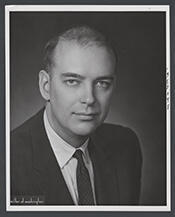
Here you will find contact information for Representative Robert Fred Ellsworth, including email address, phone number, and mailing address.
| Name | Robert Fred Ellsworth |
| Position | Representative |
| State | Kansas |
| District | 3 |
| Party | Republican |
| Status | Former Representative |
| Term Start | January 3, 1961 |
| Term End | January 3, 1967 |
| Terms Served | 3 |
| Born | June 11, 1926 |
| Gender | Male |
| Bioguide ID | E000148 |
About Representative Robert Fred Ellsworth
Robert Fred Ellsworth (June 11, 1926 – May 9, 2011) was an American legislator, diplomat, and defense official who served three terms as a Republican Representative from Kansas in the United States Congress from 1961 to 1967 and later held senior positions in the administrations of Presidents Richard Nixon and Gerald Ford. He served as the United States Permanent Representative to the North Atlantic Treaty Organization (NATO), an ambassadorial-level appointment, from 1969 to 1971, and subsequently as Deputy Secretary of Defense under President Ford. Over the course of his public career, Ellsworth contributed to the legislative process in Congress, to U.S. foreign and defense policy in the executive branch, and to international diplomacy.
Ellsworth was born in Lawrence, Kansas, on June 11, 1926, and was educated in the public schools of that city. During World War II he served in the United States Navy, beginning a pattern of military service that would continue into the Korean War, when he again served in the Navy. After his wartime service, he returned to Kansas and enrolled at the University of Kansas. He graduated in 1945 with a baccalaureate degree in engineering and was a member of the Alpha Nu chapter of the Beta Theta Pi collegiate fraternity. His early training in engineering and his military experience helped shape his later interest in defense and national security policy.
Following his undergraduate studies, Ellsworth pursued legal training at the University of Michigan Law School. He received his law degree in 1949 and was admitted to the bar. He then entered private practice, working as an attorney in his hometown of Lawrence, Kansas, and later in Springfield, Massachusetts. His legal career provided him with experience in statutory interpretation and public affairs that would prove useful when he entered electoral politics. During this period he remained connected to public service and Republican Party activities, building the political relationships that facilitated his eventual election to Congress.
Ellsworth was elected as a Republican to the U.S. House of Representatives from Kansas and served three consecutive terms from 1961 to 1967, a period marked by significant developments in civil rights, Cold War policy, and domestic reform. He initially represented Kansas’s 1st congressional district and later Kansas’s 3rd congressional district. As a member of the House of Representatives, he participated in the democratic process and represented the interests of his Kansas constituents while contributing to national legislative debates. While serving as a congressman for Kansas’s 1st congressional district, Ellsworth voted “present” on the proposed 24th Amendment to the U.S. Constitution, which abolished the poll tax in federal elections. During his tenure as representative for Kansas’s 3rd congressional district, he voted in favor of the Civil Rights Act of 1964 and the Voting Rights Act of 1965, aligning himself with landmark federal legislation expanding civil and voting rights. Ellsworth left Congress at the conclusion of his third term in 1967.
After departing the House, Ellsworth continued his public service in the executive branch. He served as assistant to the chairman of the Federal Maritime Commission, gaining experience in regulatory and maritime affairs at the federal level. With the advent of the Nixon administration, he was appointed an Assistant to the President, a senior White House position in which he advised on matters related to national security and foreign policy. In 1969 he was named United States Permanent Representative to NATO, serving in Brussels from 1969 to 1971. In that ambassadorial role, he participated in alliance consultations and helped shape Western defense and deterrence policy during a critical phase of the Cold War.
Under President Gerald Ford, Ellsworth was appointed Deputy Secretary of Defense, one of the highest civilian positions in the Department of Defense. In that capacity he worked on defense planning, budgeting, and strategic policy at a time of post–Vietnam War reassessment and ongoing East–West tensions. His background as a naval officer, engineer, lawyer, legislator, and NATO ambassador informed his approach to defense management and alliance relations. Ellsworth’s service in these senior posts reflected his long-standing engagement with national security and his transition from legislative to executive leadership.
In his later years, Ellsworth remained active in public affairs and private enterprise. He founded and directed a research firm, Hamilton BioVentures, based near Solana Beach, California, focusing on investment and research in biotechnology and related fields. In recognition of his service and standing, he was admitted to the Order of Saint John as a knight of honor in 1995. Even in retirement he continued to comment on defense and security issues. On November 9, 2010, he provided on-air commentary to KFMB regarding an unexplained vapor trail observed in the airspace off the coast of Los Angeles, which was widely speculated at the time to be a missile launch. He urged caution and advised waiting for definitive answers from the military, while noting that it could be a test firing of an intercontinental ballistic missile from a submarine, “to demonstrate, mainly to Asia, that we could do that.”
Robert Fred Ellsworth died on May 9, 2011, in Encinitas, California, near Solana Beach, where he had lived and conducted his business activities. His career encompassed military service in two wars, legal practice, three terms in the U.S. House of Representatives, senior advisory roles in the White House, an ambassadorship to NATO, and high office in the Department of Defense, marking him as a significant figure in mid-20th-century American legislative and defense history.