Representative Robert William Everett
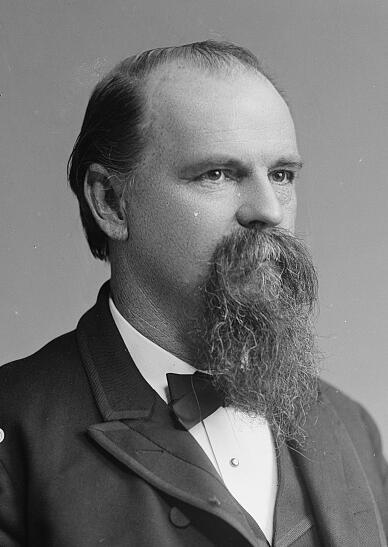
Here you will find contact information for Representative Robert William Everett, including email address, phone number, and mailing address.
| Name | Robert William Everett |
| Position | Representative |
| State | Georgia |
| District | 7 |
| Party | Democratic |
| Status | Former Representative |
| Term Start | December 7, 1891 |
| Term End | March 3, 1893 |
| Terms Served | 1 |
| Born | March 3, 1839 |
| Gender | Male |
| Bioguide ID | E000267 |
About Representative Robert William Everett
Robert William Everett (March 3, 1839 – February 27, 1915) was a Democratic U.S. Representative from Georgia who served one term in the United States Congress from 1891 to 1893. His public life spanned the tumultuous decades from the antebellum era through the Civil War, Reconstruction, and the emergence of the modern South, and he was active in state and national politics during a period of significant political and economic change in the post-Reconstruction South.
Everett was born on March 3, 1839, in Hayneville, Houston County, Georgia, in a region dominated by an agricultural economy and increasingly intense sectional tensions. Details of his early family life and upbringing are sparse in the historical record, but he came of age in the rural South, where the rhythms of farm life and the politics of slavery and states’ rights shaped the outlook of his generation. The largely agrarian character of his native community would later be reflected in his own career in agriculture and in his advocacy for the interests of farmers and rural constituencies.
Everett received his early education in the common schools of Georgia, an experience that provided him with the basic academic foundation expected of aspiring professionals and public men in the mid-nineteenth-century South. As a young man he pursued further study, preparing himself for a professional and public career. His formative years were profoundly influenced by the disruptions of the Civil War and its aftermath, which reshaped the economy and social order of Georgia and the wider South. Although specific details of his activities during the war years are not extensively documented, the conflict and Reconstruction that followed created the political environment in which he would later operate, reinforcing his identification with the Democratic Party and with the concerns of white rural communities seeking to recover from wartime devastation.
Before his election to Congress, Everett was engaged primarily in agricultural pursuits, working as a farmer and landholder in Georgia. In the decades after Reconstruction, he became identified with the interests of farmers in his region and participated actively in local and state affairs as a Democrat at a time when the party was reasserting and consolidating its dominance in Georgia politics. His familiarity with the economic challenges facing rural communities—declining crop prices, indebtedness, and the pressures of a changing national economy—helped establish his reputation as a representative voice for his area. Through his involvement in local politics and civic life, he built the standing that ultimately led to his selection as a candidate for national office.
Everett was elected as a Democrat to the Fifty-second Congress and served as a Representative from Georgia from March 4, 1891, to March 3, 1893. His single term in the U.S. House of Representatives coincided with a significant period in American history marked by contentious debates over monetary policy, tariffs, and agricultural distress, as well as the early stirrings of the Populist movement that drew heavily on agrarian discontent. Serving as part of the Democratic majority in the House, Everett participated in the legislative process and in the deliberations over measures affecting the national economy and the South’s recovery. Although specific committee assignments and sponsored legislation associated with his name are not extensively documented, his service placed him among those Southern Democrats who sought to respond to the concerns of farmers and rural communities during a time of economic uncertainty and political realignment.
After the conclusion of his term in Congress in 1893, Everett returned to private life in Georgia. He resumed his agricultural pursuits and local interests, continuing to live and work within the same rural milieu that had shaped his earlier career. Remaining identified with the Democratic Party and the civic life of his community, he exemplified the pattern of many one-term representatives of his era who alternated between periods of public service and private occupation. In his later years he stayed connected to the social and economic concerns of his region, even as the South moved further into the twentieth century and confronted new political and economic challenges.
Robert William Everett died on February 27, 1915. His life, extending from the antebellum South through the Civil War and Reconstruction to the early twentieth century, reflected the broader transformations of Georgia and the region. His single term in Congress from 1891 to 1893 secured him a place in the political history of the state and in the record of Democratic leadership in the late nineteenth-century South.