Representative Robert Hermann Foerderer
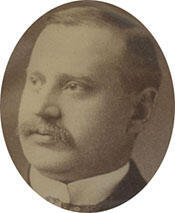
Here you will find contact information for Representative Robert Hermann Foerderer, including email address, phone number, and mailing address.
| Name | Robert Hermann Foerderer |
| Position | Representative |
| State | Pennsylvania |
| District | 4 |
| Party | Republican |
| Status | Former Representative |
| Term Start | December 2, 1901 |
| Term End | March 3, 1905 |
| Terms Served | 2 |
| Born | May 16, 1860 |
| Gender | Male |
| Bioguide ID | F000232 |
About Representative Robert Hermann Foerderer
Robert Hermann Foerderer (May 16, 1860 – July 26, 1903) was an American businessman and Republican politician who served as a member of the U.S. House of Representatives from Pennsylvania from 1901 until his death in 1903. He represented Pennsylvania’s at-large congressional district from 1901 to 1903 and Pennsylvania’s 4th congressional district in 1903, contributing to the legislative process during two terms in office. His service in Congress occurred during a significant period in American history at the turn of the twentieth century, when industrial expansion, financial regulation, and urban growth were central national concerns.
Foerderer was born on May 16, 1860, in Bad Frankenhausen, in Schwarzburg-Rudolstadt, in what is now Germany. His parents were U.S. citizens who were visiting the place of their birth at the time of his arrival. His father, Edward Foerderer, was a manufacturer of Morocco leather, a trade that would decisively shape Robert’s later career. Shortly after his birth, the family returned to the United States and settled in Philadelphia, Pennsylvania. There, Foerderer attended public and private schools, receiving a practical education suited to the commercial and industrial life of the city. He did not attend college, instead moving directly into business pursuits.
As a young man, Foerderer first worked briefly as a bank clerk, gaining experience in finance and administration. He soon entered the leather industry as an apprentice in his father’s morocco leather business in Philadelphia. Immersed in the technical and commercial aspects of leather production, he developed both a detailed understanding of tanning processes and a keen sense of the market for high-quality leather goods. In 1881, he married Caroline Fischer; the couple had two children, including a son, Percival, who would later assume leadership of the family enterprise.
In 1885, Foerderer established his own firm, Robert H. Foerderer, Inc., which manufactured leather goods and quickly became a major industrial concern. He invented a chrome tanning technique that treated animal skins with chromium sulfate, producing a soft, supple leather ideally suited for handbags, shoes, and gloves. This innovation reduced tanning time from approximately four months to two or three weeks, dramatically increasing efficiency. Foerderer trademarked his new leather product as “Vici Kid”—“Vici” from the Latin for “I conquered,” and “kid” referring to the goat skin used in production. He also partnered with the Rohm & Haas chemical company to implement the use of Oropon as a replacement for dog dung in the leather-softening process, modernizing and sanitizing a traditionally unpleasant stage of tanning.
From modest beginnings as a one-room factory in the Frankford section of Philadelphia, Robert H. Foerderer, Inc. expanded into a vast industrial complex. At its height, the plant covered 17 acres, employed more than 4,000 workers, and processed approximately 50,000 skins per day. The company also utilized by-products of leather production to manufacture hide glue and goat hair for various industrial and commercial uses. The glue plant was located in Philadelphia’s Bridesburg neighborhood, while the goat-hair factory operated near the main leather works. Foerderer’s Vici Kid leather gained national and international recognition when it won the grand prize and a gold medal at the 1893 Chicago World’s Fair, an honor that introduced the product to a broad audience and greatly increased demand.
Foerderer’s success in manufacturing led him into broader business and civic activities in Philadelphia. He served as president and director of the Keystone Telephone Company and sat on the boards of directors of the Philadelphia Rapid Transit Company, the Columbia Avenue Trust Company, and the Quaker City Trust. His prominence in business circles was reflected in his membership in leading social and professional organizations, including the Union League of Philadelphia, the Columbia Club, the Five O’Clock Club of Philadelphia, the Philadelphia Bourse, and the Manhattan Club of New York. He was also active in fraternal organizations, belonging to the Independent Order of Odd Fellows and attaining the thirty-second degree in Freemasonry. In 1895, he purchased the summer home of Charles Macalester in the Torresdale neighborhood of Philadelphia, renaming the estate Glen Foerd; it would become both a family residence and a symbol of his industrial success.
Foerderer entered national politics at the height of his business career. A member of the Republican Party, he was elected in 1900 to the Fifty-seventh Congress as a representative from Pennsylvania’s at-large congressional district, taking office on March 4, 1901. During his first term, he served on the House committees on Banking and Currency, Enrolled Bills, and Ventilation and Acoustics, positions that reflected both his financial background and his interest in the practical operations of the House. He was re-elected in 1902, this time to represent Pennsylvania’s 4th congressional district, and continued to serve in the House of Representatives until his death in 1903. Throughout his tenure, he participated in the democratic process and represented the interests of his Pennsylvania constituents during a period marked by debates over economic policy, industrial regulation, and urban infrastructure.
Foerderer died in office on July 26, 1903, at his home in Torresdale, Philadelphia. The official cause of death was listed as Bright’s disease, a historical term for chronic kidney disease. However, it has been suggested that he may have suffered from chromate poisoning as a result of years of direct exposure to chromium compounds while perfecting his chrome tanning technique. Following his death, Reuben Moon was elected to fill the resulting vacancy in Pennsylvania’s 4th congressional district. Foerderer was interred in Laurel Hill Cemetery in Philadelphia, a resting place for many of the city’s prominent figures.
After Foerderer’s death, his son Percival Foerderer assumed management of the leather business and continued the family’s prominence in the region’s industrial and social life. Percival is particularly known for building the La Ronda mansion and estate in Bryn Mawr, Pennsylvania, one of the notable Main Line residences of the early twentieth century. The Glen Foerd estate in Torresdale, which Robert H. Foerderer had acquired and renamed in 1895, has survived as a significant historic property. It is currently operated as a historic house museum, and its grounds serve as a public park, preserving the legacy of Foerderer’s life as an industrialist, civic leader, and member of Congress.