Representative Robert A. Gammage
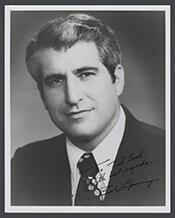
Here you will find contact information for Representative Robert A. Gammage, including email address, phone number, and mailing address.
| Name | Robert A. Gammage |
| Position | Representative |
| State | Texas |
| District | 22 |
| Party | Democratic |
| Status | Former Representative |
| Term Start | January 4, 1977 |
| Term End | January 3, 1979 |
| Terms Served | 1 |
| Born | March 13, 1938 |
| Gender | Male |
| Bioguide ID | G000036 |
About Representative Robert A. Gammage
Robert Alton “Bob” Gammage (March 13, 1938 – September 10, 2012) was an American politician, attorney, jurist, and educator who served as a Democrat in the Texas House of Representatives, the Texas State Senate, and the United States House of Representatives. A member of the Democratic Party, he represented Texas in the U.S. Congress from 1977 to 1979, contributing to the legislative process during one term in office and participating actively in the broader democratic process during a significant period in American history.
Gammage was born in Houston, Texas, and attended Milby High School in that city. After high school he moved to Corpus Christi, where he earned an associate of arts degree from Del Mar College in 1958 and a bachelor of science degree from the University of Corpus Christi in 1963. He continued his education with a master’s degree from Sam Houston State University in 1965 and then pursued legal studies, receiving a Juris Doctor from the University of Texas at Austin in 1969. Demonstrating a sustained commitment to legal scholarship, he later obtained a Master of Laws (LL.M.) from the University of Virginia School of Law in 1986.
In addition to his academic pursuits, Gammage served in the United States armed forces. He was on active duty in the United States Army from 1959 to 1960, during which time he was stationed at Fort Benning, Georgia, and in Seoul, Korea. He continued his military involvement in the Army Reserve from 1960 to 1964. Beginning in 1965, he served in the United States Navy Reserve, a commitment that extended until 2000 and culminated in his retirement with the rank of captain. Parallel to his early legal and political career, he also worked in higher education. Throughout the late 1960s and early 1970s, he served on the faculties of the University of Corpus Christi, San Jacinto College, and the South Texas College of Law, teaching while building his profile as a lawyer and public servant.
Gammage entered elective office in the Texas House of Representatives, serving from 1971 to 1973. In the House he became a member of the “Dirty 30,” a bipartisan group of reform-minded legislators who emerged in the wake of the Sharpstown stock fraud scandal and challenged the leadership of House Speaker Gus Mutscher, who was later convicted and sentenced to five years’ probation for conspiring to accept a bribe. As a state representative, Gammage advocated government reform, consumer and health legislation, voting rights for eighteen-year-olds, and equal rights for women. His legislative work included sponsorship or authorship of measures such as HB 249, relating to the regulation of practices used in the collection of debts; HB 250, concerning the awarding of attorney’s fees in civil actions where equity would be served by such an award; HB 251, removing insurance companies from certain coverage exemptions; and HB 307, refining the definition of deceptive trade practices in commerce. He also sponsored HB 592 on compensation for county attorneys in certain counties; HB 711 creating two family district courts for Harris County; HB 921 on an accused’s right to an examining trial before indictment; HB 1356 concerning contempt cast upon flags of the United States; HB 1357 relating to the jurisdiction of municipal courts and punishment for certain misdemeanors; HB 1359 proposing the abolition of the Parks and Wildlife Department and transfer of its powers to two newly established agencies; HB 1660 on the creation and jurisdiction of municipal courts in certain cities and the election of municipal judges; HB 1661 creating the La Porte Utility District; HB 1743 creating the Sagemeadow Utility District; HB 1801 requiring registration and filing of financial statements by persons representing interests before the Legislature and state agencies; HB 1843 relating to the pay of election judges and clerks; HB 1857 concerning the assignment of certain retired district judges; and HJR 76, which sought to reduce the minimum service requirement for eligibility under the Teacher Retirement System from ten years to five years.
Building on his House service, Gammage was elected to the Texas State Senate, where he served from 1973 to 1976. In 1976 he successfully ran for the United States House of Representatives, unseating freshman Republican Ron Paul and winning election to the 95th Congress. As a member of the House of Representatives from Texas from 1977 to 1979, he represented his constituents during a period marked by economic challenges and evolving national policy debates, and he participated in the legislative and oversight responsibilities of the chamber. After one term in Congress, he was defeated in his 1978 bid for reelection by Ron Paul, who reclaimed the seat. Gammage’s congressional service nonetheless formed a central part of his long public career and reinforced his reputation as a reform-oriented Democrat.
Following his departure from Congress, Gammage remained active in public service and law. From 1979 to 1980 he served as an assistant state attorney general under Texas Attorney General Mark Wells White. In 1980 he was appointed a special consultant to the United States Department of Energy under President Jimmy Carter, the last Democrat to carry Texas in the Electoral College in the twentieth century. In 1982, Gammage was elected as a justice of the Texas Third Court of Appeals in Austin, where he served until 1991. He then won election to the Texas Supreme Court in 1990 and served as a justice from 1991 until 1995. During his time on the bench he participated in nearly 250 cases and embraced an expansive interpretation of legal doctrines and constitutional provisions protecting individual rights and equality. Among the notable cases in which he took part were Colquette v. Forbes (1984), Kirby v. Edgewood Independent School District (1988), Edgewood Independent School District v. Kirby (1989), Valenzuela v. Aquino (1993), State v. Morales (1994), Barber v. Colorado Independent School District (1995), Star-Telegram, Inc. v. Doe (1995), and Rodgers v. Bradley (1995). In 1995 he resigned from the Texas Supreme Court to draw attention to what he viewed as the growing and problematic influence of campaign contributors and political action committees on judicial elections. Working with other proponents of judicial reform, including former Chief Justice Thomas R. Phillips, he played a key role in efforts that led to caps on campaign contributions in Texas judicial races.
In addition to his judicial and political work, Gammage maintained a strong presence in academia later in his career. In the late 1990s and early 2000s he taught political science and related subjects at Sam Houston State University, Texas A&M University–Corpus Christi (the successor institution to the University of Corpus Christi), Texas State University in San Marcos, and St. Edward’s University in Austin, a Roman Catholic–affiliated institution. His professional and scholarly contributions are reflected in collections such as the Robert A. Gammage Collection at Sam Houston State University and in his association with the Texas State and Sam Houston State University political science faculties, as well as in records of his judicial work.
Gammage remained engaged in electoral politics and public affairs into the twenty-first century. In 2006 he sought the Democratic nomination for governor of Texas but lost the primary to former U.S. Representative Chris Bell of Houston; Bell was subsequently defeated by incumbent Republican Governor Rick Perry in the general election. In 2008, Gammage worked in the unsuccessful campaign to secure the Democratic presidential nomination for Hillary Clinton, traveling to Iowa to meet with voters. That same year, on May 27, he delivered the funeral eulogy for his former “Dirty Thirty” colleague Joseph Hugh Allen, a former state representative from Baytown. According to his wife, Lynda Gammage, he spent his final years frequently performing pro bono legal work for individuals in need, continuing his long-standing commitment to public service and access to justice.
Robert Alton Gammage died at his home in Llano, Texas, on September 10, 2012, at the age of 74, of an apparent heart attack. His career spanned military service, legislative reform, congressional representation, judicial leadership, and academic instruction, leaving a substantial record in the United States Congress, the Texas judiciary, and the broader civic life of his state.