Representative Robert N. Giaimo
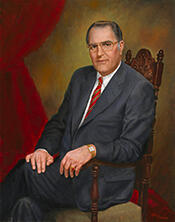
Here you will find contact information for Representative Robert N. Giaimo, including email address, phone number, and mailing address.
| Name | Robert N. Giaimo |
| Position | Representative |
| State | Connecticut |
| District | 3 |
| Party | Democratic |
| Status | Former Representative |
| Term Start | January 7, 1959 |
| Term End | January 3, 1981 |
| Terms Served | 11 |
| Born | October 15, 1919 |
| Gender | Male |
| Bioguide ID | G000151 |
About Representative Robert N. Giaimo
Robert Nicholas Giaimo (October 15, 1919 – May 24, 2006) was a Democratic United States Representative from Connecticut who served in Congress from January 3, 1959, to January 3, 1981. Over eleven consecutive terms, he became a prominent figure in federal budget policy and cultural legislation, co-sponsoring the laws that created the National Endowment for the Arts and the National Endowment for the Humanities. He also played a key role in the development of the Washington Metro system and sponsored legislation eliminating the loyalty oath requirement for college students applying for federal grants.
Giaimo was born in New Haven, Connecticut, on October 15, 1919. He was the son of an immigrant from Sicily who founded the Community Bank and Trust Company in New Haven, an institution that extended credit to many fellow immigrants and contributed to the economic life of the local community. Raised in nearby North Haven, he attended the public schools there, an experience that would later inform his interest in education policy and local governance.
After completing his early schooling, Giaimo pursued higher education at Fordham University in New York City, from which he graduated in 1941. He then studied law at the University of Connecticut, earning his law degree in 1943. His legal education was interrupted and shaped by the demands of World War II, and he combined academic preparation with impending military service as the United States intensified its involvement in the conflict.
During World War II, Giaimo served in the United States Army from 1943 until his separation from active duty in 1946, rising to the rank of first lieutenant. Following his active service, he continued his military involvement as a captain in the Judge Advocate General’s Corps in the United States Army Reserve, reflecting his legal training and ongoing commitment to public service. After the war, he was admitted to the bar in 1947 and commenced the practice of law in New Haven, Connecticut, building a professional foundation that complemented his emerging political career.
Giaimo’s entry into public life began at the local level. From 1949 to 1955, he served as a member of the North Haven Board of Education, participating in the oversight of local schools. He worked as an assistant clerk to the Probate Court in New Haven from 1952 to 1954, gaining experience in legal administration. From 1955 to 1958, he was chairman of the Connecticut Personnel Appeals Board, where he dealt with issues of public employment and civil service. At the same time, he served as third selectman of North Haven from 1955 to 1957, further grounding his political career in municipal governance and community affairs.
Politically, Giaimo first sought national office as the Democratic candidate for election to the Eighty-fifth Congress in 1956, but he was unsuccessful in that bid. He ran again two years later and was elected as a Democrat to the Eighty-sixth Congress and to the ten succeeding Congresses, serving from January 3, 1959, to January 3, 1981, as a Representative from Connecticut. His tenure in the House of Representatives spanned a period of significant change in American political and social life, including the civil rights era, the Great Society, the Vietnam War, and the economic challenges of the 1970s. Throughout these years, he participated in the legislative process and represented the interests of his Connecticut constituents in national debates.
Within Congress, Giaimo emerged as an influential voice on fiscal and cultural policy. During the Ninety-fifth and Ninety-sixth Congresses, he served as chairman of the House Committee on the Budget, placing him at the center of deliberations over federal spending and economic priorities in the late 1970s. He co-sponsored the landmark legislation establishing the National Endowment for the Arts and the National Endowment for the Humanities, helping to institutionalize federal support for cultural and scholarly endeavors. He was instrumental in the creation of the Washington Metro, supporting the development of the capital region’s mass transit system, and he sponsored legislation that eliminated the loyalty oath requirement for college students seeking federal grants, a measure that reflected concerns about civil liberties and academic freedom during the Cold War. After more than two decades in office, Giaimo chose not to be a candidate for reelection to the Ninety-seventh Congress in 1980, thereby concluding his congressional service on January 3, 1981.
In his later years, Giaimo lived in the Washington, D.C., area, remaining associated with the community where he had spent much of his congressional career. He died in Arlington, Virginia, on May 24, 2006, from complications of heart and lung disease. His long tenure in the House of Representatives, his leadership on budgetary matters, and his role in advancing federal support for the arts, humanities, public transportation, and civil liberties left a lasting imprint on national policy and on the institutions he helped to shape.