Representative Robert Stockton Green
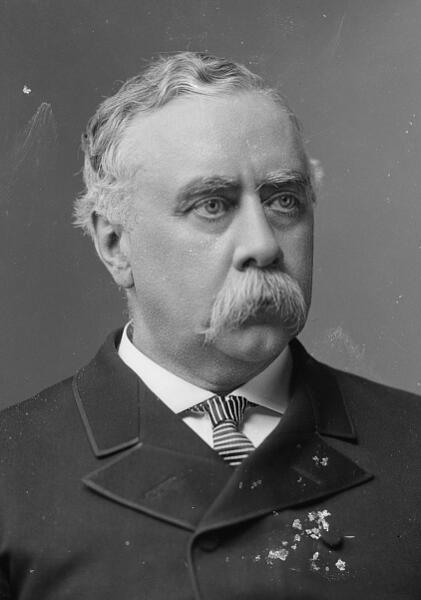
Here you will find contact information for Representative Robert Stockton Green, including email address, phone number, and mailing address.
| Name | Robert Stockton Green |
| Position | Representative |
| State | New Jersey |
| District | 3 |
| Party | Democratic |
| Status | Former Representative |
| Term Start | December 7, 1885 |
| Term End | March 3, 1887 |
| Terms Served | 1 |
| Born | March 25, 1831 |
| Gender | Male |
| Bioguide ID | G000416 |
About Representative Robert Stockton Green
Robert Stockton Green (March 25, 1831 – May 7, 1895) was an American Democratic Party politician who served as a Representative from New Jersey in the United States Congress from 1885 to 1887 and as the 27th governor of New Jersey from 1887 to 1890. Over the course of his public career he contributed to the legislative process at both the state and national levels and represented the interests of his New Jersey constituents during a significant period in American history.
Green was born on March 25, 1831, in Princeton, New Jersey. He was a member of a prominent New Jersey family and was named in part for Commodore Robert F. Stockton, reflecting the family’s connections within the state. Growing up in New Jersey in the decades before the Civil War, he was educated in local schools before pursuing higher education, preparing for a professional career in law and public service.
After completing his early education, Green studied law and was admitted to the bar, beginning the legal career that would undergird his later political life. He established himself as an attorney in New Jersey, gaining experience in civil and municipal matters at a time when the state was undergoing economic and demographic growth. His legal practice and family background helped bring him into contact with Democratic Party leaders and local officials, providing a pathway into elective office and judicial responsibilities.
Green’s political and public career advanced steadily in the decades following the Civil War, as he became active in Democratic Party affairs and local governance. By the early 1880s he had built a reputation as a capable lawyer and party figure, which positioned him for higher office. His work in law and politics coincided with a period of national reconstruction, industrial expansion, and contentious debates over tariffs, monetary policy, and civil service reform, issues that would shape the environment in which he later served in Congress and as governor.
In 1884 Green was elected as a Democrat to the United States House of Representatives, serving one term from March 4, 1885, to March 3, 1887. As a member of the House of Representatives, he participated in the democratic process and contributed to the legislative work of the Forty-ninth Congress. Representing New Jersey, he took part in debates and votes on matters central to the era, including questions of interstate commerce, federal regulation, and economic policy, and he worked to advance the interests of his constituents during a time of rapid industrialization and political realignment.
At the conclusion of his congressional term, Green returned to New Jersey politics and was elected the 27th governor of New Jersey, serving from 1887 to 1890. His governorship coincided with a period of growing urbanization and labor unrest, and he oversaw state government during ongoing debates about regulation of corporations, public improvements, and the role of state authority in social and economic affairs. As governor, he exercised executive authority over legislation passed by the state legislature, influenced appointments, and helped shape New Jersey’s response to the broader national issues of the late nineteenth century.
In his later years, after leaving the governorship in 1890, Green remained a respected figure in New Jersey’s legal and political circles. Drawing on his experience as a lawyer, congressman, and governor, he continued to be associated with public affairs and Democratic Party activities, even as he reduced his direct involvement in elective office. Robert Stockton Green died on May 7, 1895, closing a career that had spanned local, state, and national service during a transformative era in American political and economic life.