Senator Robert Goodloe Harper
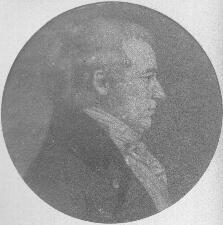
Here you will find contact information for Senator Robert Goodloe Harper, including email address, phone number, and mailing address.
| Name | Robert Goodloe Harper |
| Position | Senator |
| State | Maryland |
| Party | Federalist |
| Status | Former Representative |
| Term Start | December 2, 1793 |
| Term End | March 3, 1817 |
| Terms Served | 5 |
| Gender | Male |
| Bioguide ID | H000225 |
About Senator Robert Goodloe Harper
Robert Goodloe Harper (January 1765 – January 14, 1825) was an American soldier, lawyer, and Federalist politician who served in both houses of the United States Congress and in the legislatures of South Carolina and Maryland. A prominent Federalist orator during the early national period, he is best remembered for the phrase, “Millions for defense, but not one cent for tribute,” associated with the XYZ Affair, and for his brief service as a United States Senator from Maryland from January 1816 until his resignation in December of the same year. The town of Harper, Liberia, was later named in his honor, reflecting his influence on early American colonization efforts in Africa.
Harper was born in January 1765 near Fredericksburg, Virginia, and spent part of his youth in North Carolina. During the American Revolutionary War he served as a teenager in the Continental Army, an experience that helped shape his later political views and public career. After the war he pursued classical studies and read law, gaining admission to the bar. He eventually settled in South Carolina, where he established a legal practice and entered public life in the rapidly developing post-Revolutionary South.
Harper’s formal education included legal training typical of the era, acquired through apprenticeship and self-directed study rather than at a university. By the late 1780s he had become a respected attorney in South Carolina, which provided the foundation for his entry into politics. His legal expertise and skill as a public speaker quickly brought him to prominence within the Federalist Party, then emerging as one of the principal political forces in the new republic.
Harper’s political career began in the South Carolina House of Representatives, where he served from 1790 to 1795. In this role he participated in shaping state policy during the formative years of the federal union. He was then elected to the United States House of Representatives from South Carolina, serving from 1795 to 1801. During his five terms in Congress as a member of the Federalist Party, he contributed actively to the legislative process at a time of intense partisan conflict and international tension. It was in this period, amid the diplomatic crisis with France known as the XYZ Affair, that he became widely associated with the declaration, “Millions for defense, but not one cent for tribute,” a phrase that captured Federalist resistance to paying bribes to foreign powers and helped define American foreign policy sentiment in the late 1790s.
After leaving the U.S. House of Representatives in 1801, Harper relocated to Maryland, where he continued his legal practice and remained engaged in public affairs. He served in the Maryland State Senate, further extending his legislative experience at the state level. His reputation as a seasoned Federalist statesman led to his selection to the United States Senate from Maryland, where he served from January 1816 until his resignation in December 1816. Although his tenure in the Senate was brief, it occurred during a significant period in American history, following the War of 1812 and amid debates over national finance, defense, and the balance of power between the states and the federal government. As a member of the Senate, Harper participated in the democratic process and represented the interests of his Maryland constituents, adding to a congressional career that, in total, spanned from the mid-1790s into the second decade of the nineteenth century.
In his later years, Harper remained a prominent figure in Maryland society and continued to be identified with Federalist principles, including a strong national government and a robust defense posture. His interest in colonization and African resettlement efforts contributed to his posthumous commemoration in Liberia, where the town of Harper was named for him. He also maintained an active family life. With his wife, he had several children: Charles Carroll Harper (1802–1837), who married Charlotte Hutchinson Cheffelle (1807–1867) in 1827; Mary Diana Harper (1803–1818), who died young; Richard Caton Harper (1806–1815), who also died young; Elizabeth Hyde Harper (1809–1823), who died unmarried; Emily Louisa Harper (1812–1892), who never married; and Robert Goodloe Harper Jr. (1814–1854).
Robert Goodloe Harper died in Baltimore, Maryland, on January 14, 1825. He was initially interred in the family burial ground on his estate, Oakland, in what is now the Roland Park area of Baltimore. His remains were later reburied in Green Mount Cemetery in Baltimore, a resting place for many of the city’s leading nineteenth-century figures. His long public career—spanning service in the South Carolina House of Representatives, the U.S. House of Representatives from South Carolina, the Maryland State Senate, and the United States Senate from Maryland—left a distinct imprint on the political life of the early United States.